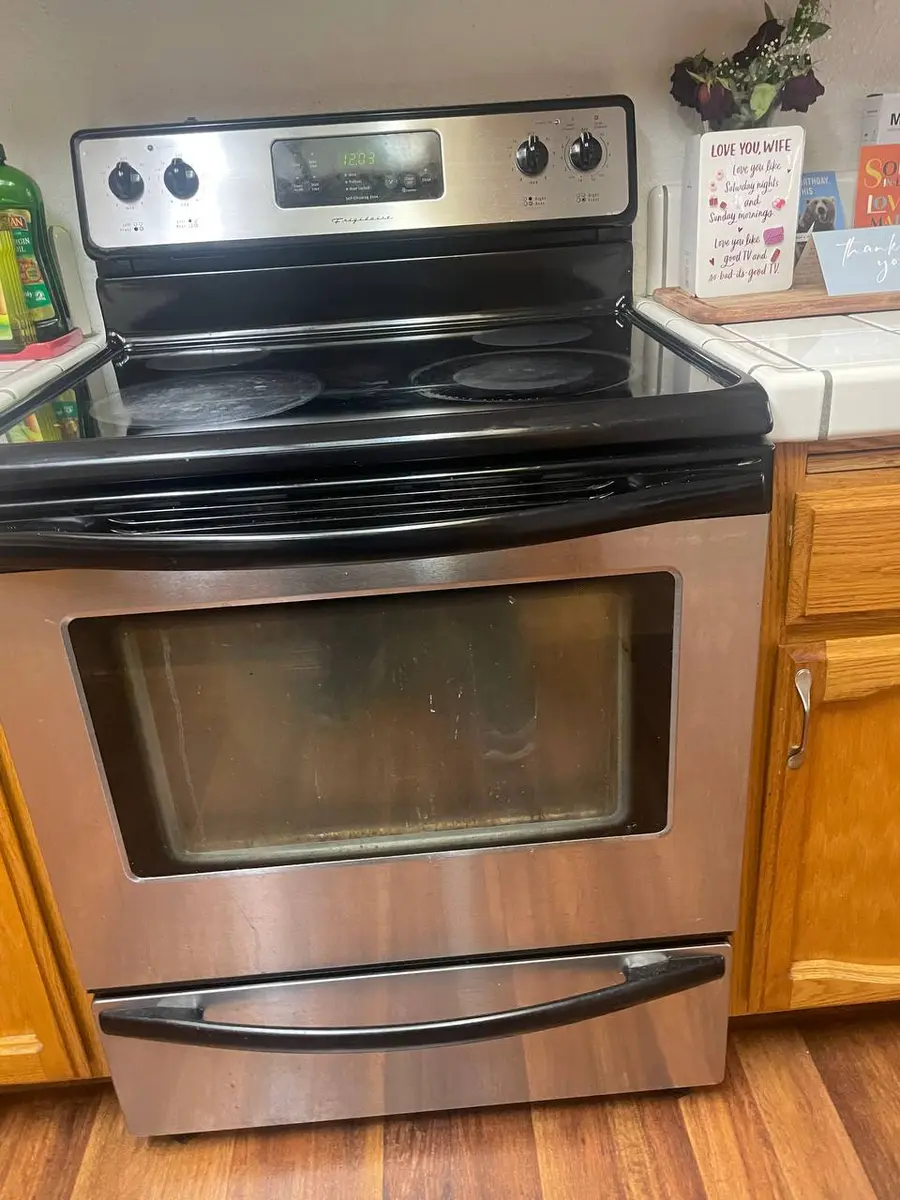
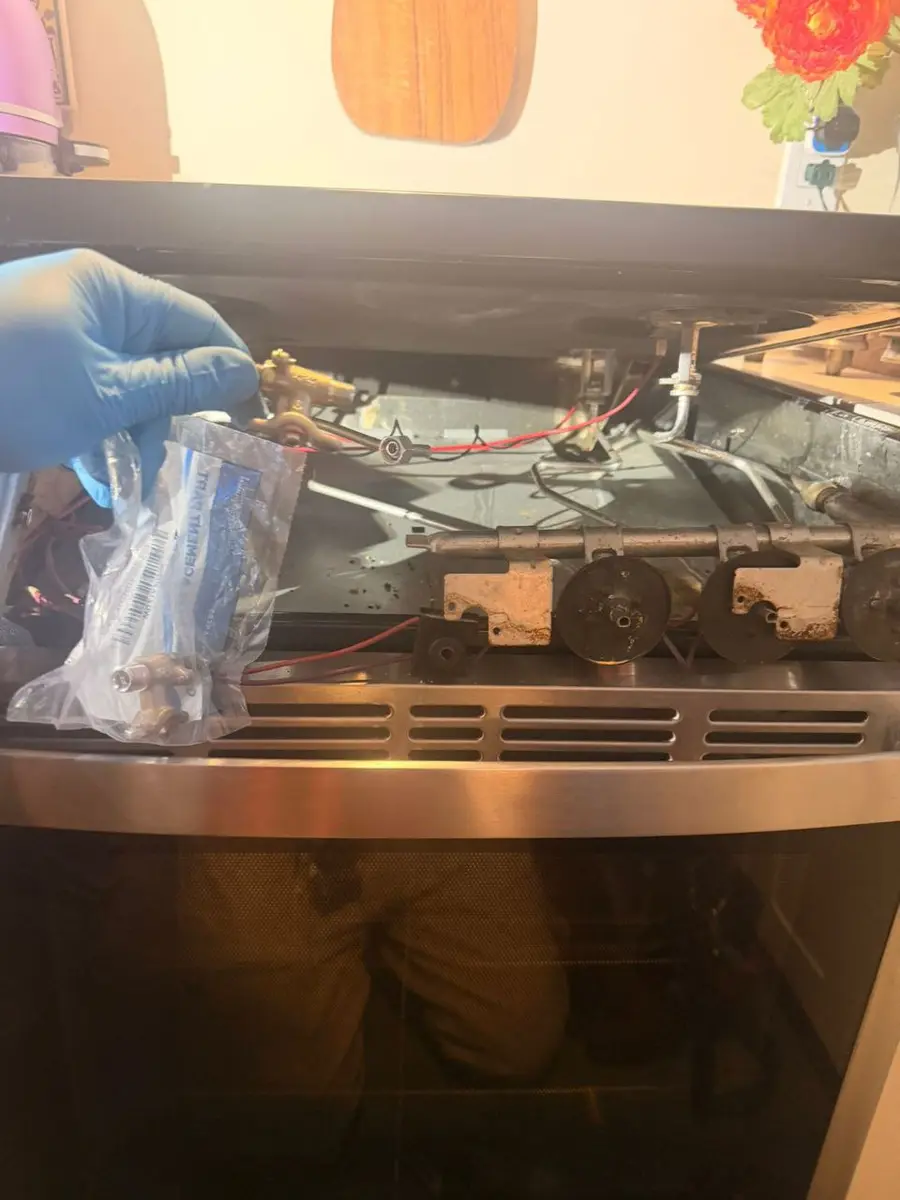
Visible sparks from an electric cooktop are always a serious safety concern. Unlike gas cooktops where clicking igniters are normal, electric cooktops should never produce sparks, arcs, or visible flashes of light during operation. Sparking from an electric element, glass surface, or beneath the cooktop indicates an electrical fault that can cause burns, fire, or electrocution. Here's what causes it, what to do immediately, and when the situation requires emergency response versus a standard repair.
Immediate Safety Steps#
If your electric cooktop is sparking:
- Turn off the burner immediately using the control knob or touch panel
- Turn off the breaker for the cooktop circuit if sparking continues after turning off the control
- Do not touch the cooktop surface — the sparking area may be energized
- Do not use water to extinguish any flame from an electrical spark — use a dry chemical fire extinguisher if needed
- Ventilate the kitchen — electrical arcing can produce ozone and burned insulation odors that are harmful with prolonged exposure
Do You Have the Right Tools?
Multimeter ($85), vacuum pump ($250), diagnostic software, and specialized hand tools. Our technician arrives with $3,000+ in professional tools — your diagnostic is free.
Licensed & Insured · 90-Day Warranty · Same-Day Service
1. Cracked or Damaged Coil Element#
The Problem: Traditional coil-type electric cooktops use exposed heating elements. When a coil element develops a crack, the nichrome wire inside can arc across the break point. You'll see a bright white or blue flash at the crack location, often accompanied by a popping sound. A severely damaged element can arc to the drip pan or element receptacle below.
What to Check:
- Visually inspect the element — look for blistering, cracks, bright spots, or sections that glow differently than the rest
- A crack in the element sheath may not be visible when cold but becomes apparent when heated
- Check the element receptacle (the plug-in terminal block) for burn marks or melting
DIY or Pro: Plug-in coil elements cost varies by model and region and are the easiest cooktop repair — unplug the old element, plug in the new one. If the receptacle is also damaged (burned or melted terminals), replace the receptacle block (varies by model and region) before installing the new element. Do not use an element with a damaged receptacle — the loose connection creates more arcing.
Typical Cost: varies by model and region DIY; varies by model and region with a technician.
2. Glass Cooktop Surface Crack or Chip#
The Problem: Smooth-top (glass-ceramic) cooktops have radiant or induction heating elements beneath a glass surface. If the glass develops a crack from impact, thermal stress, or a manufacturing defect, moisture or food can seep into the crack and contact the element beneath. This creates arcing between the element and the glass surface coating, producing visible sparks beneath the glass.
What to Check:
- Inspect the glass surface for any visible cracks, chips, or scratches — even hairline cracks can cause arcing
- Look for discoloration or dark spots beneath the glass that weren't there before
- If sparking occurs at a specific burner location, the crack may be directly over that element
DIY or Pro: A cracked glass cooktop surface must be replaced — there is no repair for glass-ceramic. Replacement glass tops cost varies by model and region depending on brand and size. This is a professional repair requiring electrical disconnection and precise fitting. For cooktops over 8 years old, the glass replacement cost may approach the price of a new unit.
Typical Cost: varies by model and region with a technician; consider replacement for older units.
Safety First — Know the Risks
Appliances involve high voltage (120-240V), pressurized water, gas lines, and chemical refrigerants. Over 400 DIY repair injuries are reported yearly. Our techs are licensed and insured — let them handle the risk.
Licensed & Insured · 90-Day Warranty · Same-Day Service
3. Faulty Burner Switch or Infinite Switch#
The Problem: The infinite switch (the control knob mechanism) regulates power to the heating element by cycling it on and off rapidly. When the switch contacts wear, burn, or weld together, the switch can produce internal arcing. You'll hear clicking or see sparking from behind the control panel area, and the burner may heat erratically — too hot on low settings or not responding to adjustment.
What to Check:
- Does sparking originate from the control panel area rather than the cooking surface?
- Does the burner stay on full power regardless of the knob position?
- Is there a burning smell from behind the control knobs?
- Try turning the knob — does it feel different (loose, stiff, or gritty)?
DIY or Pro: Infinite switches cost varies by model and region. They mount behind the control panel and connect with push-on wire terminals. Replacement requires removing the cooktop's back panel or control panel access cover. Moderate DIY — the main caution is properly reconnecting the correct wires to the correct terminals (label them before disconnecting).
Typical Cost: varies by model and region with a technician.
4. Wiring Fault or Loose Connection#
The Problem: Electric cooktops run on 240V circuits that carry 30–50 amps. Any loose connection in this high-current circuit — at the terminal block, wire nuts, or junction box — creates resistance. Resistance generates heat. Heat damages insulation. Damaged insulation exposes copper conductors. Exposed conductors arc. This escalation from loose connection to arcing fire can take months or happen suddenly.
What to Check:
- Sparking from beneath the cooktop (not from an element) suggests a wiring issue
- Burning smell without visible element damage
- Breaker tripping when the cooktop is used
- Discolored or melted wire insulation visible at the junction box (behind/under the cooktop)
- In homes built before 1975, aluminum wiring connections to a cooktop are a particular fire risk
DIY or Pro: Wiring repairs on 240V cooktop circuits should be done by a licensed electrician. This is not a DIY repair. California electrical code requires properly rated connections, wire gauges, and junction boxes for cooktop circuits. In older Sacramento-area homes, wiring may not meet current code and should be inspected.
Typical Cost: varies by model and region for an electrician; more if wiring needs to be replaced.
The Real Cost of DIY
Average DIY attempt: $150-400 in tools you may use once, plus the risk of further damage. Our diagnostic visit costs $0 — we find the problem and give you an honest quote.
Licensed & Insured · 90-Day Warranty · Same-Day Service
5. Induction Cooktop Element Failure#
The Problem: Induction cooktops use electromagnetic coils beneath the glass surface — they don't heat directly but generate magnetic fields that heat ferrous cookware. When an induction coil cracks or its insulation fails, it can arc to the glass surface or to adjacent components. Induction sparking is less common than radiant element sparking but is more expensive to repair.
What to Check:
- Does the sparking only occur with specific burners? This isolates the failed coil.
- Error codes on the display (induction cooktops have sophisticated diagnostics)
- If using non-induction-compatible cookware (aluminum, copper, glass), the cooktop may behave erratically — but it should not spark
DIY or Pro: Induction coil replacement is a professional repair. Induction coils cost varies by model and region per burner, and the repair requires accessing the electronics beneath the glass surface. The power electronics in induction cooktops handle high-frequency AC — not something for DIY repair.
Typical Cost: varies by model and region with a technician.
When to Call a Professional#
Any sparking from an electric cooktop is a "stop using it now" situation. Turn off the breaker and call for service. Coil element replacement is the one exception where a handy homeowner can safely handle the repair on a standard plug-in coil cooktop (120V or 240V elements that plug into a receptacle). All other causes — glass surface damage, wiring faults, switch failures, and induction issues — involve working with 240V circuits and should be handled by a licensed technician or electrician. California homeowners should verify that their cooktop circuit has proper GFCI or AFCI protection as required by current NEC code adopted by the state.
Don't Void Your Warranty
Opening your appliance yourself may void the manufacturer warranty. Our repair comes with a 90-day guarantee, and we document everything for warranty compliance.
Licensed & Insured · 90-Day Warranty · Same-Day Service
FAQ#
Q: Is a sparking electric cooktop a fire hazard? A: Yes. Electrical arcing is one of the leading causes of kitchen fires. If your cooktop is sparking, stop using it immediately, turn off the breaker, and have it inspected before use.
Q: My glass cooktop has a small chip. Is that dangerous? A: A surface chip may not cause immediate sparking, but it weakens the glass and can propagate into a crack under thermal stress. If the chip is over a heating element, moisture can enter and cause arcing. Replace the glass surface if the chip is in a heated zone.
Q: Can I still use other burners if one is sparking? A: Only if you're confident the sparking is isolated to a single coil element (plug-in type) and you've unplugged that element. If the sparking is from wiring, a switch, or beneath the glass, all burners share the same electrical system — turn off the entire cooktop circuit.
Q: How often should cooktop wiring be inspected? A: Every 10 years for homes with modern copper wiring; every 5 years for homes with aluminum wiring (common in 1965–1975 Sacramento construction). Any time you notice a burning smell, discolored outlets, or breaker trips, have the wiring inspected immediately.
Senior Gas Appliance Specialist · 18 years experience
AGA-certified gas appliance specialist with 18 years of experience in residential and commercial oven, range, and cooktop repairs.