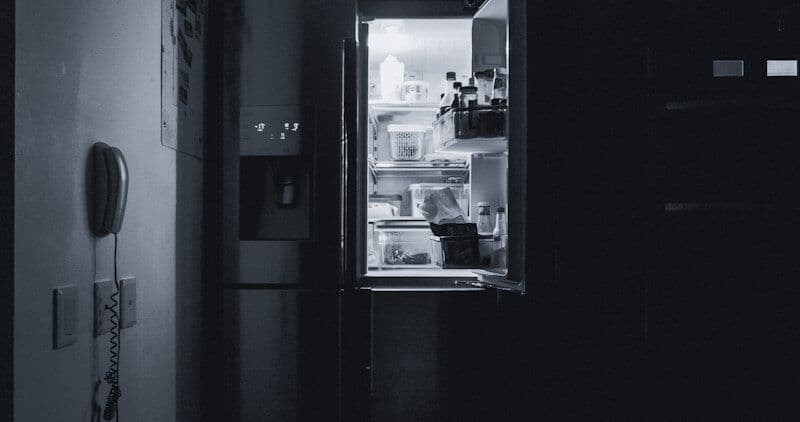
When a Whirlpool refrigerator won't start, open the door and look at the interior light before anything else. If the light works, power is reaching the unit and the fault is in the compressor circuit — most often the start relay. If the light is dark too, you have a total power failure: the outlet, the cord, or the control board. That one observation tells you which half of the diagnosis to run.
Understand What "Dead" Means Here#
Whirlpool refrigerators have no power switch — they run continuously from the moment they are plugged in. So a unit that won't start has either lost its power supply or suffered an internal electrical failure. The trap is that the most common cause looks like a total failure but isn't: a failed start relay stops the compressor and both fans, so the fridge goes silent and warm, yet the interior light and display still work. The light test cuts straight through that confusion.
Do You Have the Right Tools?
Refrigerant gauges ($200+), vacuum pump ($250), leak detector ($150), and EPA-certified recovery equipment. Our technician arrives with $3,000+ in professional tools — your diagnostic is free.
Licensed & Insured · 90-Day Warranty · Same-Day Service
First: Confirm Power Is Reaching the Unit#
- Test the outlet — plug in a lamp or charger. If it's dead, check the breaker panel for a trip.
- Inspect the cord — follow it from the plug to where it enters the body, looking for damage or burn marks. Whirlpool refrigerators use a standard three-prong 120V plug.
- Check for a tripped GFCI — the reset may be on an outlet in the garage, bathroom, or exterior, not next to the fridge.
- Verify voltage — with a multimeter, the outlet should read 110-120V AC. A brownout dropping below 100V can leave the control board locked up.
Summer-peak micro-outages and brownouts are a frequent trigger, often leaving the control board in a locked state that a simple reset clears.
The Causes, By Frequency#
1. Start Relay Failure (30% of cases)#
The most common reason a Whirlpool looks dead is a failed start relay, which supplies the initial current surge the compressor needs to overcome inertia. Without it, the compressor clicks a failed start attempt every few minutes and the overload protector cuts power, so the compressor and both fans stay off — but the light and display still work. That is your confirmation the unit has power and the fault is the compressor circuit. To check the relay, unplug, remove the rear lower panel, pull the relay off the compressor, and shake it: a rattle means broken internal contacts.
2. Tripped Thermal Overload (20% of cases)#
The compressor's external overload protector cuts power when the compressor overheats — from dirty condenser coils, high ambient heat, or a failed condenser fan. It self-resets, but only after the compressor cools significantly, and if the compartment stays hot from poor ventilation it can remain open indefinitely. Unplug the fridge for two to four hours to let the compressor cool fully, then restore power. If it starts, the overload tripped from overheating and you should find out why; if it still won't start, the relay or compressor has failed.
3. Control Board Failure (20% of cases)#
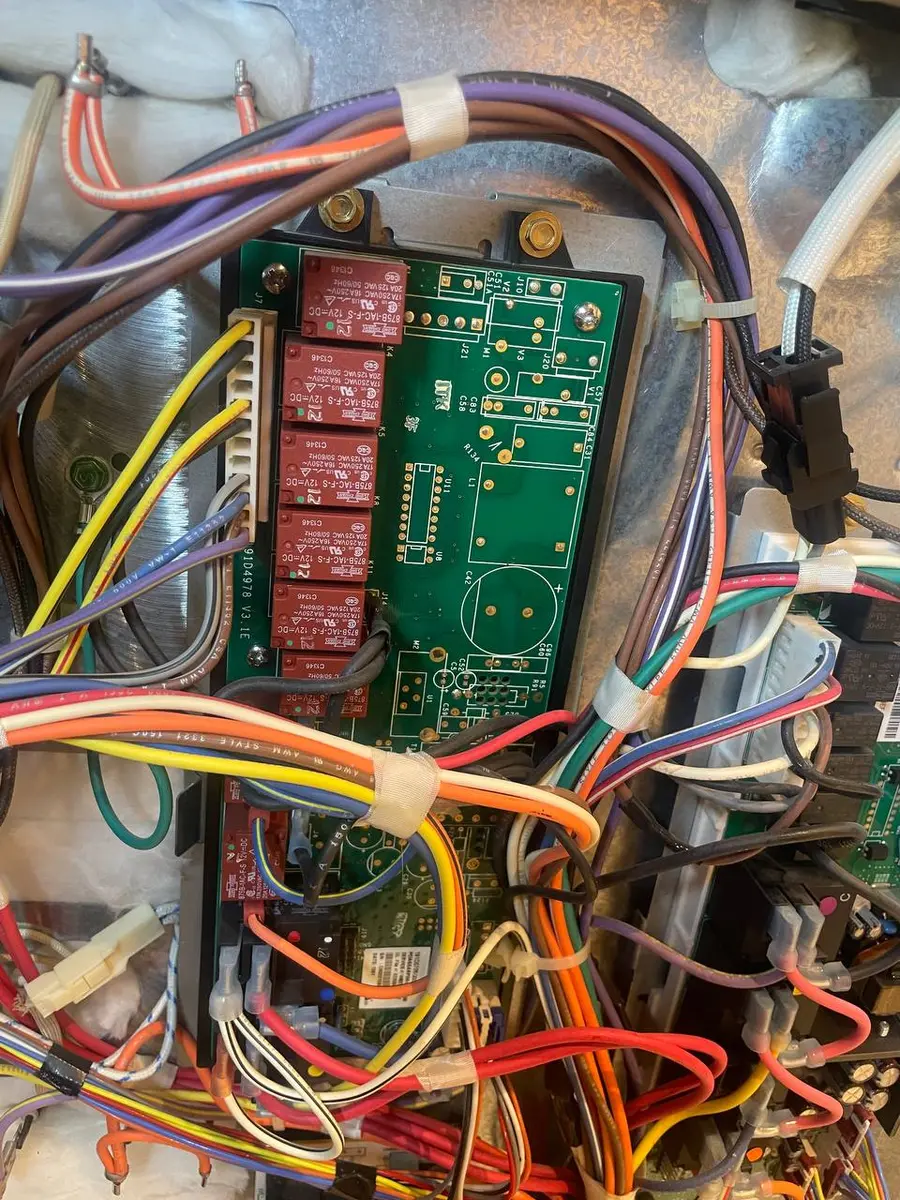
The main board runs every electrical system, and a power surge, aged capacitor, or fatigued solder joint can leave it completely non-functional — no display, no light, no compressor. Because the fridge is always on, it absorbs every voltage spike the grid delivers, and its sensitive logic can be destroyed by even a brief overvoltage. On models with a separate user-interface board, a dead UI board can make the whole unit appear lifeless while the main board is fine. Look for any sign of life, even a faint indicator LED on the board behind the temperature panel; none at all means it is not getting power or the board is dead.
4. Power Cord or Wiring Damage (15% of cases)#
The cord exits at the rear lower area and, after years of being pushed against the wall, can fatigue where it enters the body; rodents seeking warmth in the compressor compartment occasionally chew wiring. Inspect the cord end to end for crushed sections, burn marks, or exposed wire, and check the connection where it meets the internal wiring inside the compressor compartment. If the cord looks intact, measure voltage at that internal connection to confirm power is passing through.
5. Compressor Seizure (15% of cases)#
A seized compressor draws maximum current the instant power is applied, tripping the overload immediately, and on electronic-board models the board may detect the abnormal draw and enter a protective lockout that shuts off lights and display too. Seizure is the terminal failure — the motor cannot turn because bearings welded or pistons stuck — and it typically strikes older units after months of gradually louder operation. If a known-good relay and a fully cooled overload still won't start it, and you feel the compressor buzz then stop, it is seized and needs a certified technician to confirm.
Safety First — Know the Risks
Refrigerant (R-134a/R-600a) requires EPA certification to handle. Improper discharge is a federal violation and health hazard. Our techs are licensed and insured — let them handle the risk.
Licensed & Insured · 90-Day Warranty · Same-Day Service
What the Sounds Tell You#
Before you open any panel, listen, because a Whirlpool that won't start is rarely truly silent. A faint click every few minutes, with the light on, is the classic start-relay signature — the relay energizes, the compressor fails to catch, and the overload cuts it, over and over. A brief buzz or hum that starts then stops, sometimes with a momentary vibration you can feel on the compressor, leans toward a seized compressor tripping the overload the instant it tries to run. Complete silence with the light on suggests the overload has already tripped and is sitting open while it cools, or the relay has failed with no click left in it. And total silence with no light points away from the compressor entirely, toward the outlet, cord, or board. Matching the sound to the light is often enough to name the fault before you touch a tool.
Why a Brownout Leaves It "Dead"#
Modern Whirlpool boards run sensitive logic that expects a clean, stable supply. A brownout or a momentary micro-outage can drop the voltage low enough that the board neither runs nor resets cleanly, leaving it latched in a non-operating state even after normal voltage returns. That is why the five-minute unplug is such a productive first step: it forces the board to cold-start from a known state, and it revives a surprising share of units that look dead after a summer power event. If the hard reset brings it back, the board was locked rather than broken — but note whether it recurs, because a board that latches up repeatedly after minor power events is beginning to degrade and will eventually need replacement.
The Real Cost of DIY
Average DIY attempt: $150-400 in tools you may use once, plus the risk of further damage. Our diagnostic visit costs $0 — we find the problem and give you an honest quote.
Licensed & Insured · 90-Day Warranty · Same-Day Service
Diagnostic Sequence#
- Confirm the outlet has power with a lamp.
- Check for a tripped GFCI or breaker.
- Inspect the cord for physical damage.
- Open the door — does the interior light work?
- Light on = start relay or compressor (compressor circuit only).
- Light off = control board or power supply (total electrical failure).
- Unplug for five minutes and restore — a hard reset clears board lockouts from momentary power events.
- Still dead after reset = inspect the board for burnt components or a total lack of indicator LEDs.
Repair Effort at a Glance#
| Cause | DIY? | Typical repair time |
|---|---|---|
| Start relay | Easy | 10 min |
| Thermal overload | Easy (waiting is the fix) | Wait 2-4 hrs |
| Control board | Moderate | 30 min |
| Power cord | Easy to moderate | 20 min |
| Compressor (seized) | Professional only | 2-3 hours |
Don't Void Your Warranty
Opening your appliance yourself may void the manufacturer warranty. Our repair comes with a 90-day guarantee, and we document everything for warranty compliance.
Licensed & Insured · 90-Day Warranty · Same-Day Service
Protect Your Food While You Diagnose#
- Keep both doors closed as much as possible.
- A full freezer holds safe temperatures for about 48 hours; half-full for 24.
- The refrigerator section becomes unsafe after roughly 4 hours above 40 degrees F.
- If the repair will run past that, move perishables to a cooler with ice.
How to Prevent It#
- Install a dedicated appliance surge protector to shield the control board from spikes.
- Don't share the circuit with high-draw appliances that can trip the breaker.
- Know where the GFCI reset is before an emergency.
- Keep the compressor area ventilated with a few inches of clearance to prevent overload trips.
- Consider replacing the start relay proactively after about ten years of service, since it is an inexpensive part whose failure is the most common cause of an apparent no-start and it is far cheaper to swap on your schedule than to lose a fridge full of food to an unexpected failure.
Whirlpool [refrigerator repair in Sacramento](/blog/complete-guide-refrigerator-repair-sacramento) and the Bay Area — our technicians arrive with Whirlpool-specific parts and tooling. Book a same-day visit
Lead Appliance Repair Technician · 12 years experience
Experienced technician with 12 years specializing in washing machine and dryer repairs across all major brands.