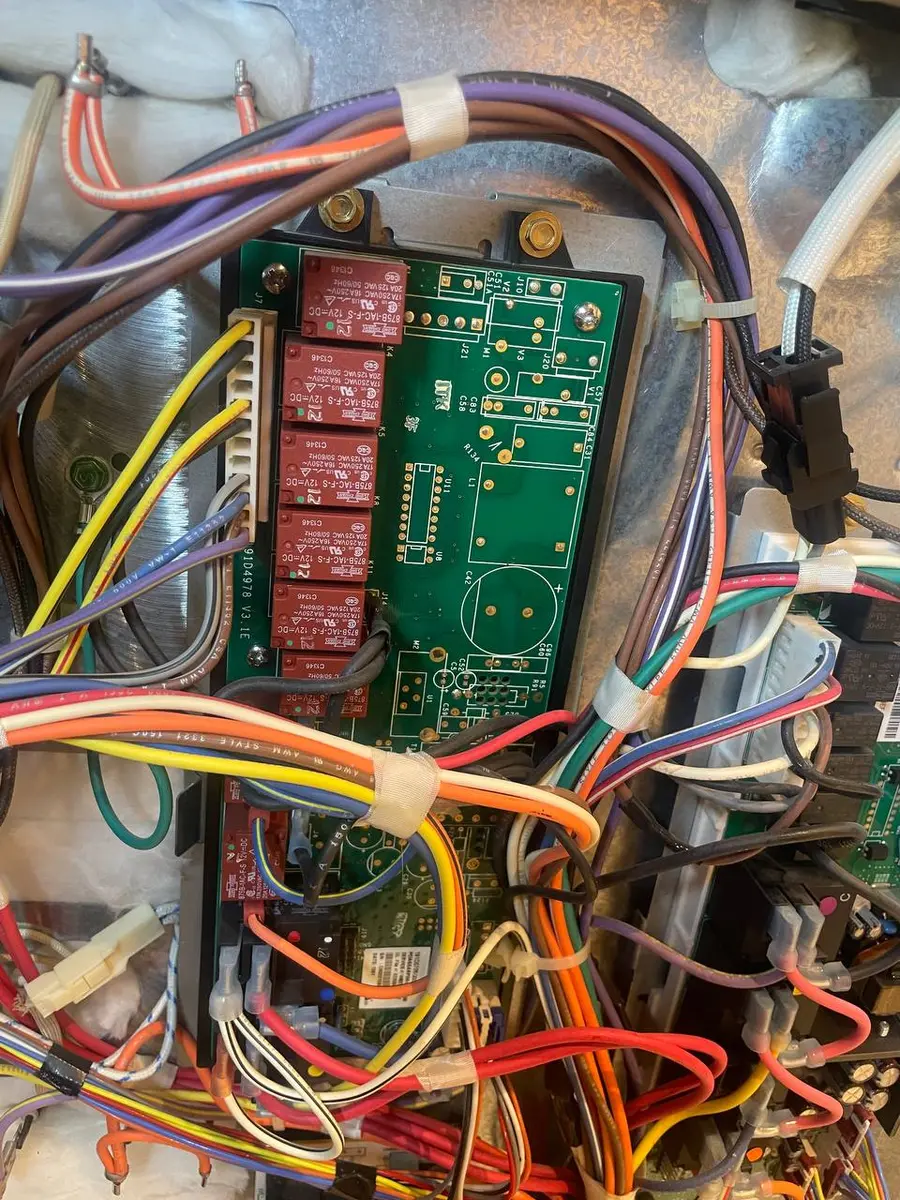
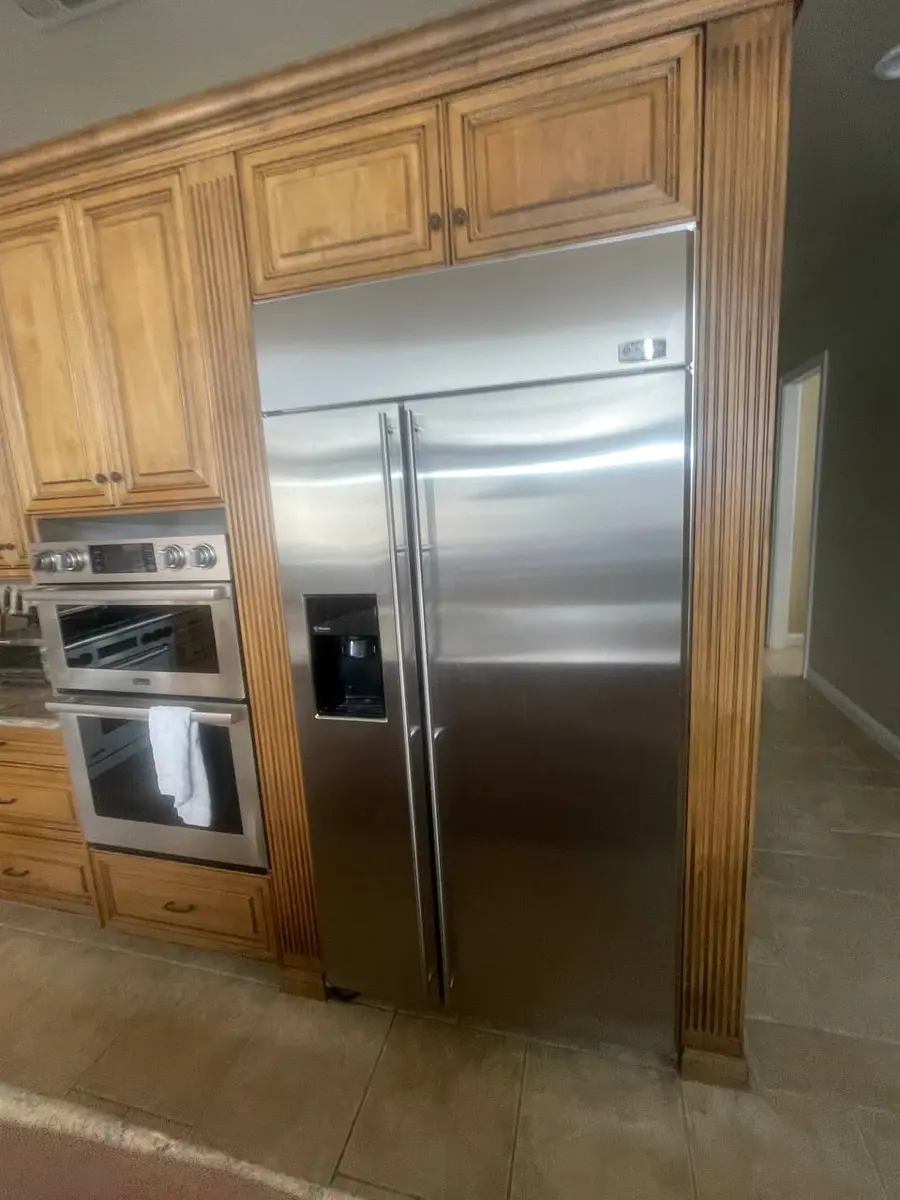
Sub-Zero Refrigerator EC 86: Compressor-to-Board Communication Failure
EC 86 indicates the main control board lost communication with the compressor management system. On variable-speed (IC-FI) models, this overlaps significantly with EC 80 but specifically targets the compressor-side feedback circuit rather than the command circuit. On fixed-speed models with enhanced monitoring (newer BI-series), EC 86 can indicate the compressor current/temperature feedback sensor circuit has failed.
The practical difference between EC 80 and EC 86: EC 80 means the board cannot send commands to the inverter; EC 86 means the board cannot receive status/feedback from the compressor system. Both result in the compressor not running, but the diagnostic path differs.
When EC 86 Appears on Different Model Types
IC-FI (Inverter) models: EC 86 indicates the inverter board's telemetry output (reporting compressor speed, current, and error status) back to the main board has failed. The main board can potentially still send commands, but since it cannot confirm the compressor's response, it refuses to operate in an unmonitored state.
Newer BI and Classic series (with enhanced diagnostics): EC 86 indicates the compressor current transformer or temperature sensor feedback wire has opened. These models use a clamp-on current sensor on the compressor power lead to verify the compressor is actually drawing current when commanded to run.
Older models (pre-2010): Typically do not display EC 86 — these models lack the advanced telemetry that makes this detection possible.
Do You Have the Right Tools?
Refrigerant gauges ($200+), vacuum pump ($250), leak detector ($150), and EPA-certified recovery equipment. Our technician arrives with $15K+ in professional tools — your diagnostic is free.
Licensed & Insured · 90-Day Warranty · Same-Day Service
Diagnostic Path for IC-FI Models
Step 1: Check inverter board LEDs. If the green LED is blinking (indicating the inverter is operating and processing commands), but the main board reports EC 86, the telemetry return line specifically has failed. Check the return data wire in the communication harness for continuity.
Step 2: Inspect the harness. The same multi-conductor cable that carries commands (main-to-inverter) also carries telemetry (inverter-to-main). A single broken conductor in this cable affects only one direction of communication. Reseat both connectors and test continuity of each individual wire.
Step 3: Inverter board output test. With a scope or logic analyzer (technician-level equipment), verify the inverter board's serial output pin is toggling during operation. If static (stuck high or low), the output driver IC on the inverter board has failed.
Diagnostic Path for BI/Classic Series with Current Sensing
Step 1: Locate current transformer. Find the small donut-shaped current transformer clamped around the compressor power wire (usually in the machine compartment).
Step 2: Test the current transformer. With the compressor running (if possible — you may need to temporarily bypass EC 86 in service mode), measure the CT output. It should produce a small AC voltage proportional to compressor current. Zero output with confirmed compressor current = failed CT.
Step 3: Check wiring from CT to board. The CT output is a low-voltage signal that is sensitive to wire breaks. Test continuity from the CT leads to the board connector.
Safety First — Know the Risks
Refrigerant (R-134a/R-600a) requires EPA certification to handle. Improper discharge is a federal violation and health hazard. Our techs are licensed and insured — let them handle the risk.
Licensed & Insured · 90-Day Warranty · Same-Day Service
The Practical Impact of EC 86
EC 86 means the compressor does not run (safety lockout — the board refuses to operate a compressor it cannot monitor). The affected compartment loses cooling on the same timeline as any compressor-off scenario.
On dual-compressor Sub-Zero units, only one compartment is affected. Identify which compressor's feedback circuit triggered EC 86 (the display or diagnostic mode typically specifies).
Parts and Costs
| Part | Description | Cost |
|---|---|---|
| SZ-4204780 | Inverter board (if output circuit failed) | $400-$700 |
| SZ-4204380 | Main control board (if input circuit failed) | $300-$500 |
| SZ-4204560 | Communication harness | $150-$250 |
| — | Current transformer (BI/Classic) | $80-$150 |
Professional repair: $400-$1,100 depending on which component has failed.
Same-Day Appliance Repair
Fixed or It's Free
$89 → $0 Service Call & Diagnosis — offer ends May 25
The Real Cost of DIY
Average DIY attempt: $150-400 in tools you may use once, plus the risk of further damage. Our diagnostic visit costs $0 — we find the problem and give you an honest quote.
Licensed & Insured · 90-Day Warranty · Same-Day Service
EC 86 vs EC 80 Decision Matrix
| Observation | Likely Code | Root Cause |
|---|---|---|
| Inverter LED off, compressor silent | EC 80 | No power/commands reaching inverter |
| Inverter LED green/blinking, compressor silent | EC 86 | Inverter works but feedback not reaching main board |
| Inverter LED red | Could be either | Inverter internal fault |
| Current transformer visible, BI model | EC 86 | CT or CT wiring failure |
FAQ
Q: EC 86 on my Sub-Zero but I hear the compressor trying to start briefly. Normal for this code? A: On some models, the board briefly attempts to start the compressor to test whether feedback appears, then shuts down when it does not receive confirmation. The brief start-attempt is the board's diagnostic sequence, not normal operation.
Q: Can EC 86 be caused by a power surge? A: Yes. The communication circuits are sensitive low-voltage components that are more susceptible to surge damage than the power-handling circuits. A surge can destroy a serial driver IC while leaving the power stage of the inverter board functional.
Q: EC 86 intermittent — works for days then fails. What is wrong? A: Thermal-dependent connector or wire fault. As the machine compartment warms from compressor operation, thermal expansion opens a marginal connection. When the compressor stops and the area cools, the connection remakes. Replace the communication harness to resolve thermal-cycling connector issues.
Q: Is EC 86 repair worth it on a 15-year-old Sub-Zero? A: Yes. EC 86 indicates a monitoring circuit failure, not a compressor problem. The compressor itself may be perfectly healthy — it just cannot communicate its status. Repairing the communication path ($400-$700) preserves a healthy compressor for potentially another 10 years.
EC 86 on your Sub-Zero? Our factory-certified technicians diagnose inverter communication issues with specialized equipment. Book your Sub-Zero diagnostic.
Don't Void Your Warranty
Opening your appliance yourself may void the manufacturer warranty. Our repair comes with a 90-day guarantee, and we document everything for warranty compliance.
Licensed & Insured · 90-Day Warranty · Same-Day Service
Communication Circuit Testing for EC 86
EC 86 diagnosis focuses on the feedback path from the compressor management system to the main board. On IC-FI models, the inverter board sends status telemetry back to the main board via a multi-wire connector carrying: compressor RPM data, motor winding temperature, inverter fault flags, and DC bus voltage readings.
Testing procedure: measure voltage levels at the feedback connector while the compressor is running. The feedback signals are low-voltage digital (3.3V or 5V logic levels). A stuck signal (always high or always low) indicates the inverter board's feedback output has failed. Fluctuating signals that do not correlate with compressor state indicate noise or wiring issues.
On BI/Classic models with current sensing, the compressor current transformer (CT) provides an analog signal proportional to compressor current. The main board reads this signal to confirm the compressor is running and to detect overcurrent conditions. A failed CT or its wiring causes EC 86 because the board receives zero current feedback despite the compressor operating.