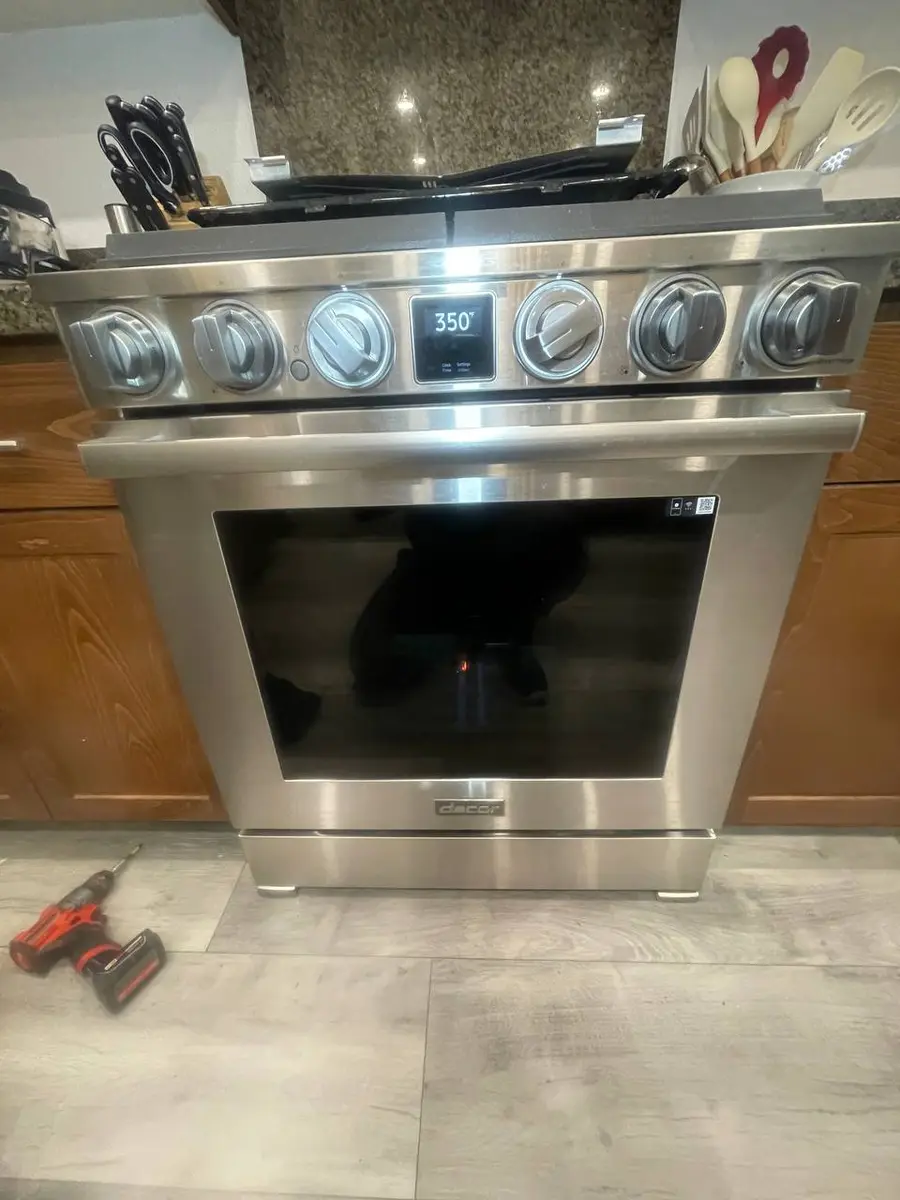
Wolf Oven/Range F8: Cooling Fan Failure — Cabinet Protection System Error
F8 means the oven's cooling fan is not running at expected speed. Wolf ovens include a dedicated cooling fan separate from the convection fan — this cooling fan circulates ambient air through the space between the oven cavity insulation and the outer cabinet shell, protecting surrounding cabinetry, countertops, and control electronics from excessive heat.
Without the cooling fan, adjacent cabinetry can reach temperatures that damage finishes, warp wood, or degrade adhesives. The control board monitors cooling fan operation and triggers F8 when it detects the fan has stopped or slowed below minimum RPM.
Understanding the Cooling Fan vs Convection Fan
Convection fan (inside the cavity): Circulates hot air within the oven for even cooking. Part of the cooking system.
Cooling fan (outside the cavity): Blows ambient air through the cabinet shell space. Part of the safety/protection system. Has nothing to do with cooking performance.
F8 relates only to the cooling fan. If your Wolf oven's convection fan fails, you would notice uneven cooking results but not an F8 code.
The cooling fan typically runs whenever the oven is above a threshold temperature (usually around 150 degrees F) and continues running for 15-30 minutes after the oven is turned off (cooling the outer cabinet before shutting down). If you have noticed your Wolf oven continues making fan noise after turning it off — that is the cooling fan doing its job.
Do You Have the Right Tools?
Multimeter ($85), vacuum pump ($250), diagnostic software, and specialized hand tools. Our technician arrives with $15K+ in professional tools — your diagnostic is free.
Licensed & Insured · 90-Day Warranty · Same-Day Service
Why the Cooling Fan Fails
Motor bearing wear (40%). The cooling fan motor runs for extended periods during every oven use. Over 10-15 years, the motor bearings wear, causing noise (grinding, squealing) before eventually seizing. A seized motor draws excessive current and may trip its thermal protector.
Hall-effect sensor failure (25%). Wolf uses a tachometer (Hall-effect sensor) built into the fan motor to measure actual RPM. The control board compares actual RPM to expected RPM. If the sensor fails, the board reads zero RPM and triggers F8 even if the motor is actually spinning. Diagnosis: listen for the fan — if you hear it running but F8 still displays, the tachometer has failed (not the motor).
Wiring issue (20%). The cooling fan motor connects to the board through a multi-pin connector. Vibration, heat cycling, or connector corrosion can create intermittent or permanent disconnection.
Blocked fan (10%). Debris (fallen insulation, nesting material in the vent path, or food packaging that fell behind the unit) can physically block the fan blade. The motor stalls, draws excessive current, and the board detects no rotation.
Control board output failure (5%). The board's fan drive circuit (relay or TRIAC) has failed and cannot supply power to the motor.
Diagnosis
Step 1: Listen. Start the oven at any temperature setting. After a few minutes, the cooling fan should start (audible from the top or rear of the oven). If you hear it running, F8 is likely a tachometer issue, not motor failure. If silence, proceed to motor testing.
Step 2: Physical inspection. Access the cooling fan (usually behind the top panel of the oven or at the rear). Check for debris blocking the blade. Spin the blade by hand — it should rotate freely with minimal resistance.
Step 3: Motor test. Disconnect the motor and apply rated voltage directly to the motor power leads (typically 120V AC). If the motor runs, the motor is functional and the problem is upstream (board, wiring, or tachometer).
Step 4: Tachometer test. If equipped with a separate tachometer wire (usually a third wire beyond the two motor power leads), the tachometer output can be tested with an oscilloscope or frequency counter while the motor spins. A dead tachometer outputs no pulses regardless of motor speed.
Safety First — Know the Risks
Appliances involve high voltage (120-240V), pressurized water, gas lines, and chemical refrigerants. Over 400 DIY repair injuries are reported yearly. Our techs are licensed and insured — let them handle the risk.
Licensed & Insured · 90-Day Warranty · Same-Day Service
Parts and Costs
| Part | Description | Cost |
|---|---|---|
| WLF-810443 | Cooling fan motor assembly | $100-$200 |
| WLF-810085 | Fan wiring harness | $50-$100 |
| WLF-811503 | Control board (if drive circuit failed) | $350-$600 |
Professional repair: $200-$400 for fan motor replacement. Board replacement: $500-$700.
Same-Day Appliance Repair
Fixed or It's Free
$89 → $0 Service Call & Diagnosis — offer ends May 25
Can You Use the Oven With F8?
Some Wolf models allow continued cooking with F8 active (the oven heats normally, just without cabinet cooling). This is not recommended for extended periods — you risk:
- Heat damage to adjacent cabinetry finishes
- Potential warping of wood or laminate near the oven
- Overheating of the control board itself (which could lead to additional failures)
- Void of warranty if heat damage to surrounding materials is traced to F8 operation
Short-term use (finishing a meal currently cooking) is acceptable. Do not use for extended baking sessions without the cooling fan operating.
The Real Cost of DIY
Average DIY attempt: $150-400 in tools you may use once, plus the risk of further damage. Our diagnostic visit costs $0 — we find the problem and give you an honest quote.
Licensed & Insured · 90-Day Warranty · Same-Day Service
FAQ
Q: My Wolf makes a loud buzzing/grinding noise then shows F8. What is failing? A: Grinding noise followed by F8 indicates the fan motor bearings are seized or seizing. The motor attempts to spin, creates noise, draws excessive current, and either trips its protector or fails to reach minimum RPM. Replace the fan motor.
Q: F8 appeared in a newly installed Wolf oven. Installation error? A: Possible. Check that no installation debris (wood shavings, packing material, screws) fell into the cooling fan area during cabinet installation. Also verify the fan wiring connector is fully seated — installers sometimes leave it partially connected.
Q: The cooling fan runs after I turn off the oven. Normal or F8 related? A: Normal. The cooling fan is designed to run 15-30 minutes after the oven turns off to bring cabinet temperatures back to safe levels. This is proper operation, not a fault.
Q: Does F8 affect cooktop burners on a Wolf range? A: No. The cooling fan protects the oven section only. Cooktop burners operate independently and are not affected by F8.
F8 on your Wolf oven? Our technicians carry replacement fan motors and can restore cabinet protection quickly. Book your Wolf service.
Cooling Fan Testing for F8
The cooling fan motor on Wolf ovens is a 120VAC single-phase motor located in the cavity between the oven insulation and the outer cabinet shell. Testing requires accessing the fan compartment — typically from the rear of the unit after removing the rear panel or the decorative trim panel above the oven opening.
With power disconnected, test the fan motor winding resistance. Healthy Wolf cooling fan motors typically read 50-150 ohms between the two power leads. Open circuit means the motor winding is broken. If the motor has a run capacitor (some models), test the capacitor separately.
The cooling fan speed sensor (if equipped on your model) provides RPM feedback to the control board. If the motor runs but the speed sensor has failed, the board cannot confirm fan operation and triggers F8 despite the fan physically spinning. Listen for fan operation while the oven heats — if you hear the cooling fan but F8 persists, the speed sensor is the likely fault.
Check for physical obstructions: years of airborne grease can coat the fan blades, creating an imbalance that slows the fan below minimum RPM. Remove and clean the fan blade assembly if accessible.