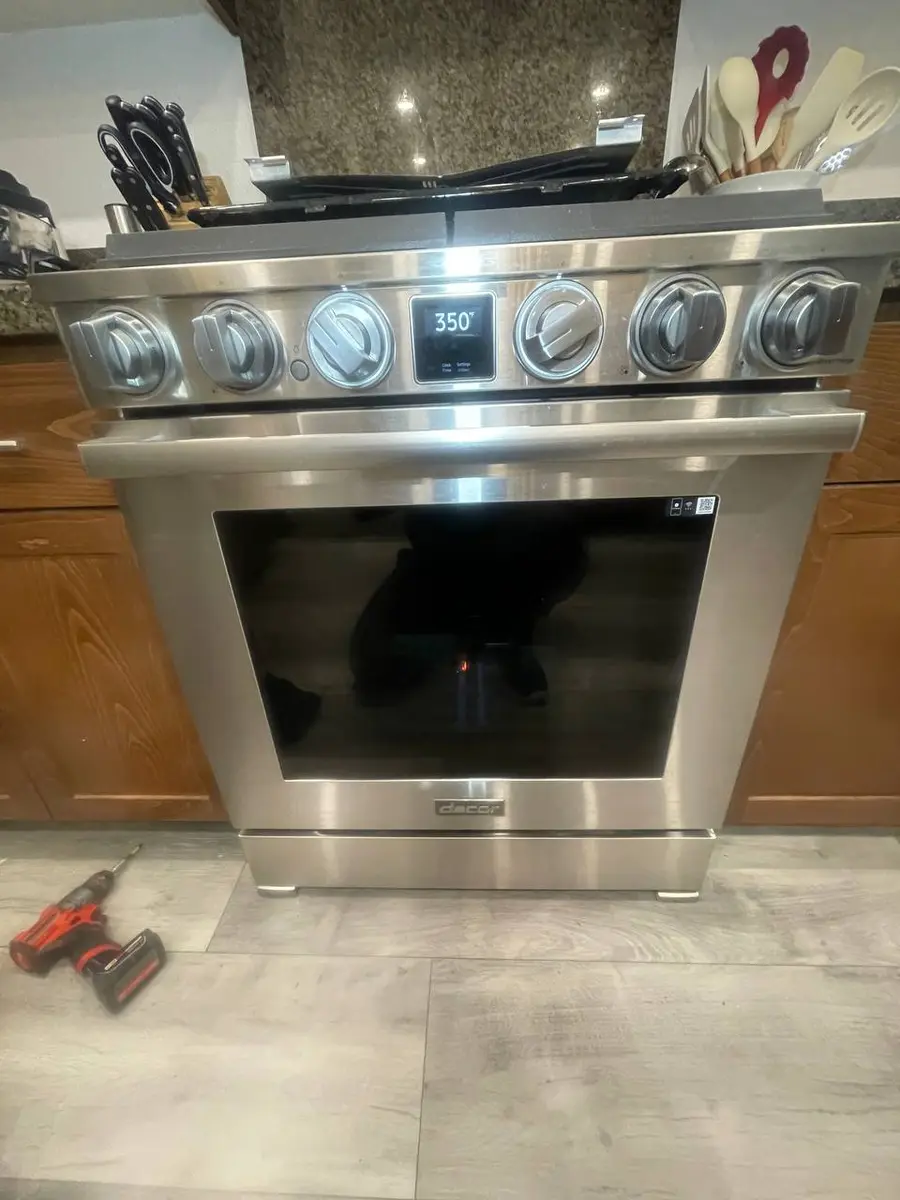
What is the Sub-Zero & Wolf Oven/Range F4 error?#
F4 on a Wolf oven is the mirror image of an open-sensor fault: it means the temperature sensor is reading shorted — the control sees near-zero resistance, as if the cavity were impossibly hot, so it refuses to heat or cycles erratically. The oven is effectively out of service, and the first thing a technician does is measure the RTD sensor's resistance at the board to confirm the short.
F4 on a Sub-Zero & Wolf Oven/Range: likely causes and repair cost#
On a Sub-Zero & Wolf Oven/Range, the F4 code signals: temperature sensor problem.
| Likely cause | Typical likelihood |
|---|---|
| Shorted temperature sensor | Most common |
| Wiring fault | Common |
| Sensor connector issue | Less common |
Typical professional repair: $250–$500 · Difficulty: moderate · usually a technician job
Symptoms that often accompany F4: Oven overheats rapidly; Temperature reading jumps erratically; Display shows very high temperature at startup; Oven cycles on and off rapidly
Technician diagnostic sequence for F4:
- Measure RTD sensor resistance at the board connector — a shorted sensor reads near 0 ohms instead of the normal ~1100 ohms
- Disconnect the sensor and re-measure at the sensor plug; if the sensor tests normal, the wiring has a short
- Inspect the sensor probe inside the oven cavity — physical damage from oven racks or cleaning can short the element
- Check for moisture ingress at the sensor connector — steam from cooking can cause intermittent shorts
Parts a technician may check or replace: RTD Temperature Sensor; Sensor Connector Assembly
Field note: F4 (shorted sensor) vs F3 (open sensor): F4 means the board sees near-zero resistance. If the sensor reads correct at the probe but shorted at the board, look for a pinched wire in the harness.
Do You Have the Right Tools?
Combustion analyzer ($300), igniter tester ($120), temperature calibrator ($150), and gas pressure manometer. Our technician arrives with $3,000+ in professional tools — your diagnostic is free.
Licensed & Insured · 90-Day Warranty · Same-Day Service
How to troubleshoot the F4 error yourself#
Owner options for F4 are limited to a reset and observation. Cut power at the breaker for a minute and restore it in case the short is an intermittent connector issue, then watch how the oven behaves. If the temperature reading jumps erratically or the display shows an impossibly high number at startup, that is the shorted-sensor signature. What you cannot do is diagnose the short yourself — as the table above explains, distinguishing a shorted sensor from a pinched or wet wire requires measuring at the board and again at the sensor plug, and inspecting the probe in the cavity for physical damage. That is technician work around high-temperature wiring. If a reset does not clear F4, leave it and call for the sensor-and-wiring check.
Is the Sub-Zero & Wolf Oven/Range F4 error worth fixing?#
F4 is worth fixing without hesitation. The table above puts the professional repair at $250 to $500 — the same affordable tier as the open-sensor fault, because a shorted RTD sensor and its connector are cheap parts. Against a several-thousand-dollar Wolf oven, replacing the range over a shorted sensor makes no sense at all. I fix these on any age of oven, because a shorted sensor is an isolated fault that tells you nothing bad about the elements or control board. There is no F4-driven case for replacement.
Appliance Repair Technician · 11 years experience
Experienced technician with 11 years specializing in Frigidaire and Electrolux refrigerator and dryer repair with a focus on safety.