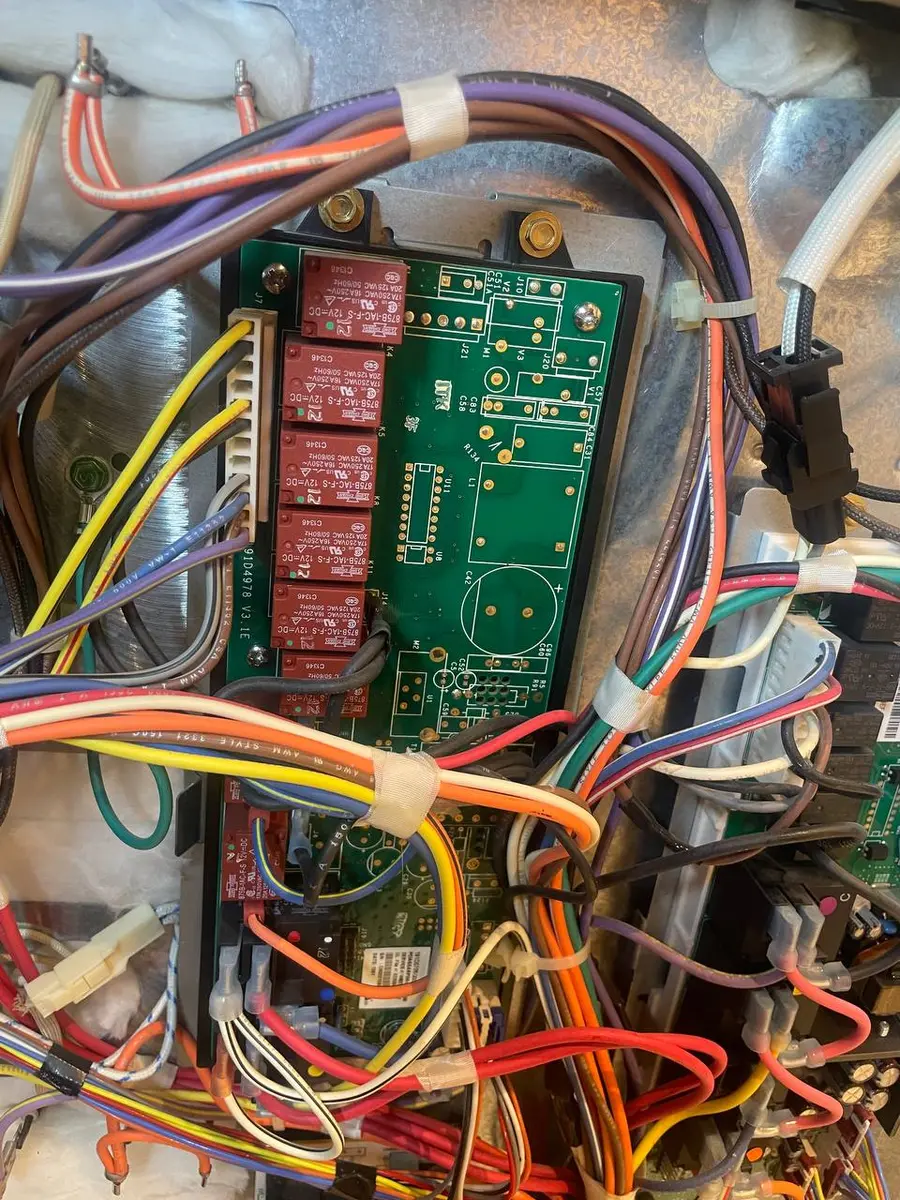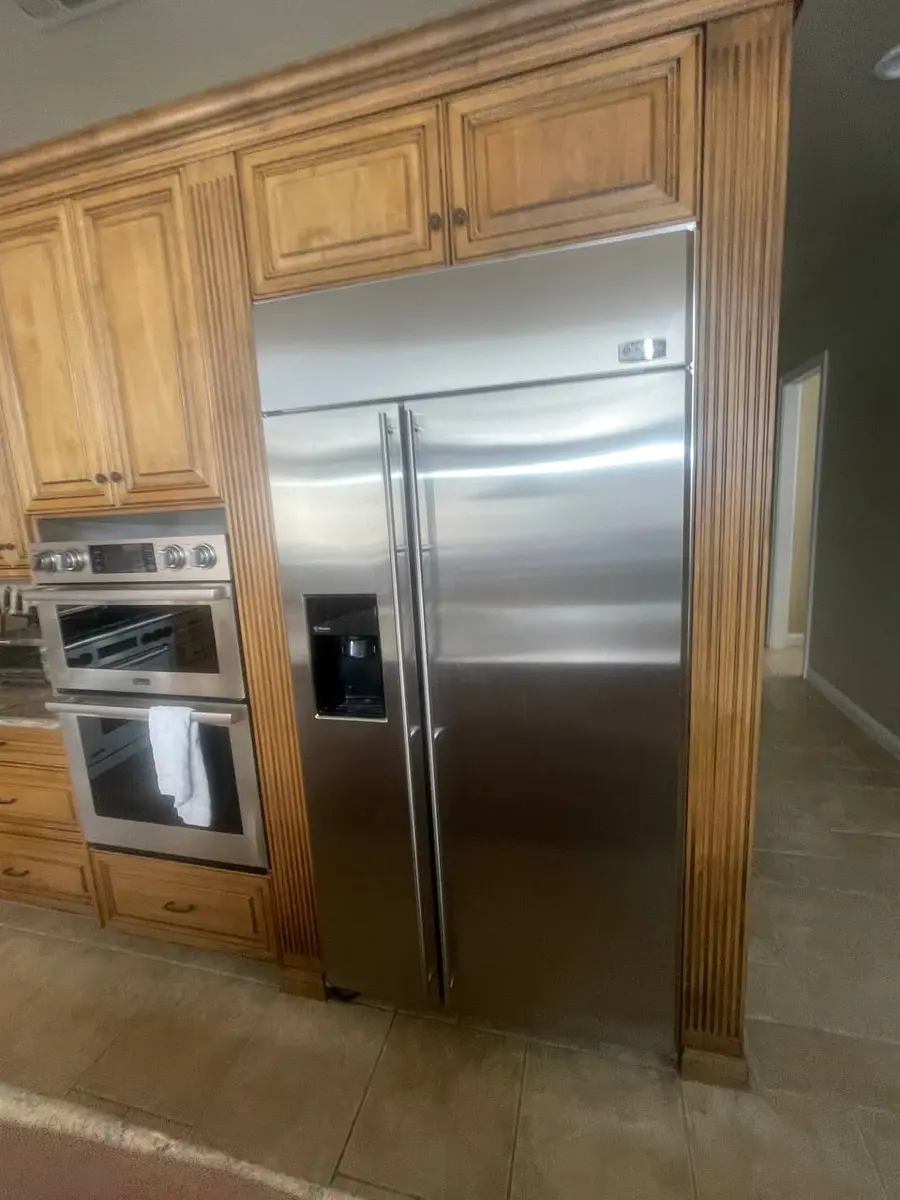
A burning smell from a Maytag refrigerator almost always traces to one subsystem — usually something electrical overheating at the rear machine compartment, occasionally a part inside the cabinet. Where the smell comes from is the fastest clue: rear points at the compressor and fans, interior points at the defrost heater or a stuck light. This guide ranks the causes.
Do this first#
If the smell is strong, continuous, or comes with visible smoke, unplug the refrigerator immediately and don't try to diagnose it — call for service. If it's faint or intermittent, note whether it comes from the rear machine compartment or the interior, and check whether it lines up with the compressor cycling on, then disconnect power before inspecting.
Do You Have the Right Tools?
Refrigerant gauges ($200+), vacuum pump ($250), leak detector ($150), and EPA-certified recovery equipment. Our technician arrives with $3,000+ in professional tools — your diagnostic is free.
Licensed & Insured · 90-Day Warranty · Same-Day Service
The likely culprit#
Most likely: a compressor start relay burnout. The start relay plugs onto the compressor terminals and gives it the current boost to start; when it fails, the contacts arc, overheat, and melt the relay's plastic housing, giving off an acrid electrical smell at the rear. If the relay is intact, an overheating condenser fan motor is the next rear-compartment suspect.
Safety first#
If the burning smell is strong, continuous, or accompanied by visible smoke, unplug the refrigerator immediately — do not attempt diagnosis.
Seek immediate service if the breaker trips with the smell, or if the smell persists after the unit has been unplugged for 30 minutes.
Safety First — Know the Risks
Refrigerant (R-134a/R-600a) requires EPA certification to handle. Improper discharge is a federal violation and health hazard. Our techs are licensed and insured — let them handle the risk.
Licensed & Insured · 90-Day Warranty · Same-Day Service
Ranked causes at a glance#
| Likely cause | How common | What you'll notice / what to check |
|---|---|---|
| Compressor start relay burnout | 25% of cases | An acrid electrical smell at the rear; a melted relay on the compressor terminals. |
| Condenser fan motor overheating | 20% of cases | A hot-metal smell from the rear as worn bearings make the motor draw excess current. |
| Defrost heater overrun or wiring fault | 18% of cases | A smell from the freezer side; a heater running past its cutoff at 120V. |
| Evaporator fan motor burnout | 15% of cases | A burning smell from inside the freezer with a loud hum from a corroded motor. |
| Compressor thermal overload cycling | 12% of cases | Repeated tripping and resetting of the overload getting hot at the compressor. |
| Interior light staying on | 10% of cases | A burning-plastic smell inside from a stuck door switch leaving the bulb on. |
Working through each cause#
1. Compressor start relay burnout (25% of cases)#
The start relay clips onto the compressor terminals and supplies the boost to start the motor, and when it fails it arcs internally — the contacts overheat and melt the plastic housing, producing a distinctive acrid electrical smell from the machine compartment. Unplug the fridge, pull the rear access panel, and inspect the relay for melting or scorching. A common Maytag replacement here is part WPW10197428, and it's an inexpensive fix caught early.
2. Condenser fan motor overheating (20% of cases)#
The condenser fan runs whenever the compressor runs, and as its bearings wear the motor draws excess current to overcome the drag, overheating the windings and giving off a hot-metal or burning-wire smell from the rear. Left alone it eventually seizes. Unplug the fridge and spin the fan by hand — drag or a burnt smell confirms it — and replace the motor.
3. Defrost heater overrun or wiring fault (18% of cases)#
The defrost heater runs inside the freezer evaporator area at 120V, and the defrost thermostat should cut power when the coil warms to about 50 degrees. If the thermostat sticks closed, the heater runs on and overheats the area, melting plastic or scorching wiring and producing a smell from the freezer side. Check the defrost termination thermostat along with the heater and its wiring.
4. Evaporator fan motor burnout (15% of cases)#
The evaporator fan sits in the freezer and is exposed to moisture and ice during defrost, and over time moisture can corrode its windings or bearings. A failing motor gives off a burning smell that seems to come from inside the freezer, often with a loud hum. Clear any ice, check whether the fan turns freely, and replace a corroded or seized motor.
5. Compressor thermal overload cycling (12% of cases)#
The compressor's own overload protector can produce a burning smell when it repeatedly trips and resets, which happens when the motor draws excess current — often from a failing start relay, dirty condenser coils, or an internal fault. The protector gets very hot during this cycling. If the smell comes with the compressor clicking on and off, clean the coils and check the relay before condemning the compressor.
6. Interior light staying on (10% of cases)#
Newer Maytag BrightSeries LED lights barely warm, but older models with an incandescent bulb (typically 40W) can overheat if the door switch fails and the light stays on with the door closed. The bulb heats the plastic housing and eventually produces a burning-plastic smell from inside the cabinet. Check that the light actually goes out when the door closes, and replace a failed door switch.
The Real Cost of DIY
Average DIY attempt: $150-400 in tools you may use once, plus the risk of further damage. Our diagnostic visit costs $0 — we find the problem and give you an honest quote.
Licensed & Insured · 90-Day Warranty · Same-Day Service
The short version#
- Start relay burnout — 25%; an acrid smell at the rear, a melted relay (WPW10197428).
- Condenser fan — 20%; a hot-metal smell, worn bearings drawing current.
- Defrost heater overrun — 18%; a freezer-side smell, a stuck thermostat at 120V.
- Evaporator fan — 15%; burning from inside the freezer with a hum.
- Compressor overload cycling — 12%; a hot overload tripping and resetting.
- Light staying on — 10%; a stuck door switch leaving a 40W bulb on.
What the repair usually involves#
A burning-smell repair uses the smell's location — rear machine compartment or interior — to point at the relay, fans, heater, or light, then confirms with the fridge unplugged and replaces the overheating part. Because several of these are live electrical faults that can progress, they're diagnosed promptly, and the unit is watched after the fix to confirm the smell is gone.
Don't Void Your Warranty
Opening your appliance yourself may void the manufacturer warranty. Our repair comes with a 90-day guarantee, and we document everything for warranty compliance.
Licensed & Insured · 90-Day Warranty · Same-Day Service
When to call a professional#
Call a technician right away if the smell is strong, persistent, or comes with smoke or a tripped breaker, if it traces to the compressor relay, a fan motor, or the defrost heater, or if you're unsure of the source. Keep the fridge unplugged until it's diagnosed. The cost depends on whether it's a relay, a fan, or the heater plus labor, and a tech can confirm first.
Smell something burning? Book an EasyBear technician — we service Maytag refrigerators including MFI and MRT models and diagnose electrical faults safely.
Lead Appliance Repair Technician · 12 years experience
Experienced technician with 12 years specializing in washing machine and dryer repairs across all major brands.