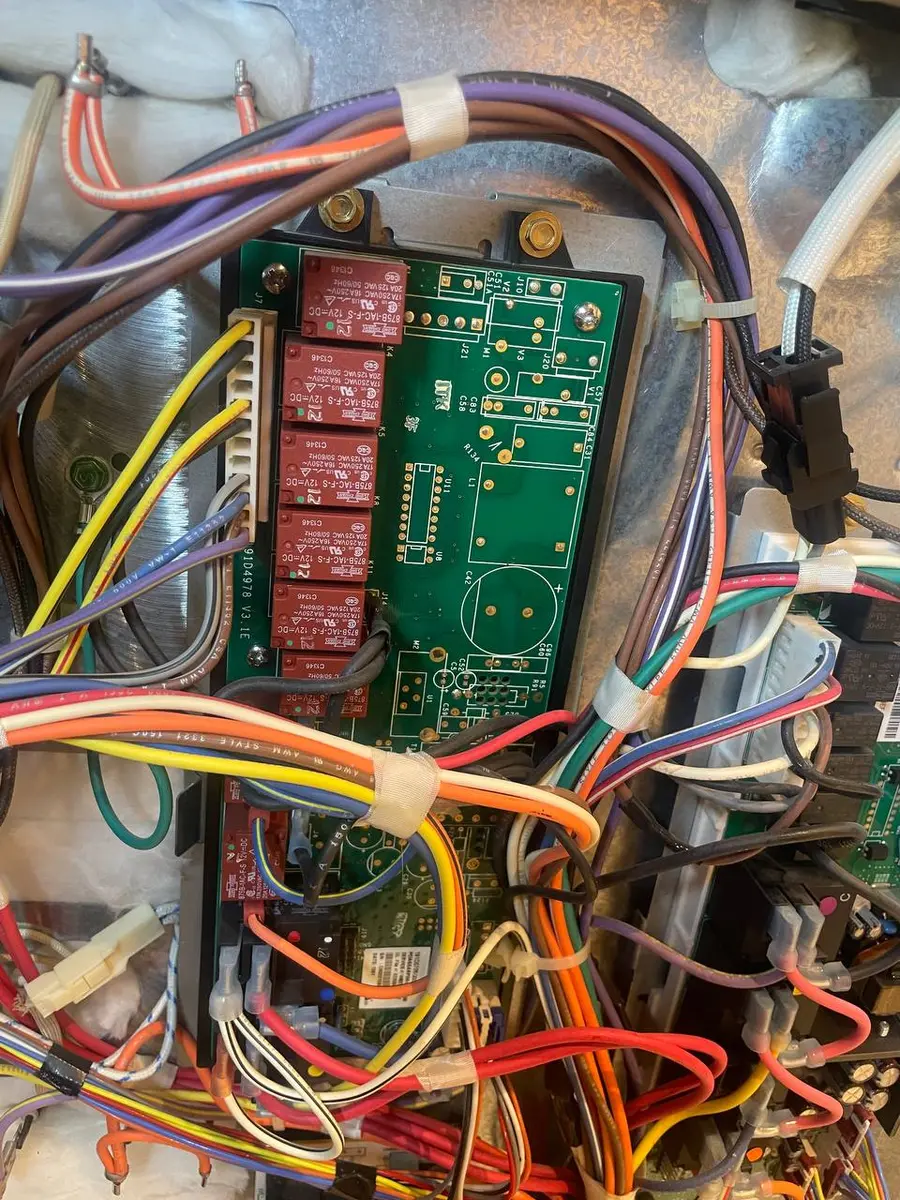
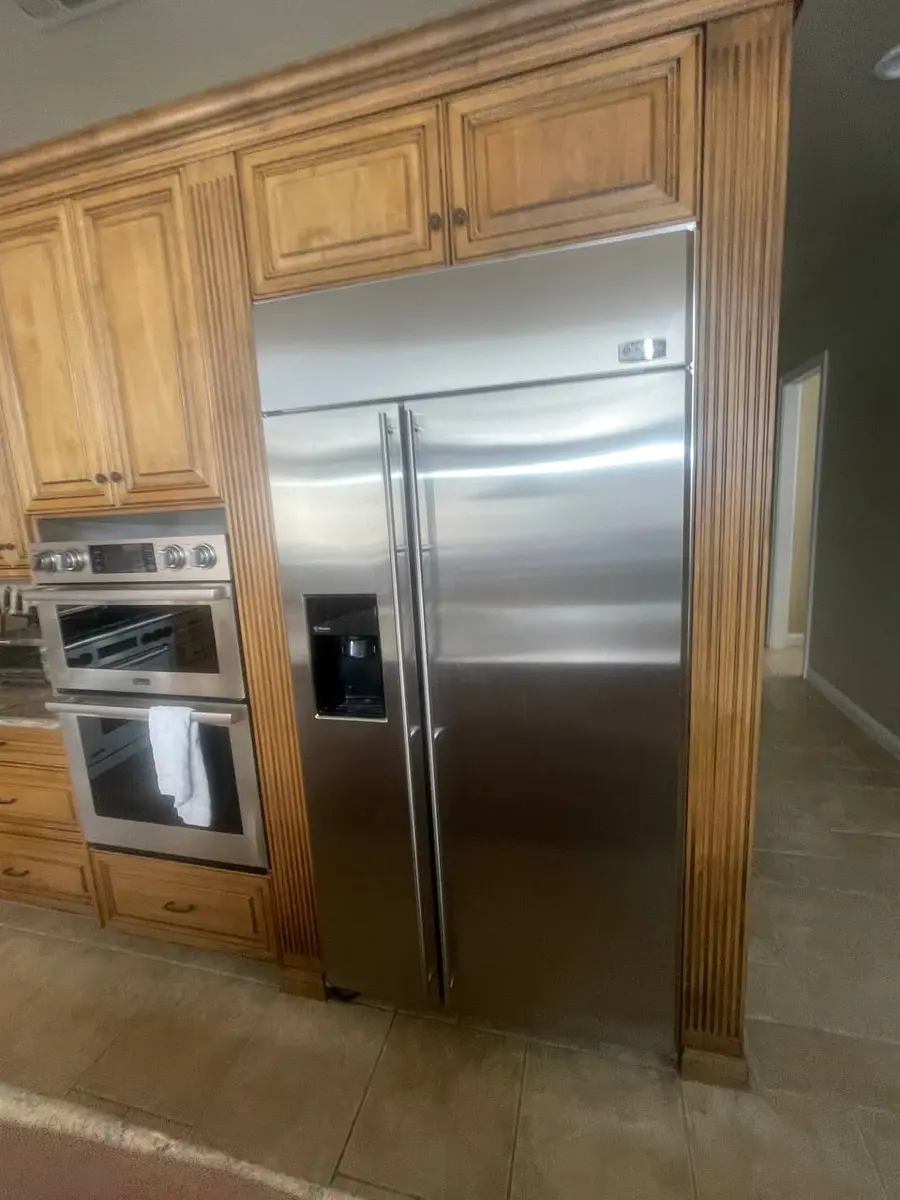
KitchenAid refrigerators sit at the premium end of the Whirlpool Corporation lineup, featuring advanced cooling systems, built-in designs, and finishes that command prices from $1,500 to $10,000. Models like the KRFC704FPS (counter-depth French door), KRMF706ESS (multi-door), and KBSD608ESS (built-in side-by-side) are found in high-end kitchens throughout California. Despite their build quality, these refrigerators develop specific issues that owners should recognize early.
Here are the most common KitchenAid refrigerator problems and how to address them.
Not Cooling Properly#
The Problem: The refrigerator compartment is warmer than the set temperature while the freezer may or may not be affected. Food is not staying cold enough.
Common Causes:
- Dirty condenser coils reducing heat dissipation (the most frequent cause on KRFC and KRMF models)
- Failed evaporator fan motor preventing cold air circulation
- Damper control stuck closed, blocking airflow from freezer to fridge
- Condenser fan motor failure (on models with rear-mounted condensers)
- Sealed system issue (compressor or refrigerant leak, less common)
How to Fix It:
- Pull the refrigerator away from the wall and locate the condenser coils. On most KitchenAid models, they are either behind the rear panel or beneath the unit behind the kick plate
- Vacuum the coils thoroughly with a brush attachment. Pet hair and kitchen grease are the primary culprits
- Open the freezer and listen for the evaporator fan. It should be running whenever the compressor is on. If it is silent, the fan motor needs replacement
- Check the air damper between the freezer and refrigerator compartments. It should open and close freely. A stuck-closed damper starves the fridge of cold air
- Set the fridge to 37 degrees F and freezer to 0 degrees F. Wait 24 hours and recheck temperatures
Estimated Repair Cost: $0 for coil cleaning; $150-$250 for fan motor; $120-$200 for damper control.
Do You Have the Right Tools?
Refrigerant gauges ($200+), vacuum pump ($250), leak detector ($150), and EPA-certified recovery equipment. Our technician arrives with $3,000+ in professional tools — your diagnostic is free.
Licensed & Insured · 90-Day Warranty · Same-Day Service
Ice Maker Not Working#
The Problem: The ice maker stops producing ice entirely, produces undersized or hollow cubes, or makes ice too slowly.
Common Causes:
- Water inlet valve not providing adequate flow (clogged screen or failed valve)
- Water filter overdue for replacement (flow restriction)
- Ice maker module failure (motor or ejector arm)
- Freezer temperature above 0 degrees F (too warm for proper ice production)
- Ice fill tube frozen over
How to Fix It:
- Check the water filter. KitchenAid recommends replacement every 6 months. A clogged filter dramatically reduces water flow to the ice maker
- Locate the water supply valve behind the refrigerator and confirm it is fully open
- Set the freezer to 0 degrees F or lower. The ice maker needs consistent freezing temperatures
- Inspect the fill tube at the back of the freezer for ice blockage. A frozen fill tube can be thawed with a hair dryer on low heat
- If the ice maker has power and water but still does not cycle, the ice maker module itself likely needs replacement
Estimated Repair Cost: varies by model and region for water filter; varies by model and region for inlet valve; varies by model and region for ice maker assembly.
Water Leaking on the Floor#
The Problem: Water appears on the floor in front of, behind, or underneath the refrigerator. The leak may be intermittent or continuous.
Common Causes:
- Clogged defrost drain (the most common leak source)
- Cracked or disconnected water line to ice maker
- Damaged water filter housing or seal
- Condensation from a door gasket that does not seal properly
- Drain pan overflow (rare, indicates excessive defrost water)
How to Fix It:
- Check the defrost drain first. On KitchenAid French door models, the drain is at the back of the freezer floor. It frequently clogs with ice or debris
- Pour a cup of warm water into the defrost drain to check flow. If it does not drain, use a turkey baster with warm water to clear the ice dam
- Inspect the water supply line connections at the back of the fridge. Look for drips or moisture at the compression fittings
- Check the water filter for proper seating. A filter that is not fully seated will leak from the filter housing
- Examine door gaskets for tears or areas that allow warm air infiltration, which causes condensation
Estimated Repair Cost: $0 for drain clearing; $80-$150 for supply line repair; $60-$120 for gasket replacement.
Safety First — Know the Risks
Refrigerant (R-134a/R-600a) requires EPA certification to handle. Improper discharge is a federal violation and health hazard. Our techs are licensed and insured — let them handle the risk.
Licensed & Insured · 90-Day Warranty · Same-Day Service
Noisy Operation#
The Problem: The refrigerator produces buzzing, clicking, grinding, or rattling sounds that were not present when new.
Common Causes:
- Condenser fan hitting debris or ice (buzzing/rattling from the rear)
- Evaporator fan motor bearings wearing out (humming from the freezer)
- Compressor aging (clicking on startup or rhythmic knocking)
- Water valve vibration during ice maker fill (brief buzzing)
- Refrigerator not level (vibration against floor or cabinets)
How to Fix It:
- Identify where the noise originates. Back of the fridge usually means condenser fan or compressor. Inside the freezer means evaporator fan
- Check that the refrigerator is level by placing a level on top. Adjust the leveling legs until stable
- For condenser fan noise, clean the fan blades and check for any objects that may have fallen near the fan
- Evaporator fan noise that increases over time typically means the fan motor bearings are failing and the motor needs replacement
- Brief buzzing during ice maker fill cycles is normal
Estimated Repair Cost: $0 for leveling; $100-$200 for fan motors; $300-$500+ for compressor.
Temperature Fluctuations#
The Problem: The refrigerator or freezer temperature swings widely, causing food to partially thaw and refreeze or drinks to freeze in the refrigerator compartment.
Common Causes:
- Defrost system cycling too frequently or not enough
- Main control board malfunction
- Temperature sensor (thermistor) reading incorrectly
- Door opened frequently or not closing fully
- Overpacking blocking airflow vents
How to Fix It:
- Verify that internal vents are not blocked by food containers. Airflow between compartments needs clear paths
- Check that doors close completely and seals are intact
- Place a thermometer inside each compartment to monitor actual temperatures versus display readings
- If actual temperatures differ significantly from display, the thermistor may need replacement
- Control board issues typically manifest as random temperature swings with no other explanation
Estimated Repair Cost: varies by model and region for thermistor; varies by model and region for control board.
The Real Cost of DIY
Average DIY attempt: $150-400 in tools you may use once, plus the risk of further damage. Our diagnostic visit costs $0 — we find the problem and give you an honest quote.
Licensed & Insured · 90-Day Warranty · Same-Day Service
When to Call a Professional#
Condenser coil cleaning and defrost drain clearing are excellent DIY maintenance tasks. However, sealed system repairs (compressor, refrigerant), control board replacement, and ice maker assembly work benefit from professional diagnosis. KitchenAid built-in models (KBSD, KBFN series) are particularly complex to service due to their integration with cabinetry.
EasyBear technicians work on all KitchenAid refrigerator models, including built-in units. We diagnose problems on-site at no charge.
Frequently Asked Questions#
Q: How long should a KitchenAid refrigerator last? A: KitchenAid refrigerators are built for 12-18 years of service. Built-in models often last longer due to their premium construction. Regular maintenance, especially coil cleaning and filter changes, significantly extends lifespan.
Q: Why is my KitchenAid refrigerator running constantly? A: Constant running is almost always caused by dirty condenser coils, a failed door gasket, or a thermostat issue. The compressor runs nonstop because it cannot reach the target temperature. Start with coil cleaning, as this resolves the issue in most cases.
Q: My KitchenAid fridge display shows an error code. What should I do? A: Common codes include PO (power outage, press any button to clear) and a door ajar icon (check all doors including ice drawer). If the display shows a persistent fault code, note the exact code and contact a technician.
Q: Are KitchenAid replacement parts expensive? A: Parts are moderately priced. Water filters run varies by model and region fan motors varies by model and region and ice maker assemblies varies by model and region. The premium price of the appliance does not always translate to premium part prices, as many components are shared with the broader Whirlpool platform.
Senior Appliance Repair Technician · 15 years experience
EPA-certified technician with 15 years of experience specializing in refrigerator and cooling system repairs.