Quick Answer: Why Your KitchenAid Freezer Runs Too Cold#
Most likely: the freezer thermistor has drifted out of calibration and is reporting a warmer temperature than the compartment actually holds, so the control board keeps commanding cooling and the freezer overshoots well past its 0°F target — sometimes to -20°F or colder, hard enough to crack packaging. KitchenAid's Preserva and ExtendFresh Plus systems hold tight tolerances, which is exactly why an overcorrection freezes so aggressively. After the sensor, the next suspects are a setpoint quietly nudged too low, a damper stuck open, or a compressor relay welded closed.
Likely Causes at a Glance#
| Cause | Likelihood | What to check |
|---|---|---|
| Freezer thermistor reading warm | 40% | board commands nonstop cooling; sensor value disagrees with a real thermometer |
| Temperature setting too low | 25% | display set below 0°F from an accidental press or a post-outage reset |
| Damper stuck open | 20% | both freezer and fresh-food sections run too cold together |
| Compressor relay welded closed | 15% | compressor never cycles off; freezer drops far below setpoint |
Do You Have the Right Tools?
Refrigerant gauges ($200+), vacuum pump ($250), leak detector ($150), and EPA-certified recovery equipment. Our technician arrives with $3,000+ in professional tools — your diagnostic is free.
Licensed & Insured · 90-Day Warranty · Same-Day Service
Walking Through the Diagnosis#
Confirm the setting first, because it is the easiest miss. KitchenAid recommends 0°F, with a normal band of about -2°F to 2°F and brief excursions during defrost; a panel bumped to -5°F genuinely holds -5°F on these precise systems, and some models reset to unfamiliar defaults after a power outage. Verify the display reads 0°F, or read the setpoint through diagnostic mode if the panel is dark.
If the setting is right, check the sensor against reality. Put an accurate thermometer in the freezer for a couple of hours, then enter diagnostic mode by holding Temperature Up and Down together for three seconds and compare the board's sensor value to your reading; a gap of more than about 5°F means the NTC thermistor has drifted and is reporting warm, driving the board to overcool. Replacing it is a matter of unplugging the fridge, unclipping the sensor from the evaporator housing or sidewall, and seating the new one in the identical spot, since position affects accuracy.
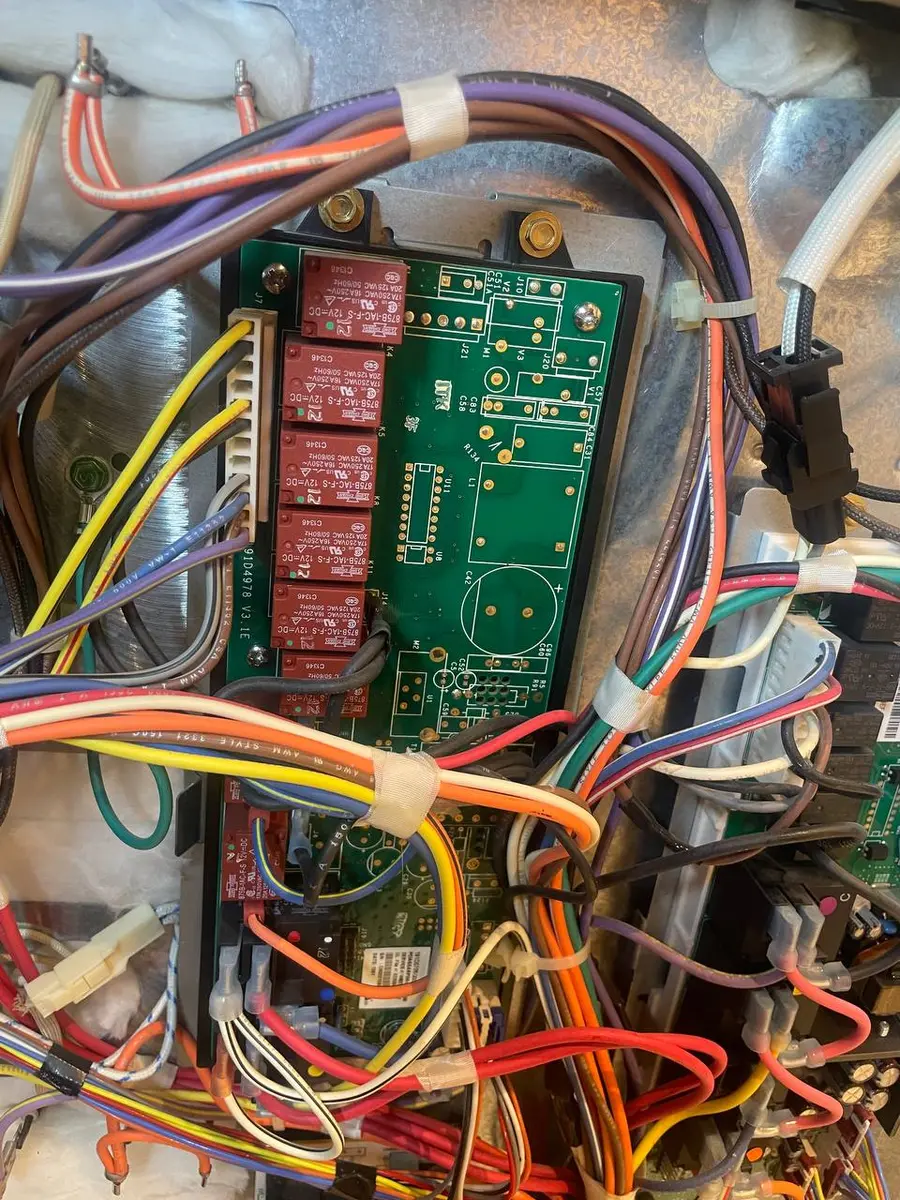
If the thermistor reads true and the compressor still never rests, look at airflow and the board. On single-evaporator models a damper stuck open dumps freezer air into the fresh-food side, so if both compartments run too cold at once, suspect the damper rather than the sensor. If only the freezer overcools while everything else checks out — correct setpoint, accurate sensor — and the compressor runs continuously, the compressor relay on the control board has likely welded closed, feeding power regardless of temperature; that is a board-level failure and the board is replaced.
Repair or Replace? The Short Version#
Three of the four causes are cheap or free — a setting correction, a thermistor, or freeing a damper — and clearly worth doing on a KitchenAid that is otherwise cooling well. Only the control board, for a welded relay, approaches real cost, and it still stays under the price of a new refrigerator. If the setpoint is right and the sensor reads accurately yet the freezer keeps dropping and the compressor never stops, have the relay and board checked before frozen packaging starts splitting — book a repair.
Safety First — Know the Risks
Refrigerant (R-134a/R-600a) requires EPA certification to handle. Improper discharge is a federal violation and health hazard. Our techs are licensed and insured — let them handle the risk.
Licensed & Insured · 90-Day Warranty · Same-Day Service
Frequently Asked Questions#
What temperature should a KitchenAid freezer hold?#
KitchenAid targets 0°F, with a normal operating band of roughly -2°F to 2°F and brief rises during defrost. If the compartment consistently reads below about -5°F, or items near the vents freeze hard enough to crack their packaging, the temperature regulation has failed.
How do I know if the freezer thermistor is bad?#
Leave an accurate thermometer in the freezer for a couple of hours, then hold Temperature Up and Down for three seconds to enter diagnostic mode and compare the board's sensor value to it. A difference over about 5°F means the NTC thermistor has drifted and is reading warm, which makes the board overcool.
Why is my freezer AND fresh-food section both too cold?#
Both compartments overcooling together points at a damper stuck open, which dumps freezer air into the fresh-food side. That is different from a thermistor fault, which typically overcools just the freezer, so checking both compartments helps separate the two.
The freezer keeps dropping and the compressor never shuts off — what is that?#
When the setpoint is correct and the sensor reads accurately but the compressor runs nonstop, the compressor relay on the control board has likely welded closed and is feeding power regardless of temperature. That is a board-level failure, so the control board is replaced.
Appliance Repair Technician · 11 years experience
Experienced technician with 11 years specializing in Frigidaire and Electrolux refrigerator and dryer repair with a focus on safety.