Quick Answer: Why Your KitchenAid Refrigerator Door Sweats#
Most likely: the anti-sweat heater built into the door frame has failed. KitchenAid runs low-wattage heaters around the frame to keep the exterior just above the dew point, and when that circuit breaks the stainless door — chilled from inside — drops below the dew point so moisture from kitchen air condenses on it. Before assuming a fault, though, rule out the environment: heavy cooking or humid weather can overwhelm even a working system. After the heater and humidity, a leaking gasket and an Energy Saver setting that quietly disables the heaters round out the usual causes.
Likely Causes at a Glance#
| Cause | Likelihood | What to check |
|---|---|---|
| Anti-sweat heater circuit failure | 35% | door-frame edges feel cold instead of slightly warm to the touch |
| High kitchen humidity | 30% | sweating only during cooking or humid spells; room above 60% RH |
| Door gasket leak | 20% | condensation concentrated along the gasket line, not the flat door |
| Energy Saver mode on | 10% | the setting dials the anti-sweat heaters down or off |
| PrintShield coating wear | 5% | droplets bead more visibly on a degraded finish |
Do You Have the Right Tools?
Refrigerant gauges ($200+), vacuum pump ($250), leak detector ($150), and EPA-certified recovery equipment. Our technician arrives with $3,000+ in professional tools — your diagnostic is free.
Licensed & Insured · 90-Day Warranty · Same-Day Service
Walking Through the Diagnosis#
Start by telling a fault from the weather. If the door sweats only while you are cooking or during humid stretches and dries out afterward, the refrigerator is probably fine — KitchenAid's anti-sweat system is built for typical indoor humidity of about 40 to 60% RH, and sustained levels above 70% will condense on the door regardless. Check the room with a hygrometer; above 60% raises the risk. Run the range hood, ventilate, and keep steaming pots away from the fridge before condemning any part.
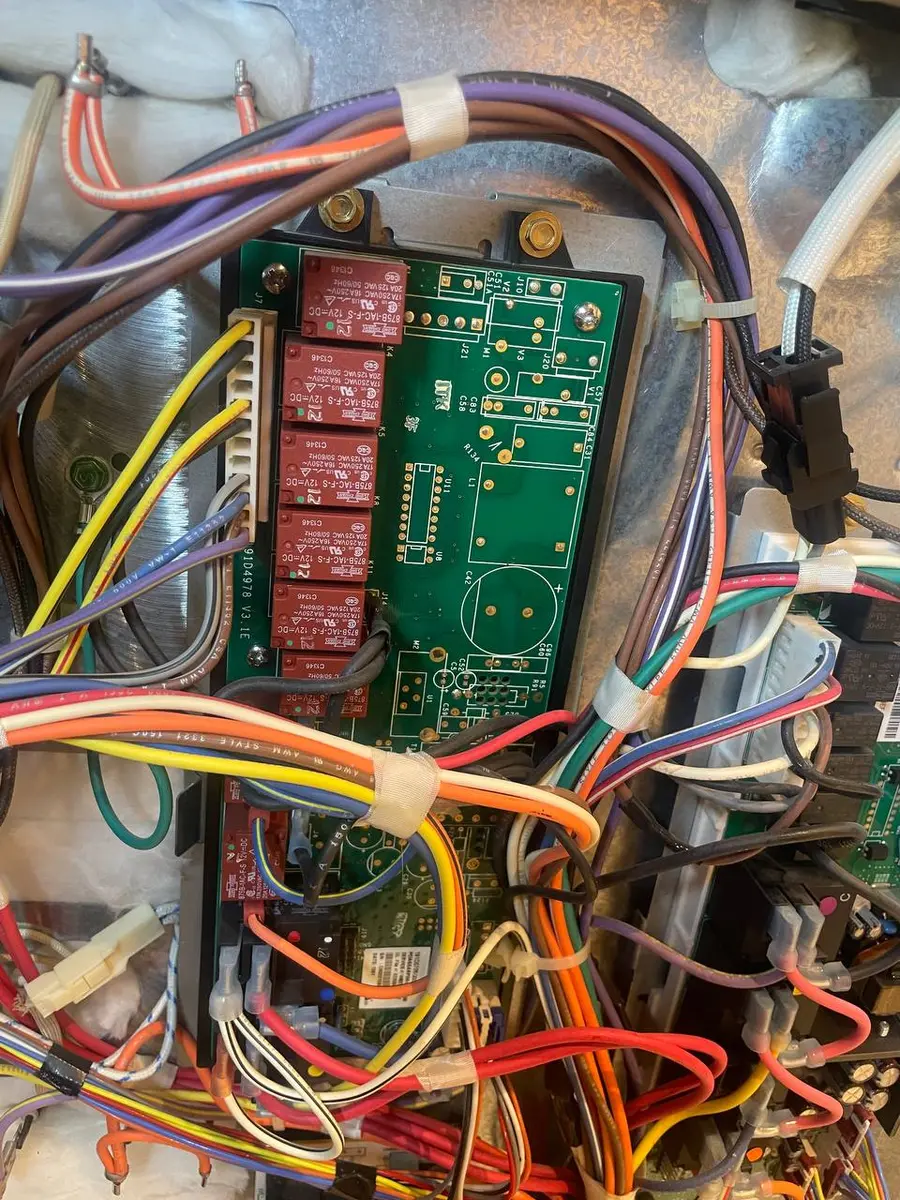
If it sweats in ordinary conditions, unplug the refrigerator and feel the door-frame edges where the gasket meets the body. On a working unit those edges are slightly warm because the anti-sweat heater runs there; if they feel cold or match the surrounding stainless, the heater element or the board relay that powers it has failed — the element can be metered for continuity, though replacement often means partial door disassembly. Read where the moisture sits, too: condensation spread across the flat door points at the heater or humidity, while moisture concentrated along the gasket line means a gasket leaking warm, humid air into the compartment. Finally, check the panel for Energy Saver — when it is on, KitchenAid reduces or disables those heaters to save power, so in a humid kitchen simply turning it off restores full heater operation. A degraded PrintShield finish does not cause sweating but makes the droplets more visible.
Repair or Replace? The Short Version#
Nothing here condemns the refrigerator. A humidity fix or an Energy Saver toggle costs nothing, a gasket is a straightforward part, and even an anti-sweat heater or its control board stays far under the price of a new fridge. The reason to act is cosmetic but real: standing condensation leaves hard-water spots that can etch the PrintShield coating over time, so wipe droplets promptly and use only approved stainless cleaner. If the frame edges are cold and the door sweats in a dry kitchen, have the heater circuit checked — book a repair.
Safety First — Know the Risks
Refrigerant (R-134a/R-600a) requires EPA certification to handle. Improper discharge is a federal violation and health hazard. Our techs are licensed and insured — let them handle the risk.
Licensed & Insured · 90-Day Warranty · Same-Day Service
Frequently Asked Questions#
Is a sweating refrigerator door always a fault?#
No. Condensation during high-humidity events — cooking, a running dishwasher, or humid weather — is normal, especially since KitchenAid's system targets about 40 to 60% RH and struggles above 70%. Persistent sweating in ordinary, drier conditions is what points to a failed anti-sweat heater or a gasket leak.
How do I know if the anti-sweat heater has failed?#
Unplug the fridge and run your hand along the door-frame edges where the gasket seals. On a working unit they feel slightly warm; if they are cold or match the surrounding stainless, the heater element or its control-board relay has failed and the frame is dropping below the dew point.
Why is the moisture only along the gasket line?#
Condensation concentrated along the gasket, rather than across the flat door, usually means the gasket is leaking warm, humid air into the compartment. That is different from anti-sweat heater failure, which produces broader condensation over the whole door surface.
Will turning up the temperature stop the sweating?#
Only marginally, and it is not recommended. A warmer interior slightly warms the door surface, but raising the setpoint compromises food safety. Fix the real cause — the heater, a gasket, an Energy Saver setting, or the room humidity — instead of trading cold storage for a drier door.
Appliance Repair Technician · 11 years experience
Experienced technician with 11 years specializing in Frigidaire and Electrolux refrigerator and dryer repair with a focus on safety.