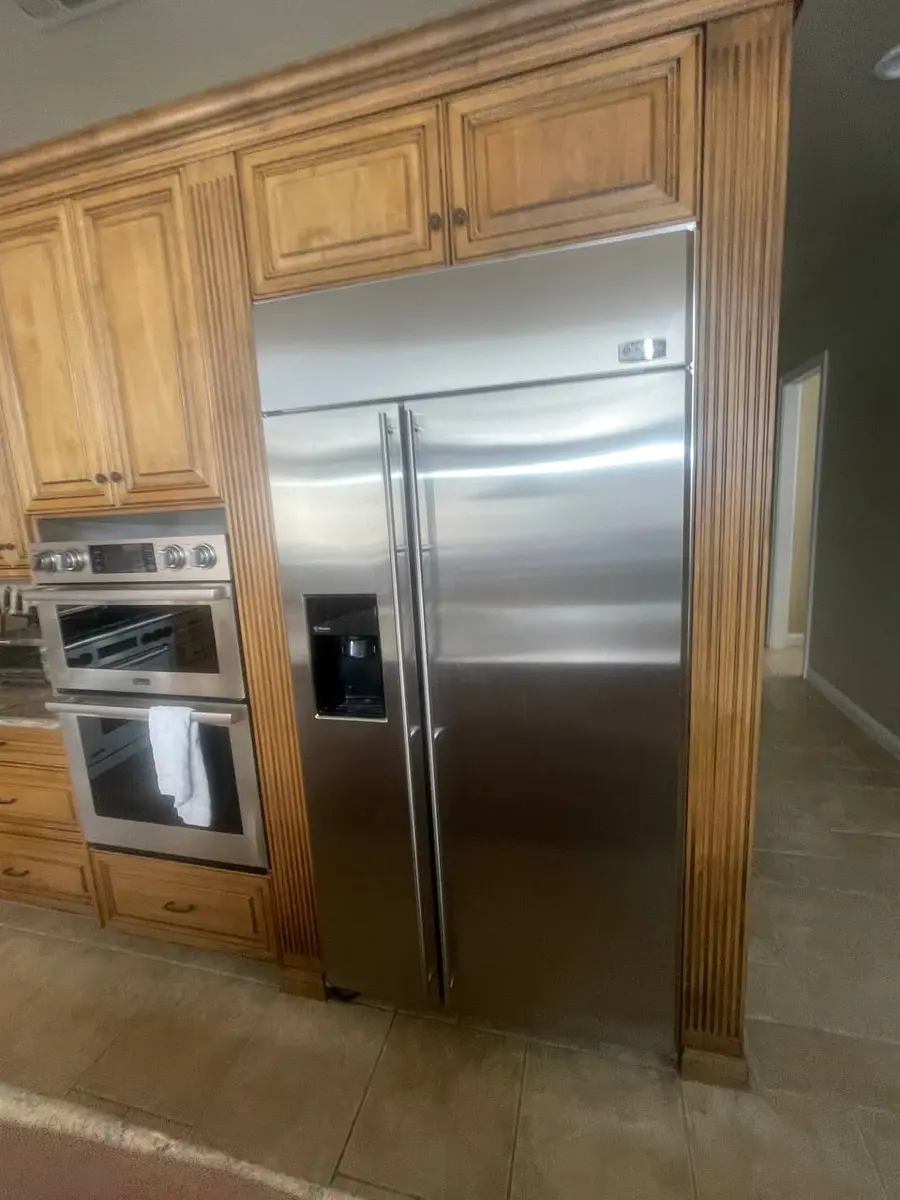
KitchenAid refrigerator owners frequently report cycle not completing as an issue — here is what causes it and how to address each root cause. Both scenarios indicate a system that is unable to achieve its designed endpoints, and the root causes differ significantly.
Quick Answer#
KitchenAid refrigerator owners frequently report cycle not completing as an issue — here is what causes it and how to address each root cause. Both scenarios indicate a system that is unable to achieve its designed endpoints, and the root causes differ significantly.
KitchenAid's Preserva Food Care System adds complexity because the dual independent cooling circuits each have their own cycle management. A cycle failure in one system does not necessarily affect the other — the freezer may complete cycles normally while the fresh-food section struggles, or vice versa.
Do You Have the Right Tools?
Refrigerant gauges ($200+), vacuum pump ($250), leak detector ($150), and EPA-certified recovery equipment. Our technician arrives with $3,000+ in professional tools — your diagnostic is free.
Licensed & Insured · 90-Day Warranty · Same-Day Service
How Do You Identify Which Cycle Is Failing?#
Cooling cycle not completing (compressor runs continuously):
- Interior temperatures remain above setpoint
- Compressor never cycles off (see runs-constantly guide for detailed diagnosis)
- Energy consumption increases noticeably
Defrost cycle not completing:
- Frost accumulates progressively behind the freezer rear panel
- Error code dF may appear on models with digital displays
- Cooling efficiency degrades over weeks as frost blocks airflow
Ice maker cycle not completing:
- Mold fills with water but cubes never eject
- Harvest motor stalls mid-cycle
- Only partial cubes form (incomplete freeze)
What Are the Most Common Causes?#
1. Defrost Cycle Incomplete — Heater or Thermostat (30% of cases)#
KitchenAid's adaptive defrost system initiates the defrost heater, which runs until the termination thermostat senses the evaporator has reached approximately 40F. If the thermostat fails prematurely (opens before the evaporator is fully defrosted), the cycle terminates early, leaving residual frost. Over multiple incomplete defrost cycles, frost accumulates until airflow is significantly restricted.
Across hundreds of Kitchenaid service calls, our technicians identify wear on the primary failure component as the primary culprit when diagnosing fix kitchenaid refrigerator cycle not completing.
Alternatively, the defrost heater may be weakening — producing insufficient heat to fully defrost the coils within the expected timeframe. The control board has a maximum defrost duration (typically 20-30 minutes), and if the heater cannot complete the job within that window, the board terminates the cycle to prevent overheating.
Diagnosis: Access the evaporator after a known defrost cycle time. If frost remains but is thinner at the top (where the termination thermostat sits) and thicker at the bottom, the cycle is starting but not completing — the thermostat is terminating too early or the heater is too weak.
DIY Difficulty: Moderate Parts (heater + thermostat set) Professional
Repair Steps:
- Unplug and access the evaporator assembly.
- Test both the heater (continuity) and thermostat (continuity at room temp).
- Even if both test okay on a meter, an aging heater with increased resistance draws less current and produces less heat. If the unit is over 8 years old, replace both as a preventive set.
- After replacement, manually defrost the remaining frost before reassembling.
2. Cooling Cycle Incomplete — Dirty Condenser (25% of cases)#
When condenser coils are dirty, the compressor cannot effectively reject heat from the refrigerant. It runs at reduced efficiency, and the cooling cycle takes dramatically longer to bring temperatures down — sometimes never reaching the target at all. On KitchenAid counter-depth models where the condenser is already space-constrained, even moderate dust buildup extends cycle times significantly.
Diagnosis: The compressor runs continuously or for extended periods (over 45 minutes per cycle when normal is 20-30 minutes). Both compartments feel cool but not at the set temperature.
DIY Difficulty: Easy Parts Professional
3. Ice Maker Harvest Cycle Stalling (20% of cases)#
The ice maker harvest cycle involves the ejector motor rotating blades to push frozen cubes out of the mold. If the motor weakens or ice has bonded too firmly to the mold (due to low freezer temperatures or mineral deposits), the harvest stalls mid-rotation. The motor draws current for its allotted time and then stops, leaving partially ejected cubes that freeze in place and block subsequent cycles.
KitchenAid's Professionally-Inspired ice system uses a slightly more powerful harvest motor than basic brands, but the principle is the same. The harvest thermostat must also properly warm the mold bottom to release cubes — if it fails, cubes stick.
Diagnosis: Open the freezer and inspect the ice maker. If cubes are partially ejected (sticking up at angles from the mold), the harvest is stalling. You may hear the motor strain briefly during harvest attempts.
DIY Difficulty: Moderate Parts (ice maker module) Professional
4. Compressor Short-Cycling (15% of cases)#
Short-cycling is when the compressor starts, runs briefly (1-5 minutes), then shuts off on overload — never completing a full cooling cycle. This differs from not starting at all (relay failure) in that the compressor does operate but cannot sustain operation. Causes include low refrigerant (causing rapid head pressure rise), overheating from poor ventilation, or a failing compressor motor with worn valves.
Diagnosis: Time the compressor run duration. Normal is 20-40 minutes of continuous operation before cycling off. If the compressor runs for less than 10 minutes and shuts off, then restarts after a 5-10 minute pause, it is short-cycling.
DIY Difficulty: Not DIY (requires professional refrigerant system diagnosis) Parts -500+ depending on cause Professional
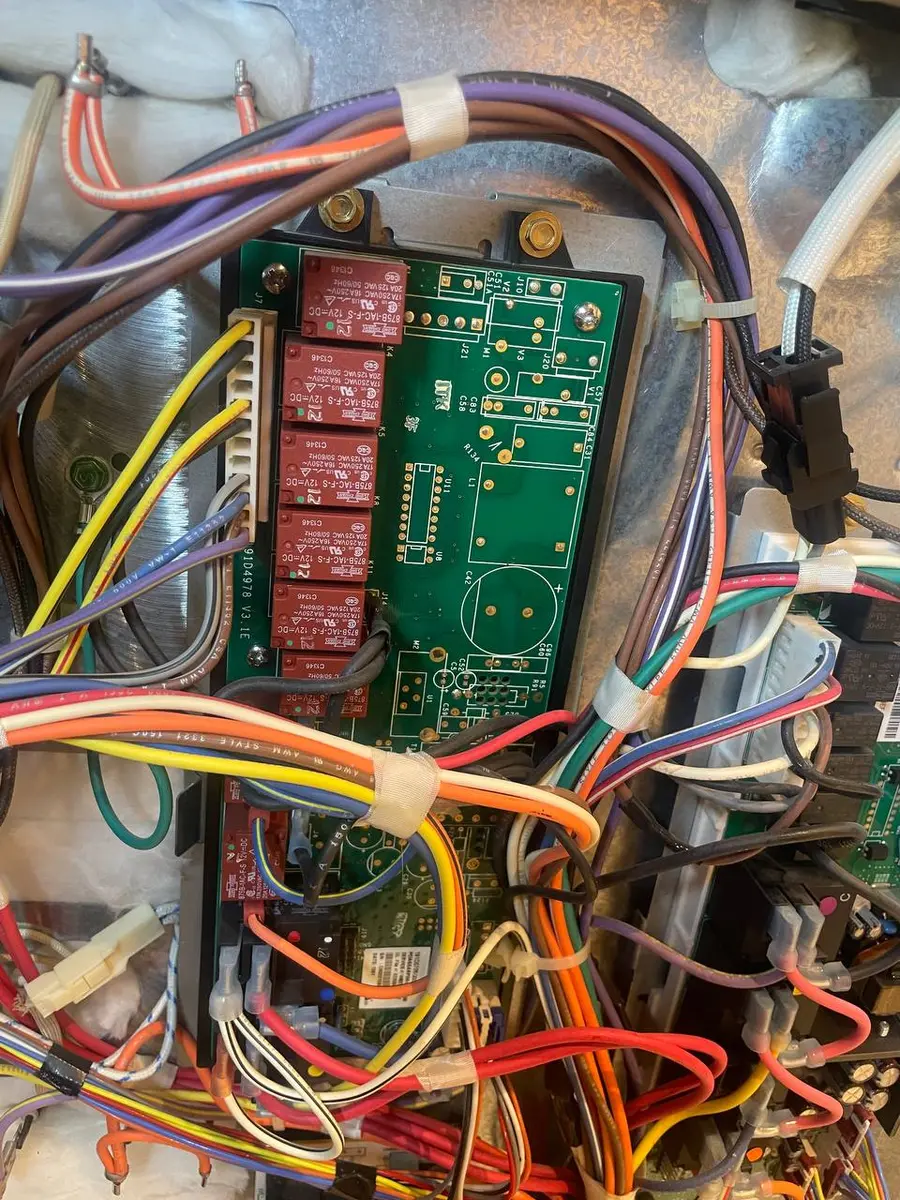
5. Control Board Timer/Relay Issue (10% of cases)#
The main control board manages all cycle timing — defrost duration, compressor cycle, fan operation. A partially failed board may initiate cycles correctly but terminate them prematurely due to a faulty relay or corrupted timer data. This is particularly common after power surges that damage specific board sections while leaving others functional.
Diagnosis: If multiple cycles seem to terminate prematurely (short compressor runs AND incomplete defrost AND erratic fan operation), the control board is the common point of failure.
DIY Difficulty: Difficult Parts Professional
Safety First — Know the Risks
Refrigerant (R-134a/R-600a) requires EPA certification to handle. Improper discharge is a federal violation and health hazard. Our techs are licensed and insured — let them handle the risk.
Licensed & Insured · 90-Day Warranty · Same-Day Service
What Is the Diagnostic Sequence?#
- Identify WHICH cycle is not completing — cooling, defrost, or ice maker.
- For cooling cycle: Check condenser coils, condenser fan, and door seals. Time the compressor run duration.
- For defrost cycle: Access the evaporator and assess frost pattern. Test heater and thermostat.
- For ice maker cycle: Inspect the mold for stuck cubes. Attempt manual harvest (test button).
- If multiple cycles are affected: Focus on the control board as the common element.
Should You DIY or Call a Professional?#
| Issue | DIY? | Parts Cost | Professional Cost |
|---|---|---|---|
| Defrost components | Moderate | ||
| Dirty condenser | Yes | ||
| Ice maker module | Moderate | ||
| Compressor short-cycling | No | -500+ | |
| Control board | Difficult |
The Real Cost of DIY
Average DIY attempt: $150-400 in tools you may use once, plus the risk of further damage. Our diagnostic visit costs $0 — we find the problem and give you an honest quote.
Licensed & Insured · 90-Day Warranty · Same-Day Service
How Can You Prevent This?#
- Clean condenser coils every 6 months to maintain optimal cooling cycle efficiency.
- Listen for cycle patterns — learn your KitchenAid's normal sounds so you recognize when something changes.
- Empty the ice bin regularly to prevent old ice from jamming the harvest mechanism.
- Maintain stable power supply with surge protection to prevent board damage that affects cycle timing.
FAQ#
Q: My KitchenAid seems to run for hours without stopping — is the cycle just very long?
Normal cooling cycles run 20-40 minutes with 15-30 minute off-periods. If the compressor runs for more than an hour continuously, it has not completed the cycle. Check condenser coils and door seals first.
Q: The ice maker makes ice but the cubes are odd shapes — is the cycle completing?
Odd-shaped cubes (hollow, small, fused together) indicate incomplete freeze or harvest cycles. Check freezer temperature (must be 0F or below) and water fill volume (low pressure = underfilled molds = odd shapes).
Q: Can I force a defrost cycle to complete manually?
Yes — through KitchenAid's diagnostic mode (hold Temperature UP + DOWN for 3 seconds), you can initiate a forced defrost. This runs the heater until the thermostat terminates. If the forced cycle completes and the automatic does not, the board's timing is the issue.
Professional KitchenAid [refrigerator repair](/bay-area/services/refrigerator-repair) — diagnosis, parts, and fix in a single visit. [Sacramento](/sacramento/sacramento) and Bay Area coverage. Schedule a visit
Appliance Repair Technician · 11 years experience
Experienced technician with 11 years specializing in Frigidaire and Electrolux refrigerator and dryer repair with a focus on safety.