A burning smell from a KitchenAid refrigerator is one symptom you shouldn't sit on — most causes are an electrical component overheating, and a few can progress to smoke. If you smell burning plastic or see smoke, cut power first; then use this guide to find the source.
Do this first#
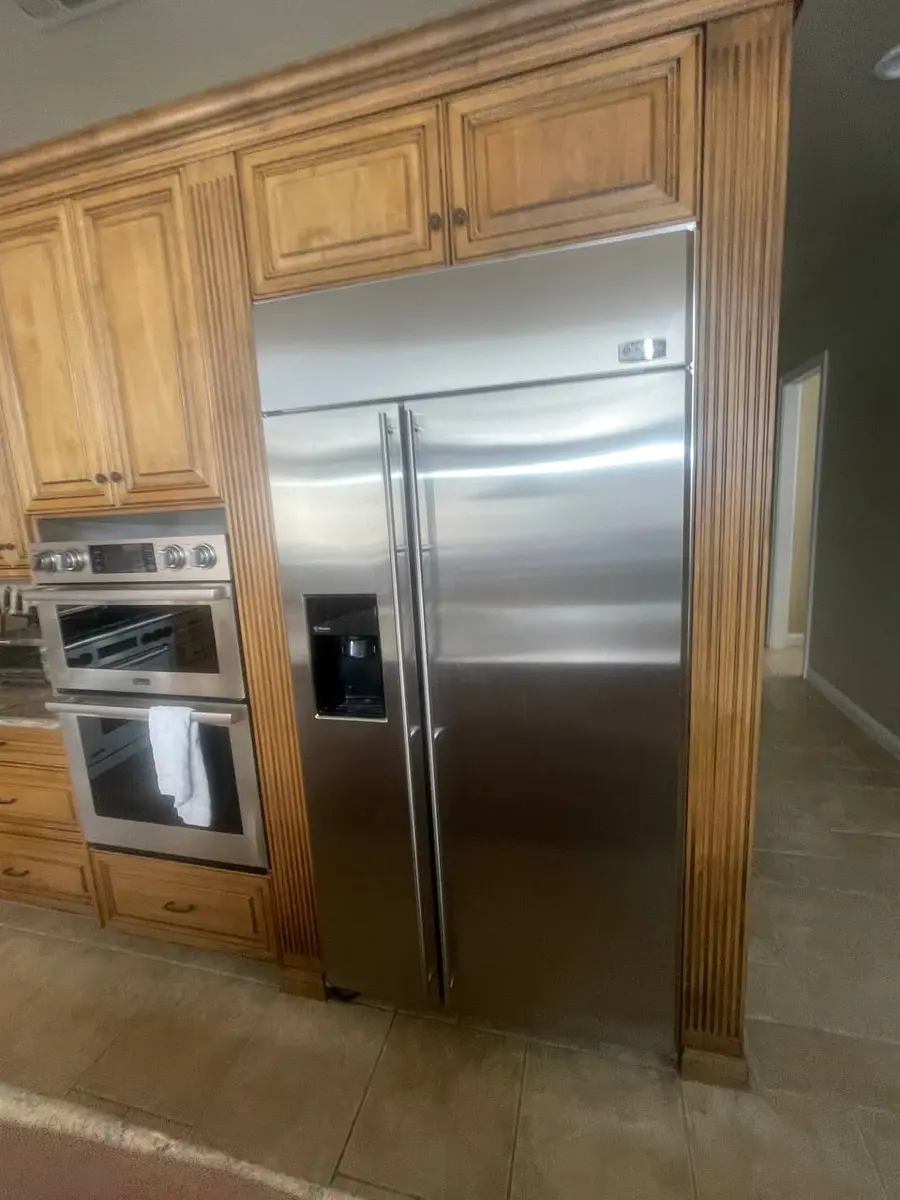
Unplug the refrigerator or kill its breaker if you smell burning plastic or see smoke. Don't wait to diagnose. On KBSD built-in models the dedicated breaker is usually the only quick disconnect, since the plug is inaccessible behind the unit.
Do You Have the Right Tools?
Refrigerant gauges ($200+), vacuum pump ($250), leak detector ($150), and EPA-certified recovery equipment. Our technician arrives with $3,000+ in professional tools — your diagnostic is free.
Licensed & Insured · 90-Day Warranty · Same-Day Service
The likely culprit#
Most likely: a compressor start relay burnout. The start relay mounts on the side of the compressor and boosts it to start; when its internal contacts and PTC thermistor deteriorate, they arc and burn, producing the smell. A warning sign is clicking every few minutes as the compressor tries, fails, and cycles on its overload. If the relay is fine, an overheating condenser fan motor is next.
Safety first#
If you smell burning plastic or see smoke, unplug the refrigerator immediately or kill the circuit breaker — do not wait to diagnose.
Never ignore a burning smell that persists for more than a few minutes.
Safety First — Know the Risks
Refrigerant (R-134a/R-600a) requires EPA certification to handle. Improper discharge is a federal violation and health hazard. Our techs are licensed and insured — let them handle the risk.
Licensed & Insured · 90-Day Warranty · Same-Day Service
Ranked causes at a glance#
| Likely cause | How common | What you'll notice / what to check |
|---|---|---|
| Compressor start relay burnout | 30% of cases | Burning smell at the compressor; clicking every few minutes as it fails to start. |
| Condenser fan motor overheating | 25% of cases | A laboring fan motor drawing excess current and melting its housing. |
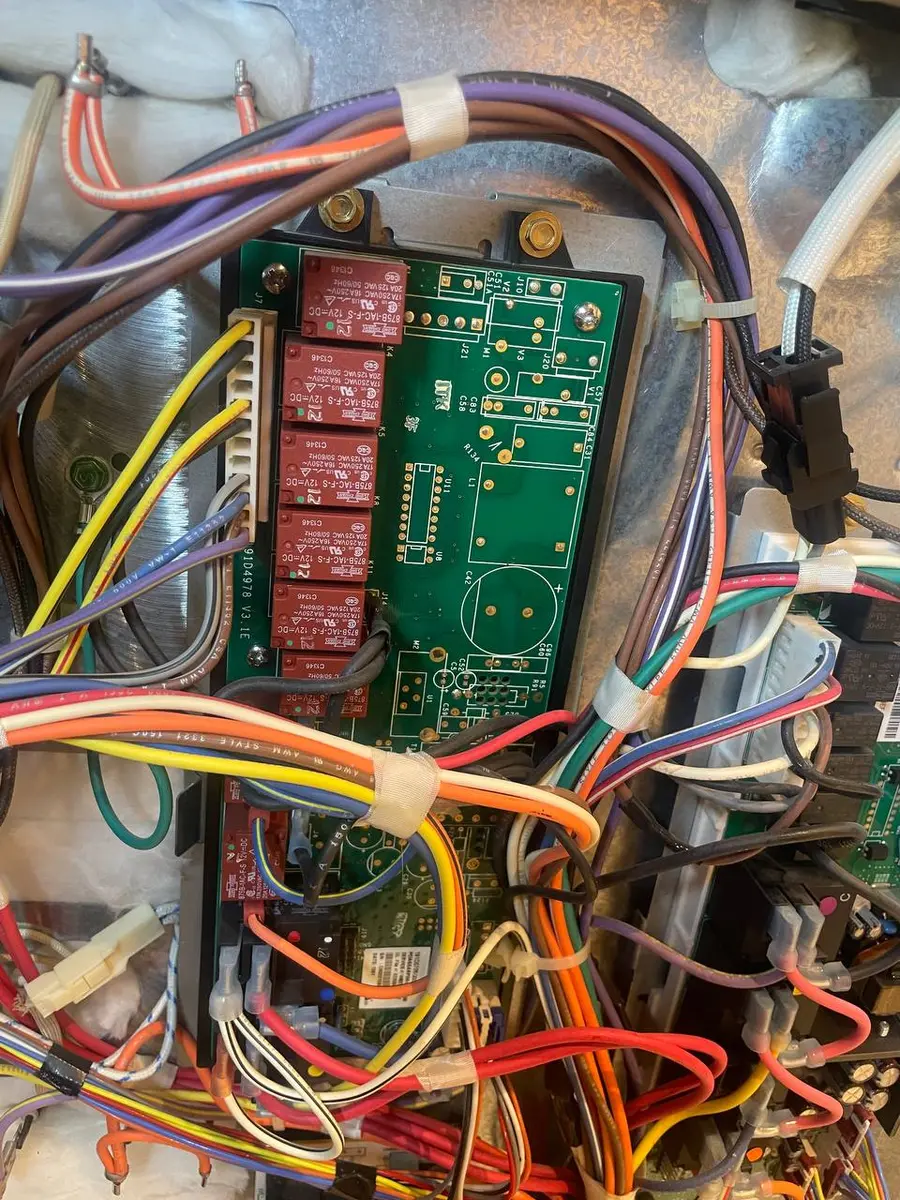
| Control board component failure | 18% of cases | A sweet-chemical smell from a swollen capacitor or overheated relay on the board. |
| Defrost heater malfunction | 12% of cases | The heater running too long, softening nearby plastic near the evaporator. |
| Evaporator fan motor seizure | 10% of cases | Grinding or buzzing from the freezer, then burning as a seized motor overheats. |
| Wiring harness damage | 5% of cases | Burning insulation smell at the top of a French-door hinge from a chafed harness. |
Working through each cause#
1. Compressor start relay burnout (30% of cases)#
The start relay on the side of the compressor gives it the boost to start, and when its internal contacts wear they arc and burn, and the PTC thermistor inside gives off the smell. Before full failure you often hear clicking every 3-5 minutes as the compressor tries to start, fails, and cycles on its overload. Unplug the fridge and inspect the relay for burn marks — it's a common, inexpensive replacement.
2. Condenser fan motor overheating (25% of cases)#
The condenser fan pulls air across the coils and compressor, and when its bearings wear the motor draws excess current trying to turn, heating its windings. On counter-depth KitchenAid models where the condenser area is tight, a laboring fan can get hot enough to melt its plastic housing. Listen for a straining or intermittent fan and check the motor for heat and drag.
3. Control board component failure (18% of cases)#
The main and user-interface boards carry capacitors, relays, and power transistors that can overheat, and a failing capacitor swells, leaks, and gives off a distinctive sweet-chemical smell. This is more common where household power quality is inconsistent. Inspect the boards for swollen or leaking capacitors and scorch marks around the relays.
4. Defrost heater malfunction (12% of cases)#
The defrost heater should cycle on briefly to clear frost, but if the defrost thermostat fails to end the cycle the heater runs continuously and overheats the evaporator area. On KitchenAid glass-tube heaters, an extended overrun can crack the glass and soften nearby plastic, producing a burning smell from the freezer side. Check the defrost termination thermostat along with the heater.
5. Evaporator fan motor seizure (10% of cases)#
The evaporator fan in the freezer can seize from ice buildup around the blades or a failed bearing, and a seized motor with power still applied draws maximum current through locked windings and overheats, burning the housing and nearby insulation. You'll usually hear grinding, squealing, or buzzing from inside the freezer first. Clear any ice and check whether the fan turns freely.
6. Wiring harness damage (5% of cases)#
On French-door models (KRFF/KRMF) the harness through the door hinge flexes thousands of times, and individual wires can break and short against each other or the metal hinge, producing localized heat and a burning-insulation smell usually noticed at the top of the door. Inspect the hinge harness for chafing and shorts. A damaged harness is repaired or replaced before it shorts further.
The Real Cost of DIY
Average DIY attempt: $150-400 in tools you may use once, plus the risk of further damage. Our diagnostic visit costs $0 — we find the problem and give you an honest quote.
Licensed & Insured · 90-Day Warranty · Same-Day Service
The short version#
- Start relay burnout — 30%; burning at the compressor, clicking every few minutes.
- Condenser fan overheating — 25%; a laboring fan melting its housing.
- Control board — 18%; a sweet-chemical smell, a swollen capacitor.
- Defrost heater — 12%; an overrun softening plastic near the evaporator.
- Evaporator fan seizure — 10%; grinding then burning from the freezer.
- Wiring harness — 5%; burning insulation at a French-door hinge (KRFF/KRMF).
What the repair usually involves#
A burning-smell repair locates the overheating source — the compressor relay, a fan motor, the control board, the defrost heater, or the hinge harness — with the fridge unplugged, then replaces that part. Because several of these are live electrical faults that can progress, the diagnosis is done promptly rather than run-to-failure, and the unit is watched after the fix to confirm the smell is gone.
Don't Void Your Warranty
Opening your appliance yourself may void the manufacturer warranty. Our repair comes with a 90-day guarantee, and we document everything for warranty compliance.
Licensed & Insured · 90-Day Warranty · Same-Day Service
When to call a professional#
Call a technician right away if the smell is strong, persistent, or accompanied by smoke, if it traces to the compressor relay, a fan motor, or the control board, or if you have a KBSD built-in where the breaker is the only disconnect. Keep the fridge unplugged until it's diagnosed. The cost depends on whether it's a relay, a fan, or the board plus labor, and a tech can confirm first.
Smell something burning? Book an EasyBear technician — we service KitchenAid refrigerators including KRFF, KRMF, and KBSD models and diagnose electrical faults safely.
Appliance Repair Technician · 11 years experience
Experienced technician with 11 years specializing in Frigidaire and Electrolux refrigerator and dryer repair with a focus on safety.