Quick Answer: Why Your KitchenAid Ice Maker Stopped Making Ice#
Most likely: a water-supply problem — a frozen fill line, a failed inlet valve, or water pressure too low (it needs at least 20 PSI). KitchenAid's standalone and undercounter units in the KUIX and KUID series run a Whirlpool-designed ice module, but they all depend on water actually reaching the mold, so that is where diagnosis starts. Before anything else, check the two simplest things people overlook: that the ice maker is switched on and its bail arm is down, and that the freezer or unit is cold enough to freeze a harvest. Then work from the water supply inward.
Likely Causes at a Glance#
| Cause | Likelihood | What to check |
|---|---|---|
| Frozen water line | Most likely | frost on the small fill line; thaw with a hair dryer on low |
| Failed water inlet valve | Common | solenoid coil should read 200-500 ohms; needs at least 20 PSI |
| Defective ice maker module | Occasional | run a manual harvest — no response means the module failed |
| Thermostat or sensor failure | Occasional | continuity when cold (below ~15°F), open when warm |
| Bail arm raised or switch off | Common (overlooked) | the simplest fix — confirm it is switched on |
Do You Have the Right Tools?
Multimeter ($85), vacuum pump ($250), diagnostic software, and specialized hand tools. Our technician arrives with $3,000+ in professional tools — your diagnostic is free.
Licensed & Insured · 90-Day Warranty · Same-Day Service
Walking Through the Diagnosis#
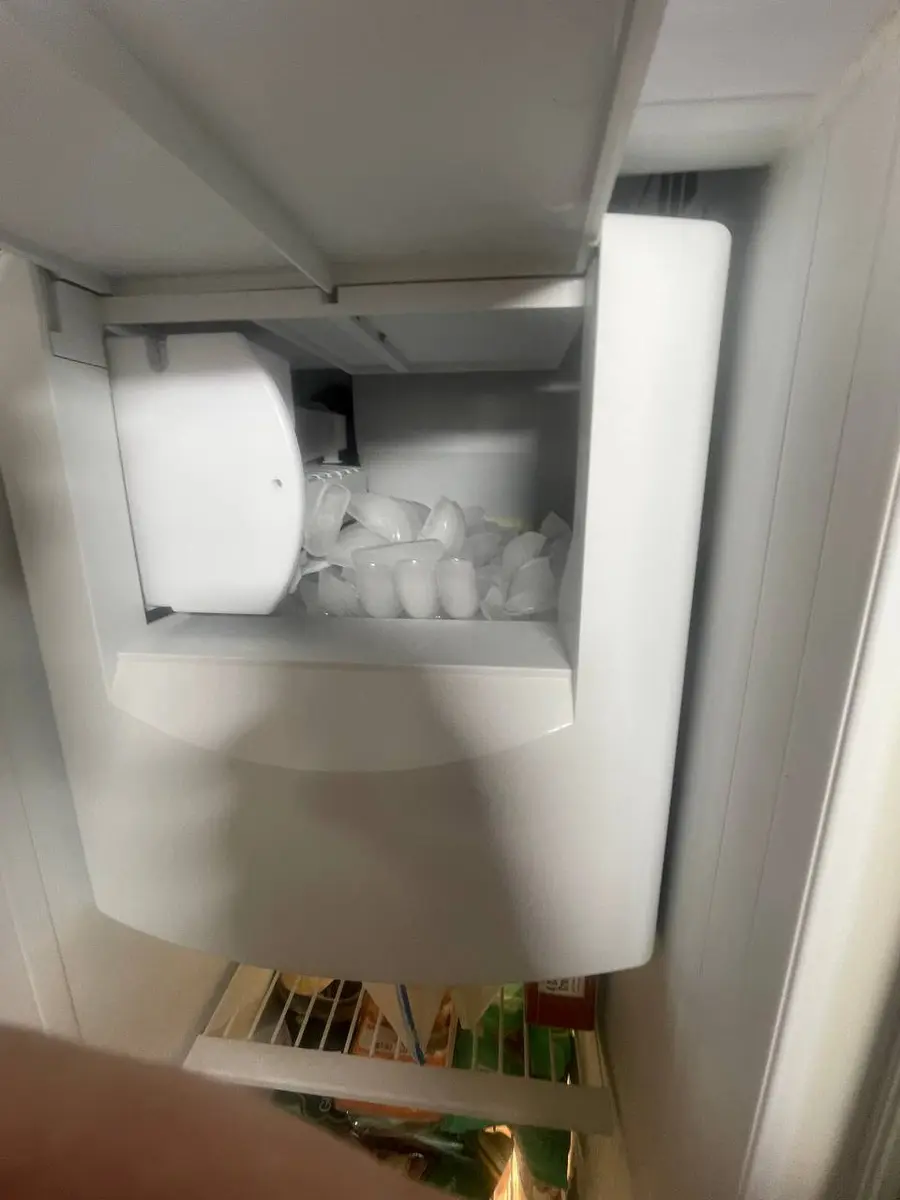
Start with the two-second checks: confirm the ice maker's on/off switch is on and the wire bail arm is down, since a bumped arm or switch is the most frequently overlooked cause. Then confirm the water supply — the shutoff valve (under the sink or behind the unit) should be fully open.
Now follow the water. Inspect the small fill line for frost or an ice plug, which is the single most common cause, especially if the freezer is set below 0°F or the line runs through a cold zone; thaw it with a hair dryer on low and set the compartment to 0°F (above about 10°F, ice will not freeze properly). If the line is clear but the mold never fills, test the inlet valve — disconnect the line and check flow into a bucket for at least 20 PSI, then meter the valve's solenoid coil, which should read roughly 200-500 ohms. With water confirmed reaching the unit, run your model's manual harvest procedure to exercise the ice-maker module and motor; no response means the module has failed. And if the module powers but never begins a harvest, the mold thermostat or sensor may not be signaling "frozen" — it should show continuity when cold (below about 15°F) and open when warm. Recurring freeze-ups after thawing usually point back to low pressure letting water sit, or a partially clogged line.
How to Prevent This#
Keep the freezer or unit at 0°F so the fill line does not freeze, and verify water pressure stays at least 20 PSI to prevent water sitting and re-freezing. If your model uses a filter, keep it fresh or the correct bypass plug in place, since some units will not run without one.
Safety First — Know the Risks
Appliances involve high voltage (120-240V), pressurized water, gas lines, and chemical refrigerants. Over 400 DIY repair injuries are reported yearly. Our techs are licensed and insured — let them handle the risk.
Licensed & Insured · 90-Day Warranty · Same-Day Service
Repair or Replace? The Short Version#
A frozen line or a raised bail arm costs nothing to fix, and an inlet valve, thermostat, or ice module is an inexpensive, targeted part — so this never approaches a replace decision. Give a new or reset unit a full day before worrying, since it takes about 24 hours to start and a day or two to fill the bin. For a failed valve or module, our technicians carry KitchenAid ice-maker parts — book a repair.
Frequently Asked Questions#
How long should a KitchenAid ice maker take to make ice?#
After installation or a reset, most units need about 24 hours to start producing, and the first batch can take longer. A healthy unit fills a full bin within 24 to 48 hours depending on capacity.
Why does my ice maker's water line keep freezing?#
Recurring freeze-ups usually mean the freezer is set too low, water pressure is low enough to let water sit in the line, or a partial clog restricts flow. Raise the setting toward 0°F and confirm at least 20 PSI of pressure.
Can I run my KitchenAid ice maker without a filter?#
Most standalone units can run without one, though water quality affects taste and clarity. Check your model, since some will not operate unless a filter or a bypass plug is installed.
What's the first thing to check when it stops making ice?#
The simplest, most overlooked things: that the ice maker is switched on with the bail arm down, and that the water shutoff valve is fully open. Then check the fill line for a freeze-up before suspecting the module.
Appliance Repair Technician · 11 years experience
Experienced technician with 11 years specializing in Frigidaire and Electrolux refrigerator and dryer repair with a focus on safety.