How to Remove a GE Refrigerator for Service or Replacement
Removing a GE refrigerator safely requires proper preparation — especially for French door models that weigh 300-350 pounds. This guide covers water line disconnection, door removal for tight doorways, and proper moving technique for GE's specific hinge and connection design. Whether you are moving the unit for service access, kitchen renovation, or full replacement, following these steps prevents damage to the refrigerator, your floors, and your water supply connections.
GE refrigerators connect to three things: power (standard 120V outlet), water supply (1/4" copper or braided line to the rear), and sometimes an ice maker drain. The water line connection at the rear uses either a compression fitting or a push-fit connector depending on model year. Knowing which type you have before starting saves time and prevents leaks.
Before You Start
- Tools needed: Phillips #2 screwdriver, 1/4" hex driver, adjustable wrench, appliance dolly, towels, bucket
- Parts needed: None — optional: new water supply line if old one is kinked or corroded
- Time required: 30-45 minutes
- Difficulty: Intermediate
- Safety warning: Turn off water supply valve behind refrigerator. Unplug unit. Have a helper for lifting — GE French door models weigh 300-350 lbs.
Do You Have the Right Tools?
Refrigerant gauges ($200+), vacuum pump ($250), leak detector ($150), and EPA-certified recovery equipment. Our technician arrives with $15K+ in professional tools — your diagnostic is free.
Licensed & Insured · 90-Day Warranty · Same-Day Service
Step-by-Step Instructions
Step 1: Turn Off the Water Supply
Locate the water shut-off valve behind or beneath the refrigerator. It is typically a small quarter-turn valve (ball valve) on the wall or floor near the rear. Turn it clockwise to close. If your home does not have a dedicated refrigerator shut-off, you may need to turn off the main water supply or the closest branch valve. After closing the valve, dispense water from the door dispenser (if equipped) for 10 seconds to relieve pressure in the line.
Step 2: Unplug the Refrigerator
Pull the power cord from the wall outlet. On many GE models, the outlet is behind the unit and difficult to reach while the refrigerator is in position. If you cannot reach it, turn off the circuit breaker for that outlet. Never move a refrigerator with power connected — the cord can snag and damage the outlet or create a trip hazard.
Step 3: Remove Food and Loose Components
Remove all food, shelves, crisper drawers, and door bins. These add significant weight and will slide or fall during movement. GE glass shelves are tempered but can crack if they shift during transport. Store food in coolers — plan for at least 30-45 minutes with the unit off. Remove the ice bin from the freezer to prevent water dripping as ice melts during the move.
Step 4: Disconnect the Water Line
At the rear of the refrigerator, locate the water inlet connection. GE uses two styles: a 1/4" compression fitting (brass nut that threads onto the inlet valve) or a push-fit connector (push in the collet ring and pull to release). For compression fittings: use an adjustable wrench to hold the inlet valve fitting while turning the compression nut counterclockwise with a second wrench. For push-fit: press the plastic collet ring toward the valve body and pull the tubing straight out. Have a towel ready — residual water will drip from both the line and the inlet valve.
Step 5: Remove Doors if Passage Is Tight
GE French door models are typically 35-36 inches wide with doors. If your doorway is tight, remove the doors. GE French door hinges use a top hinge pin assembly: pop the hinge cover (if present), remove the 2-3 hex bolts holding the hinge bracket, disconnect the wire harness for the door dispenser (right door on most models), then lift the door straight up off the middle hinge pin. Set doors on a padded surface face-down. For the freezer drawer: pull it fully out, lift the front slightly, and pull forward to disengage from the rails.
Step 6: Protect Your Floors and Move
Place cardboard or hardboard sheets in the path from the refrigerator to the exit. Tilt the refrigerator back slightly and slide an appliance dolly under the front. Strap the unit to the dolly. Move slowly — GE refrigerators have a high center of gravity, especially side-by-side models. Never lay a refrigerator on its side for more than briefly — compressor oil can flow into the lines and cause damage. If you must tilt past 45 degrees for doorways, wait 4 hours before restarting after returning to upright.
Step 7: Cap or Seal Open Connections
If the refrigerator will be gone for an extended period, cap the water supply line with a compression cap fitting to prevent drips. Tape the power cord to the back of the unit so it does not drag. If reinstalling later, mark the floor position of the leveling legs to make re-positioning easier.
Troubleshooting Common Issues
- If the water line connector is seized and will not turn, apply penetrating oil and wait 10 minutes. Use two wrenches to avoid torquing the inlet valve body
- If a door will not lift off the hinge pin, check for a retaining screw or clip on the pin that you may have missed
- For older GE models with a separate ice maker water line (not through the door), check behind the freezer for a second connection
- If the refrigerator has been in place for many years, the floor may be discolored where the feet sat — this is normal and not damage
Safety First — Know the Risks
Refrigerant (R-134a/R-600a) requires EPA certification to handle. Improper discharge is a federal violation and health hazard. Our techs are licensed and insured — let them handle the risk.
Licensed & Insured · 90-Day Warranty · Same-Day Service
When to Call a Professional
Contact a certified technician if:
- The water shut-off valve is corroded and you cannot close it without risk of breaking the valve or flooding
- You need to disconnect a hardwired ice maker drain line that connects to plumbing
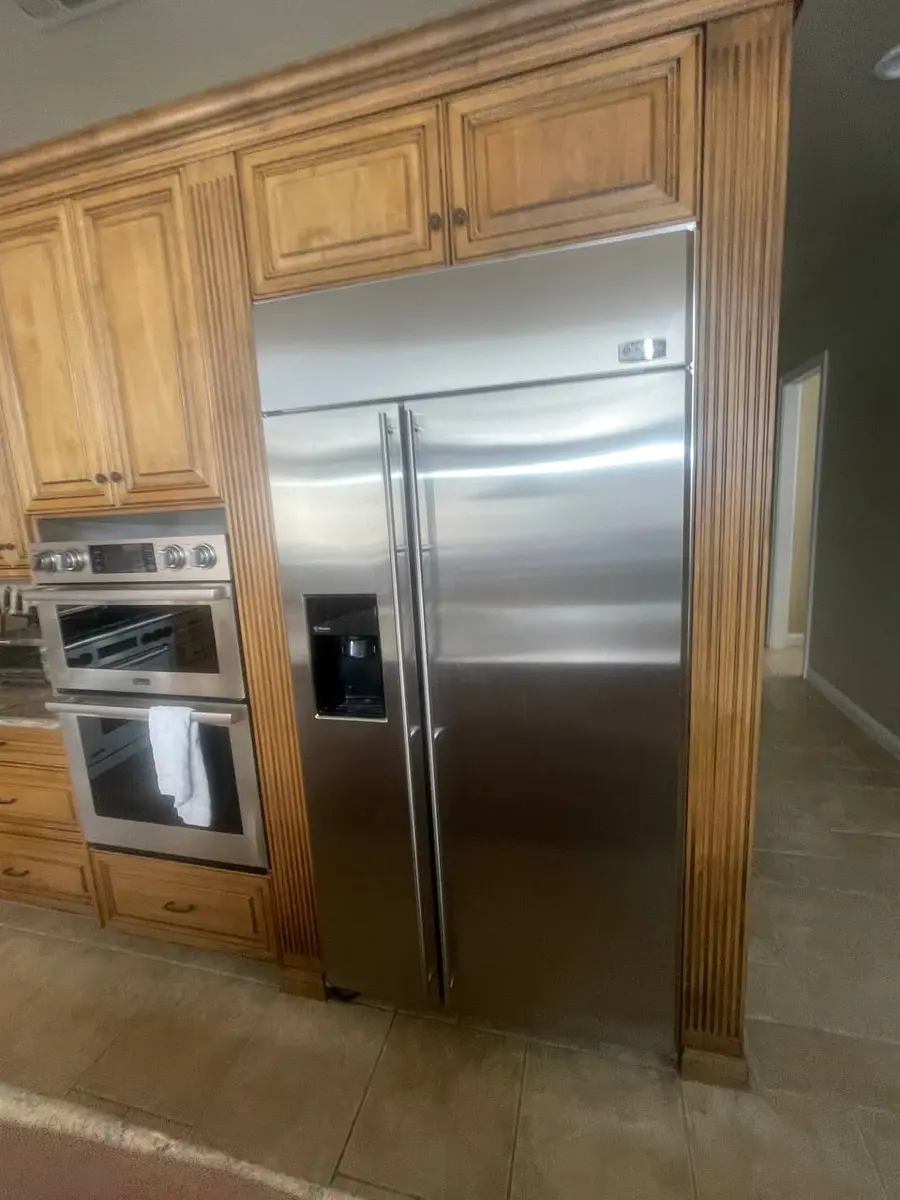
- The refrigerator is a built-in model (Monogram series) with custom cabinet panels that require precise reinstallation
- You are moving the refrigerator to a different floor (stairs) and do not have a helper — the weight requires at least two people
- The refrigerator has a damaged power cord that needs professional replacement before moving
Same-Day Appliance Repair
Fixed or It's Free
$89 → $0 Service Call & Diagnosis — offer ends May 25
Cost Comparison: DIY vs Professional
| DIY | Professional | |
|---|---|---|
| Parts | $0 | $0 |
| Labor | $0 | $100-$200 |
| Time | 0.5-0.75h | 0.5h |
| Risk | Moderate (weight/water) | Insured |
The Real Cost of DIY
Average DIY attempt: $150-400 in tools you may use once, plus the risk of further damage. Our diagnostic visit costs $0 — we find the problem and give you an honest quote.
Licensed & Insured · 90-Day Warranty · Same-Day Service
Need Professional Help?
FAQ
Q: Can I lay my GE refrigerator on its side to move it? A: GE does not recommend it. If you must tilt past 45 degrees briefly for a doorway, wait 4 hours before plugging in after returning to upright. Laying flat for extended periods allows compressor oil to migrate into refrigerant lines, potentially causing compressor damage on restart.
Q: How do I remove the doors on a GE French door refrigerator? A: Remove the top hinge cover, disconnect the door wiring harness (right door), remove the 2-3 hex bolts from the top hinge bracket, then lift the door straight up off the center hinge pin. Reverse for reinstallation.
Q: Will my GE refrigerator need to be re-leveled after moving it back? A: Yes, check the leveling after reinstallation. GE French door models require a slight rear tilt (front legs about 1/4 turn higher) so doors close by gravity. Use a level on the shelf inside — not on the exterior surface which may not be perfectly flat.
Q: How long can my food stay safe when the GE refrigerator is unplugged? A: With doors closed, a full refrigerator maintains safe temperatures for about 4 hours. A full freezer holds temperature for about 48 hours (24 hours if half-full). Since you are removing food for the move, use coolers with ice packs.
Need a certified technician? Book same-day repair →