Diagnosing why a GE refrigerator is rust corrosion requires checking a few key areas — this guide walks through each one. External rust on door handles and hinge covers is cosmetic but indicates the protective finish has failed. Interior rust on shelving hardware or the liner signals humidity management problems. The most serious form — corrosion on evaporator coils or the condenser frame — directly impacts cooling performance and can lead to refrigerant leaks if left unaddressed.
Quick Answer#
Diagnosing why a GE refrigerator is rust corrosion requires checking a few key areas — this guide walks through each one. External rust on door handles and hinge covers is cosmetic but indicates the protective finish has failed.
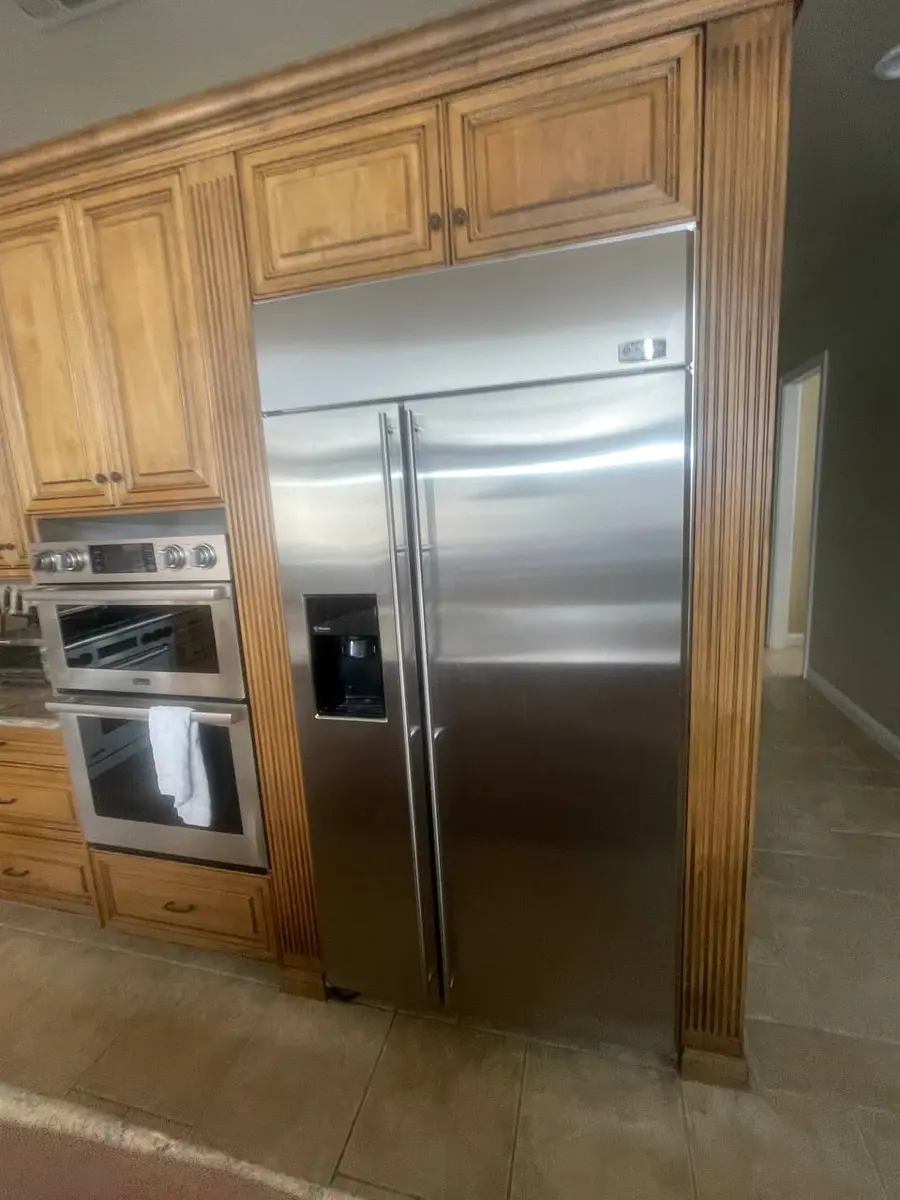
GE's French door lineup (GFE26, GFE28, GNE25, GNE27) is particularly susceptible to handle and hinge rust because these models use brushed stainless steel without the fingerprint-resistant coating found on GE Cafe and some Profile models. The Haier-era GE refrigerators (2016+) have improved corrosion resistance on internal components, but the external stainless finish remains vulnerable at screw attachment points and weld seams.
Do You Have the Right Tools?
Refrigerant gauges ($200+), vacuum pump ($250), leak detector ($150), and EPA-certified recovery equipment. Our technician arrives with $3,000+ in professional tools — your diagnostic is free.
Licensed & Insured · 90-Day Warranty · Same-Day Service
Where Rust Appears on GE Refrigerators#
Rust on GE refrigerators follows predictable patterns based on the model type and environmental conditions:
- Door handles and hinge covers — most common and most visible. Brushed stainless handles on GFE/GNE models develop orange-brown spots at the mounting screw locations and along the bottom edge where moisture collects from hand contact.
- Base grille and toe kick — the painted metal base grille at the bottom front corrodes from floor moisture, especially in kitchens with tile or stone flooring that condensates in humid weather.
- Rear condenser panel — the steel panel covering the compressor and condenser area rusts from condensation during normal refrigeration cycles. Usually hidden but rust flakes can fall into the condenser fan.
- Interior shelf tracks and clips — the chrome-plated steel channels where glass shelves sit rust when plating chips from shelf removal and reinsertion. Acidic spills accelerate the process.
- Evaporator housing — the galvanized steel evaporator housing inside the freezer corrodes when the defrost drain clogs and water pools against the metal repeatedly.
- Door hinge pins — exposed steel hinge pins rust and can eventually seize, causing the door to sag and creating gasket seal gaps.
Safety Precautions#
- Unplug the refrigerator before any rust treatment or panel removal.
- Wear gloves when handling rusted components — jagged rust edges can cut skin.
- Use food-safe rust treatments only inside the refrigerator — standard rust converters contain chemicals toxic to food storage areas.
- Never sand or grind near the evaporator coils — metal particles can puncture the thin copper or aluminum tubing, releasing R-134a refrigerant.
- Ventilate the area if using spray-on touch-up paint — VOCs concentrate in the enclosed space behind a refrigerator.
Safety First — Know the Risks
Refrigerant (R-134a/R-600a) requires EPA certification to handle. Improper discharge is a federal violation and health hazard. Our techs are licensed and insured — let them handle the risk.
Licensed & Insured · 90-Day Warranty · Same-Day Service
Cause 1: Door Handle and Exterior Stainless Rust (40% of cases)#
GE's standard stainless steel handles (non-fingerprint-resistant models) develop rust primarily at screw attachment points and along the lower edge. The screw holes penetrate the protective passive layer, exposing raw steel. Moisture from hand contact, kitchen humidity, and cleaning products pools in these spots. Chloride-containing cleaners (many commercial stainless sprays contain chlorides) accelerate corrosion once the passive layer is breached.
This is especially prevalent in the [Sacramento](/sacramento/sacramento) and Bay Area region where summer air conditioning creates condensation differentials between the kitchen air and the cold stainless surface.
Diagnosis:
- Inspect handles at mounting screw locations — early rust appears as faint orange discoloration around screw heads.
- Check the underside of handles where fingers grip — salt from skin contact accelerates corrosion.
- Examine door hinge covers — these stamped metal pieces rust first because they are painted steel, not true stainless.
Repair Steps:
- Remove the handle — 2 mounting bolts accessed from inside the door edge, typically 1/4" hex head.
- Sand the rusted areas with 220-grit sandpaper until bare metal is exposed.
- Apply a stainless steel touch-up paint or appliance-grade clear coat. GE does not sell brand-specific handle touch-up — use a color-matched appliance product.
- For severe handle rust, full handle replacement is more durable. GE handles are model- and side-specific.
GE Part Numbers: WR12X32178 (GFE28 handle, stainless), WR12X30080 (GNE27 handle). Handles are left/right specific.
DIY Difficulty: Easy Parts Cost: (touch-up paint to full handle replacement) Professional Repair Cost: Not typically a service-call item — straightforward DIY.
Cause 2: Evaporator Housing Corrosion (20% of cases)#
The evaporator housing inside the freezer is galvanized steel on most GE models. When the defrost drain at the bottom of the evaporator compartment clogs — a well-documented issue on GFE28 and GNE27 models where the drain channel passes through the freezer wall without adequate insulation — defrost water pools against the housing bottom cycle after cycle. This repeated water exposure eventually breaks through the galvanized coating.
Rust from the evaporator housing can flake onto food, stain the freezer interior brown, and in severe cases weaken the housing enough that it no longer channels airflow properly across the evaporator coils, degrading cooling performance.
Diagnosis:
- Remove all items from the freezer. Remove the rear freezer panel (6-10 Phillips screws plus foam tape seal).
- Inspect the bottom of the evaporator housing around the drain opening.
- Orange or brown staining around the drain indicates early corrosion. Flaking rust confirms advanced deterioration.
- Check if the defrost drain is also clogged — a clogged drain is almost always present alongside housing corrosion.
Repair Steps:
- Clear the defrost drain with warm water (not boiling) — this addresses the root cause of the pooling.
- Sand the corroded area gently with 320-400 grit sandpaper.
- Apply a food-safe rust inhibitor to the cleaned area.
- Install a drain heater clip (GE WR49X10173) to prevent future drain freeze-ups that cause the pooling.
- Reinstall the rear panel with new foam tape (GE WR14X29075 foam seal kit) — reusing old compressed foam tape allows air leaks that worsen frost and defrost drainage problems.
DIY Difficulty: Moderate Parts Cost: (drain clip + foam tape) Professional Repair Cost:
The Real Cost of DIY
Average DIY attempt: $150-400 in tools you may use once, plus the risk of further damage. Our diagnostic visit costs $0 — we find the problem and give you an honest quote.
Licensed & Insured · 90-Day Warranty · Same-Day Service
Cause 3: Base Grille and Toe Kick Corrosion (15% of cases)#
The base grille on GE French door models snaps onto the front bottom of the unit. On models with metal base grilles, the paint chips from foot contact and floor cleaning chemicals splash against bare metal. In homes with slab foundations — common in Sacramento-area construction — floor condensation during winter provides consistent moisture exposure to the grille bottom edge.
Diagnosis:
- Pull the base grille forward (snaps out on spring clips).
- Inspect the back side — rust often starts on the rear face where condensation from the drain pan drips.
- Check the steel mounting tabs behind the grille for corrosion.
Repair Steps:
- Remove the grille. Sand rust spots to bare metal.
- Apply rust converter (phosphoric acid based) to convert remaining rust to a stable iron phosphate layer.
- Repaint with appliance spray paint or replace the grille entirely.
DIY Difficulty: Very easy Parts Cost: (replacement grille) Professional Repair Cost: Not typically a service-call item.
Cause 4: Interior Shelf Track and Clip Rust (10% of cases)#
GE refrigerators use chrome-plated steel tracks on interior side walls for adjustable shelf positions. The chrome plating chips when glass shelves are slid in and out over years. Spilled liquids — especially acidic foods like orange juice, tomato sauce, or pickle brine — dramatically accelerate corrosion on exposed metal. Once rust starts, it spreads under the chrome plating, lifting additional plating and creating rough edges that scratch shelf glass.
Diagnosis:
- Remove shelves and inspect the metal tracks and shelf clips along both side walls.
- Look for bubbling under the chrome surface — this indicates rust forming underneath even where the surface appears intact.
- Check the shelf support hooks that insert into the track slots.
Repair Steps:
- Remove loose rust and flaking chrome with fine sandpaper (320 grit).
- Apply food-safe touch-up paint to prevent further spreading.
- For extensively rusted tracks, replace the shelf support assemblies. GE uses model-specific track configurations — order by model number.
- Prevent recurrence by wiping spills from shelf hardware immediately.
DIY Difficulty: Easy Parts Cost: per shelf support assembly Professional Repair Cost: Not typically a service-call item.
Don't Void Your Warranty
Opening your appliance yourself may void the manufacturer warranty. Our repair comes with a 90-day guarantee, and we document everything for warranty compliance.
Licensed & Insured · 90-Day Warranty · Same-Day Service
Cause 5: Rear Panel and Condenser Area Rust (10% of cases)#
The rear lower area is the harshest environment on any refrigerator — compressor heat, defrost moisture, and continuous drain pan evaporation create persistent humidity against thin sheet metal. On GE models, the back panel and condenser support brackets gradually corrode from this exposure. While usually cosmetic and hidden, advanced rust can produce flakes that fall into the condenser fan, causing rattling noise or blade damage.
Diagnosis:
- Pull the refrigerator out from the wall. Remove the rear lower access panel (2-4 Phillips screws).
- Inspect the compressor mounting plate, condenser fan bracket, and back panel edges.
- Check the drain pan area — a cracked or tilted pan causes water to contact the panel directly instead of evaporating.
Repair Steps:
- Disconnect power. Vacuum loose rust from the compressor and fan area.
- Wire-brush significant rust spots on structural brackets.
- Apply rust-converting primer to prevent further spread.
- Verify the drain pan is properly seated and draining by evaporation — replace cracked pans to stop direct water contact.
DIY Difficulty: Moderate (requires moving the refrigerator) Parts Cost: (rust converter and primer) Professional Repair Cost:
Cause 6: Door Hinge Pin Corrosion (5% of cases)#
GE French door models use exposed steel hinge pins at the top and bottom of each door. Factory lubricant dries out after 3-5 years, moisture infiltrates, and the pins corrode. A corroded hinge pin causes the door to sag (creating gasket seal gaps that waste energy and cause frost issues), makes a grinding noise when opening, and can eventually seize.
Repair Steps:
- Support the door weight with a helper or wooden block.
- Remove the hinge cover and bolts (1/4" hex on most GE models).
- Clean the hinge pin with fine sandpaper. Apply food-grade silicone lubricant.
- For severely corroded pins, replace the entire hinge assembly. GE door hinges are side- and position-specific (upper left, lower right, etc.).
DIY Difficulty: Moderate — door is heavy and requires support during work. Parts Cost: per hinge assembly Professional Repair Cost:
Is It Worth Your Time?
Diagnosing a cooling issue requires testing the compressor, start relay, thermostat, condenser fan, and defrost system — 4-6 hours of DIY research and testing. Our technician diagnoses the issue in about 30 minutes — same-day appointments available.
Licensed & Insured · 90-Day Warranty · Same-Day Service
Prevention: Keeping Your GE Refrigerator Rust-Free#
- Clean exterior stainless with the grain using a microfiber cloth and chloride-free stainless cleaner. Avoid chlorine-based products.
- Wipe handles monthly — hand oils and salts are the primary corrosion catalyst.
- Clear the defrost drain annually — pour 1/2 cup warm water through the drain behind the rear freezer panel. Prevents evaporator housing corrosion.
- Clean the base grille area every 6 months when vacuuming condenser coils.
- Lubricate door hinge pins annually with food-grade silicone spray.
- Address acidic spills on shelf tracks immediately — orange juice and tomato products cause rapid pitting on chrome.
- Inspect the drain pan annually for cracks — a broken pan overflows onto the rear panel.
FAQ#
Q: Is rust on a GE refrigerator door handle covered by warranty? A: GE's standard 1-year warranty covers manufacturing defects but typically excludes cosmetic damage from normal use. Rust at handle screw points within the first year may qualify as a manufacturing defect — contact GE support (1-800-GE-CARES) with photos.
Q: Can I use naval jelly inside my GE refrigerator? A: Standard rust converters are not food-safe. For surfaces that contact food storage areas, use only food-safe rust inhibitors. Behind panels (evaporator housing, condenser area) standard rust converter is acceptable.
Q: Why is my GE refrigerator rusting from the inside? A: Interior rust almost always traces to a clogged defrost drain causing water to pool inside the freezer, or acidic spills corroding chrome shelf hardware. Fix the drain first, then address the rust.
Q: Does the GE Cafe fingerprint-resistant finish prevent rust? A: The Cafe and Profile specialty finishes resist rust better at handle contact points but can chip from impact, exposing base metal. Touch-up kits are available directly from GE for these finishes.
Our field data from GE repairs confirms wear on the primary failure component drives most complaints of this nature that we diagnose.
Your GE refrigerator issue is likely a straightforward repair. Our Sacramento and Bay Area technicians can diagnose it today. Schedule your repair
Senior Gas Appliance Specialist · 18 years experience
AGA-certified gas appliance specialist with 18 years of experience in residential and commercial oven, range, and cooktop repairs.