Quick Answer: Run Test 6 and Watch for the Glow#
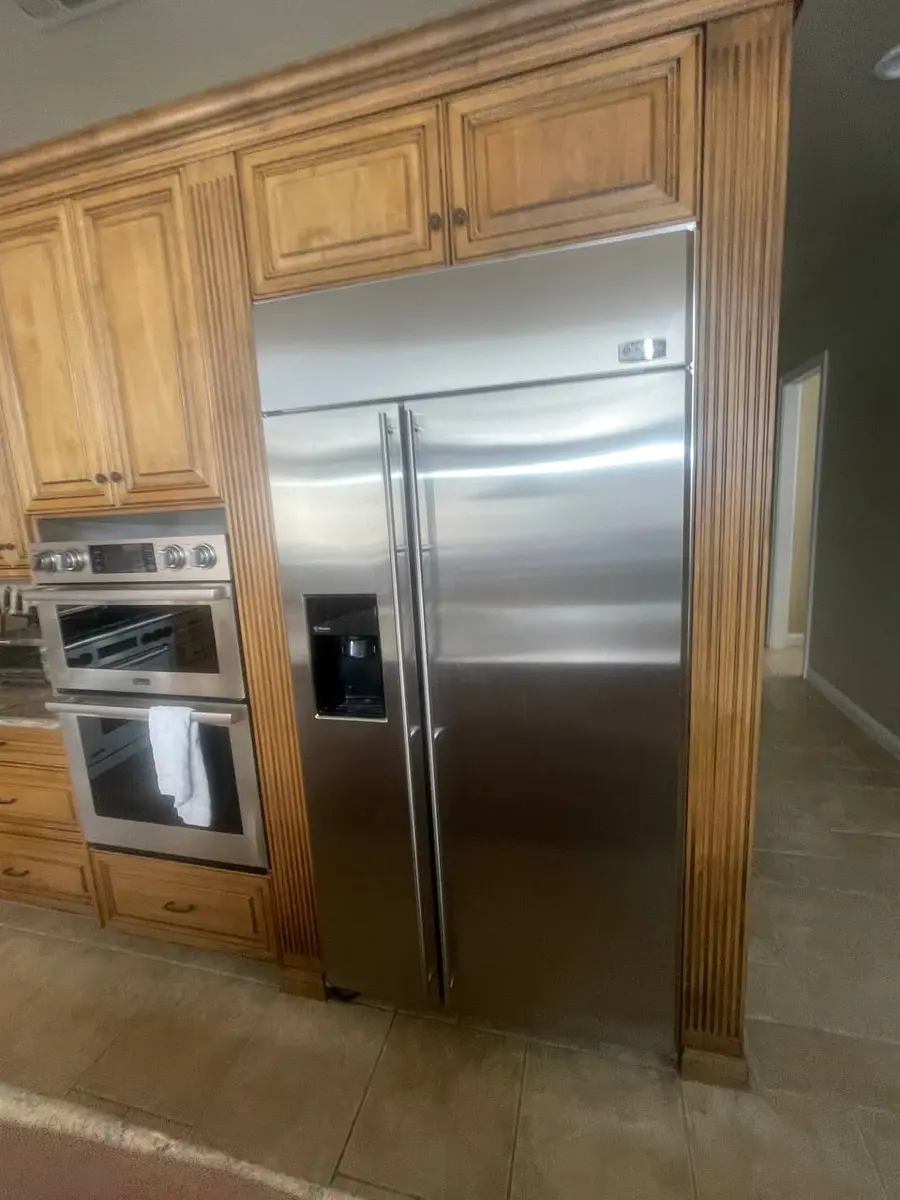
Most likely: the defrost heater has burned out. A refrigerator does not heat food — the only heat source is the defrost heater, a glass-tube calrod element under the evaporator coils that melts frost every several hours, and when it opens, frost builds until it blocks airflow and cooling collapses. A burned-out heater is the leading cause at about 40% of "not heating" cases. This is the same fault as a GE not defrosting — see our GE refrigerator not defrosting guide — with the same short list: heater, defrost thermostat, or the control board's defrost relay. GE makes this easy to pin down: run built-in diagnostic Test 6 and watch for the heater's orange glow through the freezer rear panel.
Likely Causes at a Glance#
| Cause | Likelihood | What to check |
|---|---|---|
| Defrost heater burned out | 40% | Resistance across the terminals is about 20–40 ohms; OL (open) is dead (WR51X10055 French door, WR51X10101 side-by-side) |
| Defrost thermostat failed open | 30% | Test cold in ice water — it should show continuity; open means failed (WR50X10068) |
| Control board defrost relay | 20% | Heater works in Test 6 but never runs automatically (WR55X10942, WR55X11072) |
| Wiring harness damage | 10% | Continuity along the harness from the board connector to the heater terminals |
Do You Have the Right Tools?
Refrigerant gauges ($200+), vacuum pump ($250), leak detector ($150), and EPA-certified recovery equipment. Our technician arrives with $3,000+ in professional tools — your diagnostic is free.
Licensed & Insured · 90-Day Warranty · Same-Day Service
Walking Through the Diagnosis#
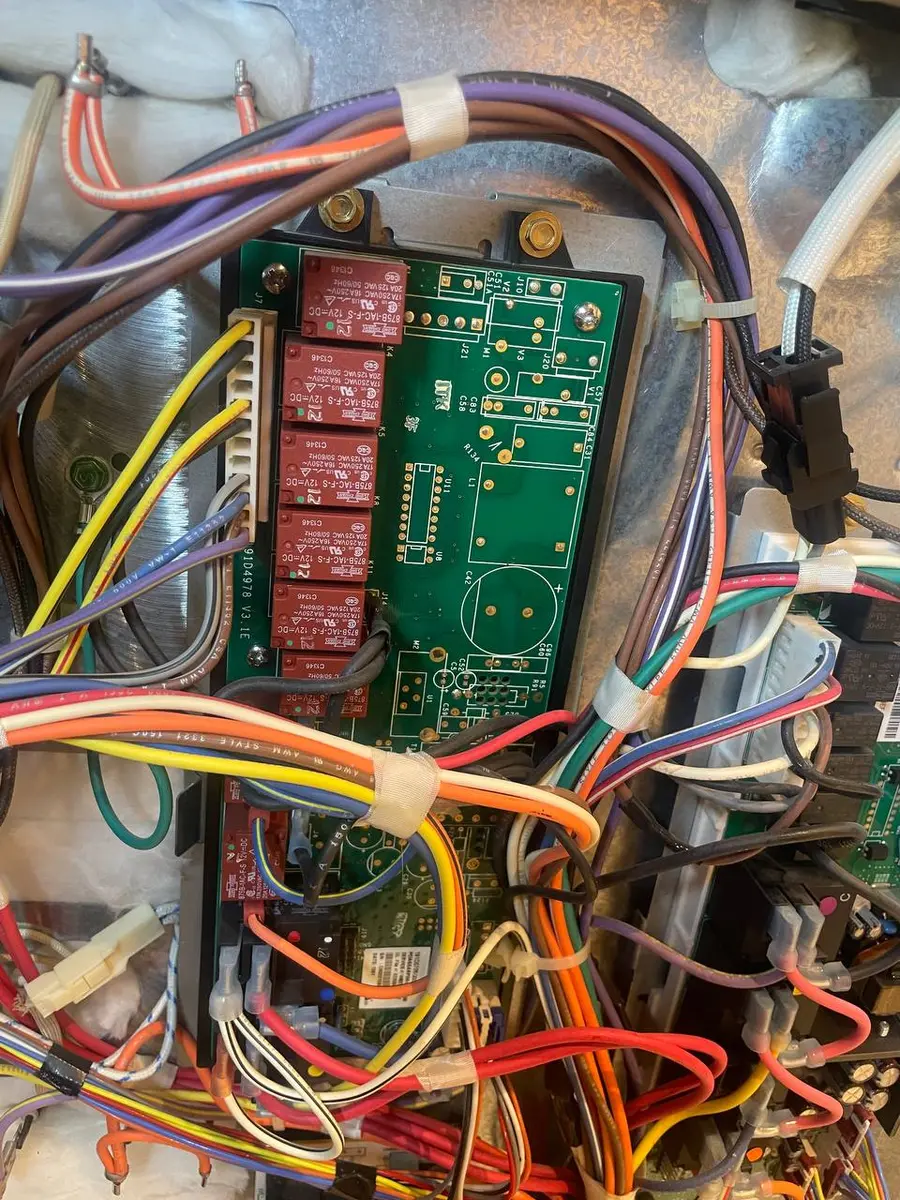
Start with GE's built-in test, because it isolates the whole defrost circuit in one step. Enter service mode by holding the Freezer Temp and Fridge Temp buttons for about 8 seconds, then press Fridge Temp to advance to Test 6, which forces the defrost heater on — within 30 seconds you should see an orange glow through the freezer rear panel. A glow means the heater, thermostat, and their wiring are fine, so the fault is that the board never triggers defrost on its own; no glow means the heater, thermostat, or wiring has failed and you test them individually. Unplug the fridge, clear the freezer, and remove the rear panel to reach the evaporator. Measure the heater across its terminals: about 20 to 40 ohms is healthy and OL (open) means it burned out — GE uses a straight heater (WR51X10055) on French-door models and a U-shaped one (WR51X10101) on side-by-sides.
If the heater reads good, test the bi-metal defrost thermostat, which passes power to the heater only when the evaporator is cold: chill it in ice water and check for continuity — no continuity when cold means it failed open and is blocking the heater (WR50X10068). If both the heater and thermostat are fine but Test 6 made the heater glow while frost keeps building in normal use, the board's defrost relay has failed to initiate the cycle (WR55X10942 on GFE and GNE models, WR55X11072 on GYE Profile). The least common fault is the wiring harness between the board and the heater, which runs through areas of thermal cycling and moisture and can corrode or break — a continuity test along its length finds an open section. Do not let this linger: a dead defrost system frosts the evaporator until it blocks airflow, ices the evaporator fan until the motor burns out, and overworks the compressor, so address it within one to three weeks. As a stopgap, you can manually defrost by unplugging the fridge with the doors open for four to six hours.
Repair or Replace? The Short Version#
This is squarely a repair. Every part in the defrost circuit — the calrod heater, the bi-metal thermostat, the control board, or a length of harness — is inexpensive and far below the cost of a new refrigerator, so on any GE worth keeping the math favors fixing it. The value of Test 6 is that it tells you whether to buy a heater and thermostat or a board before you spend anything. Because a dead defrost system cascades into fan and compressor damage if ignored, do not defer it; if you are not comfortable testing around the evaporator, have it done — book an EasyBear technician.
Safety First — Know the Risks
Refrigerant (R-134a/R-600a) requires EPA certification to handle. Improper discharge is a federal violation and health hazard. Our techs are licensed and insured — let them handle the risk.
Licensed & Insured · 90-Day Warranty · Same-Day Service
Frequently Asked Questions#
My GE refrigerator heater glowed in Test 6 but frost keeps building — why?#
The heater is physically fine, but the control board's defrost relay is not triggering the cycle during normal operation, so the coil never gets its scheduled defrost and frost accumulates. Test 6 only forces the heater on manually; it does not prove the board initiates defrost on its own. When the heater and thermostat both test good but frost returns, the board (WR55X10942 or WR55X11072) needs replacing.
Can I keep running my GE refrigerator with a bad defrost heater?#
Only briefly. You can manually defrost by unplugging the fridge with the doors open for four to six hours every one to three weeks, but it is unsustainable — the growing ice eventually blocks airflow, encases the evaporator fan until its motor burns out, and overworks the compressor. Because those secondary failures are far more expensive, replace the failed defrost part rather than living with manual defrosting.
How do I know if it's the heater or the thermostat?#
Test them individually with the fridge unplugged and the evaporator exposed. The heater should read about 20 to 40 ohms across its terminals — OL means it burned out. The bi-metal thermostat should show continuity when cold (chill it in ice water), and no continuity cold means it failed open and is blocking a good heater. Running Test 6 first tells you the whole circuit is suspect before you open the panel.
Senior Gas Appliance Specialist · 18 years experience
AGA-certified gas appliance specialist with 18 years of experience in residential and commercial oven, range, and cooktop repairs.