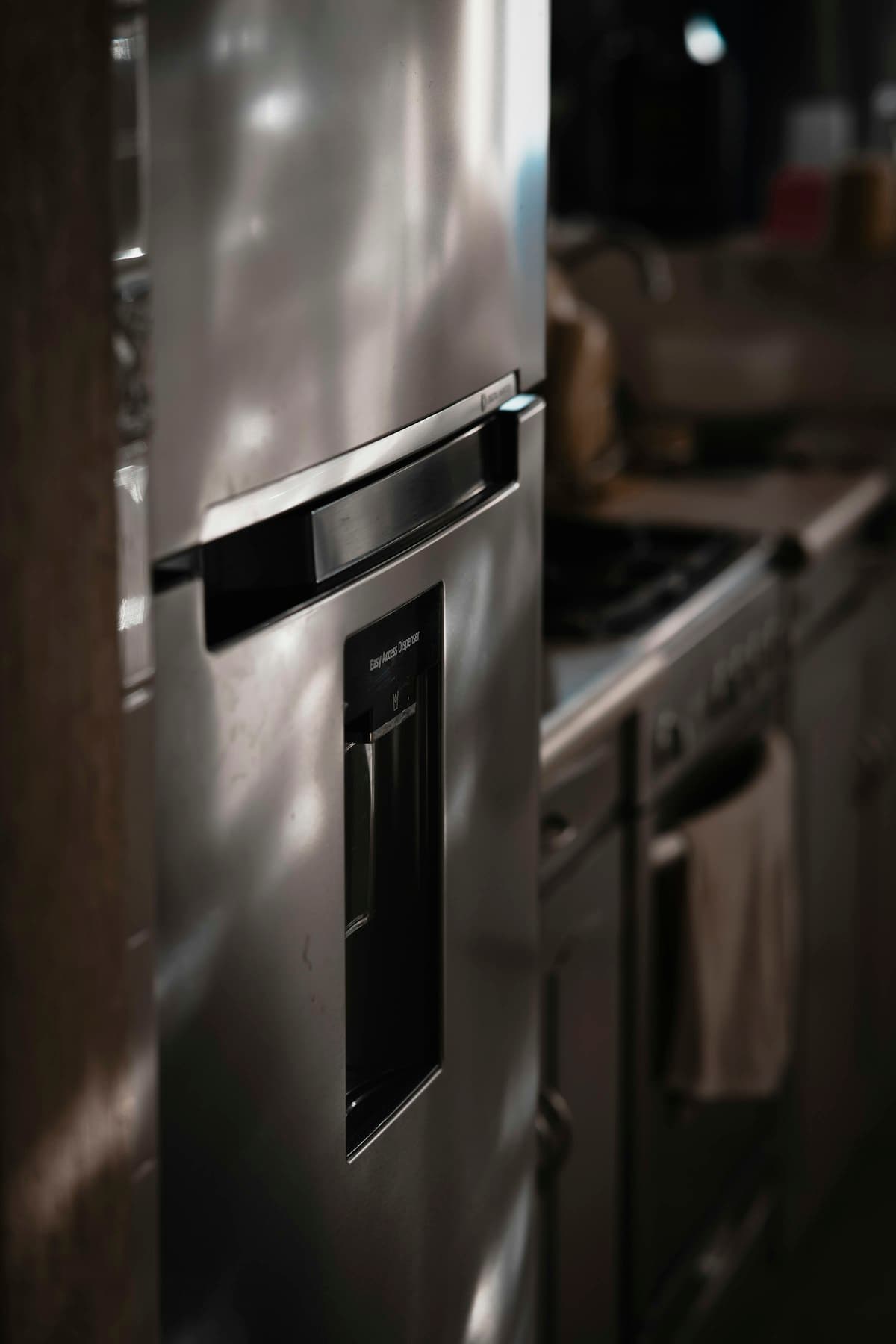
GE Refrigerator Fan Motor Replacement — Evaporator and Condenser Fans
GE refrigerators use two fans: the evaporator fan circulates cold air from the freezer into the refrigerator compartment, and the condenser fan removes heat from the condenser coils at the bottom or rear. Each produces distinct symptoms when it fails, and replacing the wrong fan wastes money.
Two Fans, Two Different Jobs
Evaporator fan motor — mounted behind the rear panel inside the freezer. This fan blows cold air from the evaporator coils (where refrigerant absorbs heat) through air ducts into the freezer and refrigerator compartments. The fan runs whenever the compressor runs.
Condenser fan motor — mounted at the bottom rear of the refrigerator near the compressor. This fan blows air across the condenser coils (where refrigerant releases heat). Without it, the condenser cannot dissipate heat and the compressor overheats. Not all GE models have a condenser fan — some use a static condenser (coils mounted on the back wall) that relies on natural convection.
Do You Have the Right Tools?
Multimeter ($85), vacuum pump ($250), diagnostic software, and specialized hand tools. Our technician arrives with $15K+ in professional tools — your diagnostic is free.
Licensed & Insured · 90-Day Warranty · Same-Day Service
Symptoms by Fan
| Symptom | Fan |
|---|---|
| Freezer stays cold but refrigerator compartment is warm | Evaporator fan |
| Loud buzzing or clicking from inside freezer | Evaporator fan motor |
| Both freezer and refrigerator warm, compressor clicks on/off rapidly | Condenser fan |
| Compressor runs continuously but unit does not cool well | Condenser fan or dirty coils |
| Ice buildup on freezer back wall | Evaporator fan (air not circulating away from coils) |
The classic evaporator fan failure pattern: the freezer stays relatively cold (because it is close to the evaporator coils) but the refrigerator compartment warms to room temperature (because cold air is not being blown through the duct into the fridge).
Diagnosis
Evaporator Fan Test
Open the freezer door. You should hear the fan running (a soft humming/whirring). On most GE models, the fan stops when the freezer door opens (door switch cuts power). Press and hold the door switch — the fan should start running. If it does not, the fan motor has failed.
Condenser Fan Test
Pull the refrigerator away from the wall and remove the rear access panel at the bottom. Start the compressor by adjusting the thermostat to a colder setting. The condenser fan should run whenever the compressor runs. If the compressor is running but the fan is not, the fan motor has failed.
Safety First — Know the Risks
Appliances involve high voltage (120-240V), pressurized water, gas lines, and chemical refrigerants. Over 400 DIY repair injuries are reported yearly. Our techs are licensed and insured — let them handle the risk.
Licensed & Insured · 90-Day Warranty · Same-Day Service
Part Numbers and Pricing
| Component | Part Number | Cost |
|---|---|---|
| OEM evaporator fan motor | WR60X26866 | $30-$90 |
| OEM condenser fan motor | WR60X10350 | $25-$65 |
| Evaporator fan blade | WR60X10141 | $8-$20 |
| Aftermarket fan motors | Varies | $15-$50 |
| Professional installation | — | $120-$220 |
Same-Day Appliance Repair
Fixed or It's Free
$89 → $0 Service Call & Diagnosis — offer ends May 25
Tools Required
Phillips #2 screwdriver, 1/4-inch nut driver, Torx T20 (newer models).
The Real Cost of DIY
Average DIY attempt: $150-400 in tools you may use once, plus the risk of further damage. Our diagnostic visit costs $0 — we find the problem and give you an honest quote.
Licensed & Insured · 90-Day Warranty · Same-Day Service
Evaporator Fan Replacement
Accessing the Fan
Empty the freezer. Remove the shelves and bins. The evaporator fan is behind the rear panel inside the freezer. Remove the screws holding the panel (typically 4-8 screws). Carefully pull the panel forward — it may have frost adhesion. The fan motor and blade are mounted to a bracket behind this panel.
Replacement
Disconnect the fan motor wire harness. Remove the mounting screws or clips. Pull the fan blade off the motor shaft (it is usually a friction fit). Transfer the blade to the new motor (or use the new blade if included). Mount the new motor, reconnect the harness, and reassemble.
Ice Buildup Note
If you find heavy ice buildup on the evaporator coils while the panel is off, the defrost system may also need attention. A failed evaporator fan alone does not cause ice buildup — that indicates a defrost timer, defrost heater, or defrost thermostat problem. Address both issues simultaneously.
Condenser Fan Replacement
Accessing the Fan
Unplug the refrigerator. Remove the rear access panel at the bottom of the unit (screws around perimeter). The condenser fan is mounted near the compressor.
Replacement
Disconnect the wire harness. Remove the fan mounting screws. Pull the fan blade off the motor shaft. Transfer the blade to the new motor. Mount the new motor and reconnect.
Condenser Coil Cleaning
While the access panel is off, clean the condenser coils with a coil brush and vacuum. Dirty coils are the most common cause of condenser fan overwork and premature failure. Clean coils every 6-12 months.
Freezer cold but fridge warm? That is almost always the evaporator fan. Our technicians carry both fan motors for same-visit replacement. Schedule a repair
