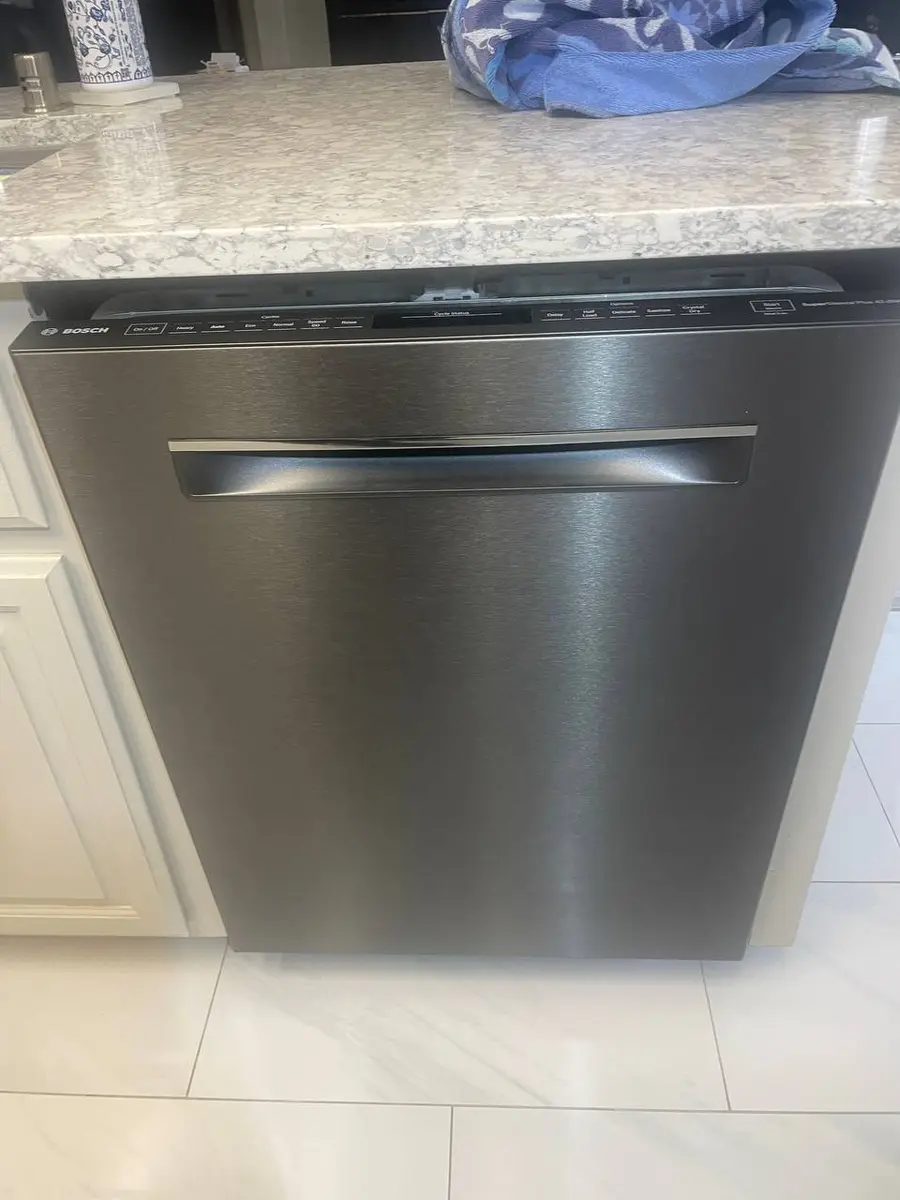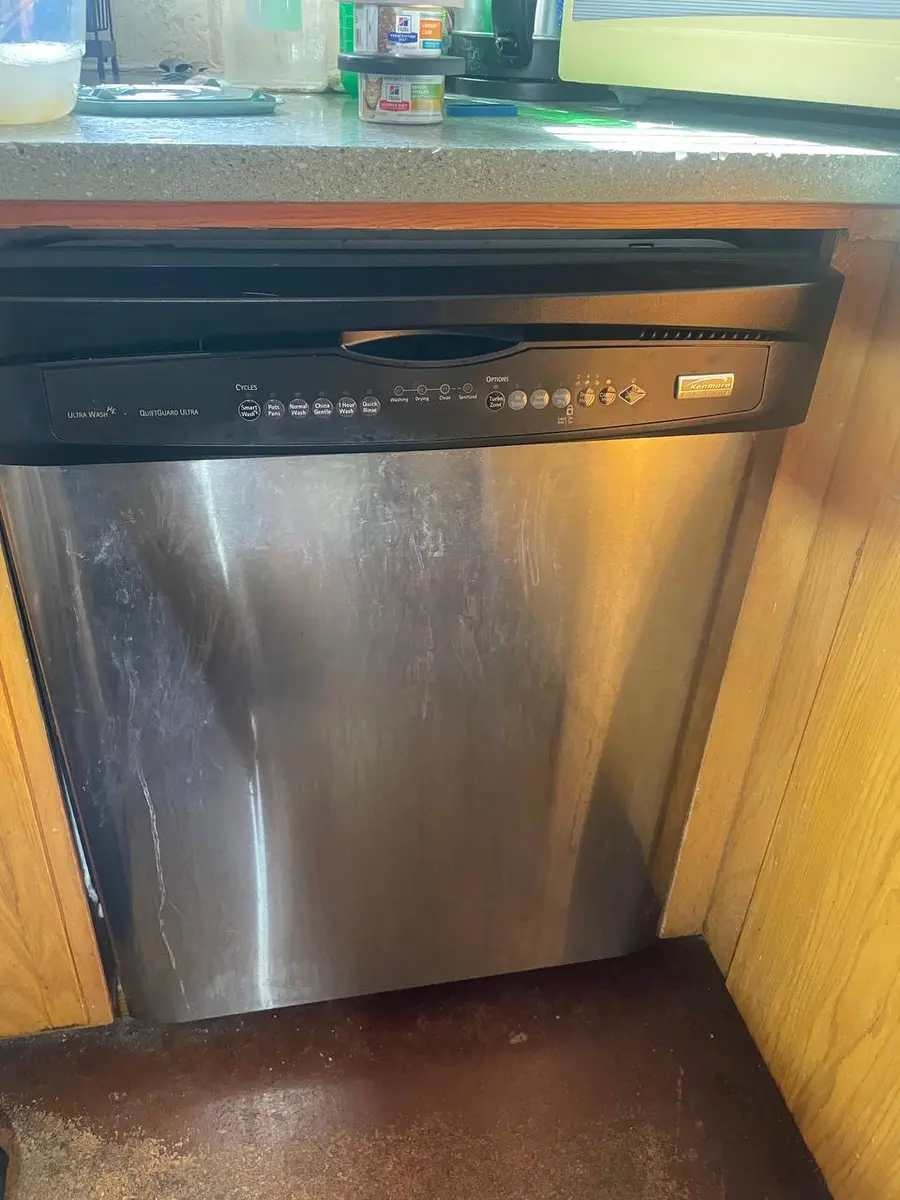
KitchenAid dishwashers are premium appliances known for their powerful cleaning performance and quiet operation. Built by Whirlpool Corporation, KitchenAid dishwashers share many components with Whirlpool and Maytag models, which means parts are widely available and repair knowledge is well-established. Whether you own a KitchenAid KDTM404KPS (top control), KDTE334GPS (ProWash), or a KitchenAid KDFE104HPS (front control), this guide covers every common problem and how to resolve it.
Understanding KitchenAid Dishwasher Systems#
KitchenAid dishwashers use a sophisticated wash system that includes:
- ProWash cycle (on equipped models): Uses sensors to detect soil level and adjusts water temperature, wash duration, and spray intensity automatically.
- Clean Water Wash system: A filtration system that continuously removes food particles from the wash water during the cycle.
- Third-level rack (upper models): A shallow rack at the top for utensils and small items.
- PrintShield finish (stainless models): A special coating that resists fingerprints.
Understanding these systems helps troubleshoot problems specific to KitchenAid's design.
Do You Have the Right Tools?
Water pressure gauge ($60), spray arm tester, float switch multimeter ($85), and drain inspection camera. Our technician arrives with $3,000+ in professional tools — your diagnostic is free.
Licensed & Insured · 90-Day Warranty · Same-Day Service
Problem 1: Dishwasher Not Cleaning Properly#
Dishes coming out dirty, spotted, or with food residue is the most common KitchenAid dishwasher complaint. This is usually not a mechanical failure but a usage or maintenance issue.
Causes and fixes:
Clogged Spray Arms#
The spray arms have small holes that can clog with mineral deposits, food debris, or detergent residue.
How to clean:
- Remove the upper spray arm by unscrewing the nut or pressing the release tab.
- Remove the lower spray arm by pulling up and twisting (depending on model).
- Soak both arms in warm water with white vinegar for 30 minutes.
- Use a toothpick or thin wire to clear each spray hole.
- Flush the arms under running water to verify all holes are open.
- Reinstall and verify they spin freely.
Dirty Filter#
KitchenAid's Clean Water Wash system uses a manual-clean filter that must be maintained regularly.
How to clean:
- Remove the bottom rack.
- Locate the circular filter assembly at the center-bottom of the tub.
- Turn the upper cylindrical filter counterclockwise and lift out.
- Remove the flat fine-mesh filter beneath it.
- Rinse both under running water. Use a soft brush for stubborn deposits.
- Check for debris in the sump below the filter.
- Reinstall — the cylindrical filter should lock clockwise.
Maintenance: KitchenAid recommends cleaning the filter monthly. In households that run the dishwasher daily, bi-weekly cleaning is better.
Water Temperature Too Low#
KitchenAid dishwashers need incoming water at 120°F for optimal cleaning. If your water heater is set lower, or if the dishwasher is far from the heater, water may arrive too cold.
Fix: Run the kitchen faucet hot for 1–2 minutes before starting the dishwasher. This primes the hot water line so the dishwasher fills with hot water from the start. Also verify your water heater is set to 120°F.
Wrong Detergent or Dosage#
- Use fresh, name-brand dishwasher detergent (pods, powder, or gel).
- Don't use expired detergent — it loses effectiveness after 6–12 months.
- Don't overload the dispenser — pods work best for consistent dosing.
- Always use rinse aid — it significantly improves cleaning and drying performance.
Improper Loading#
- Don't nest items — each piece should have space around it for water to reach all surfaces.
- Face dirty surfaces toward the spray arms (center and down).
- Don't block the detergent dispenser or spray arm rotation.
- Large items go on the bottom rack, cups and bowls on the top rack face down.
Problem 2: Dishwasher Not Draining#
Standing water in the bottom after a cycle indicates a drainage failure.
Causes and fixes:
Clogged Filter#
The most common cause. Clean the triple-filter system as described above.
Blocked Drain Hose#
- Check the drain hose for kinks (pull the dishwasher out if needed).
- Verify the high-loop installation — the hose must rise to the countertop level before descending to the drain.
- If connected to a garbage disposal, ensure the knockout plug was removed.
Failed Drain Pump#
If the filter is clean and the hose is clear, the drain pump may have failed.
Symptoms: No draining sound during the drain phase, or a humming sound with no water movement.
Part number: W10348269 or WPW10348269 (KitchenAid/Whirlpool drain pump).
Cost: varies by model and region for the part. Professional repair: varies by model and region.
Check Valve Blockage#
The check valve (backflow preventer) can stick closed. It's typically integrated into the drain pump assembly. Inspect and clean, or replace the pump assembly.
Safety First — Know the Risks
Live 120V wiring in a wet environment is one of the most dangerous DIY scenarios. Water + electricity = serious shock risk. Our techs are licensed and insured — let them handle the risk.
Licensed & Insured · 90-Day Warranty · Same-Day Service
Problem 3: Dishwasher Won't Start#
You press Start but nothing happens, or the dishwasher seems dead.
Troubleshooting steps:
- Check the power supply: Verify the circuit breaker. Check the outlet under the sink if the dishwasher is cord-connected (some are hardwired).
- Door latch: The dishwasher won't start if the door isn't fully closed and latched. Close the door firmly until you hear the latch click.
- Control lock: The control panel may be locked. Press and hold the Lock button (or dedicated icon) for 3–4 seconds to unlock.
- Delay wash: Check if a delayed start is set. The display will show the countdown time. Press Cancel/Drain to clear.
- Reset the control board: Turn off the breaker for 60 seconds, then restore power. This clears temporary glitches.
- Blown thermal fuse: On some models, a thermal fuse protects the control board. If it blows, the dishwasher is completely dead. Located on or near the control board inside the door panel.
- Failed door latch assembly: If the latch is broken, the door switch doesn't close and the control board can't initiate a cycle. Part W10862259 (varies by model and region).
Problem 4: Dishwasher Leaking#
Water on the kitchen floor around the dishwasher demands immediate attention.
Common leak sources:
-
Door gasket: The rubber seal around the door can wear, crack, or accumulate debris preventing a proper seal. Clean the gasket with warm soapy water. Replace if damaged (part W10524469, varies).
-
Door hinge or tub: If the tub has a crack or the door hinge area is corroded, water escapes during the wash cycle. This is a more serious issue that may require professional repair or replacement.
-
Spray arm seal: If the lower spray arm's bearing or seal is worn, water can leak from the center mount down into the motor area and eventually onto the floor.
-
Hose connections: The fill hose, drain hose, or internal hoses can loosen or crack. Pull the dishwasher out and inspect all hose connections while running a cycle.
-
Excessive suds: Using regular dish soap instead of dishwasher detergent causes massive suds overflow. If this happened, run a rinse cycle to clear the suds, and always use dishwasher-specific detergent.
The Real Cost of DIY
Average DIY attempt: $150-400 in tools you may use once, plus the risk of further damage. Our diagnostic visit costs $0 — we find the problem and give you an honest quote.
Licensed & Insured · 90-Day Warranty · Same-Day Service
Problem 5: Dishwasher Making Unusual Noises#
KitchenAid dishwashers are designed for quiet operation (many models rated at 39–44 dBA). New or loud noises are worth investigating.
Sound guide:
- Grinding/crunching: Debris (broken glass, bones, pits) in the chopper area or pump impeller. Clean the filter and check the sump for foreign objects.
- Loud buzzing: The drain pump is straining against a blockage, or the wash motor capacitor is failing.
- Humming: Normal wash motor operation. A new, louder hum can indicate a worn wash motor bearing.
- Clicking: Normal cycle transitions. The detergent dispenser opening during the wash cycle also produces a click.
- Thumping/banging: A spray arm hitting a dish or utensil that's protruding through the rack. Rearrange the load.
- High-pitched whine: Worn wash motor bearing or a failing circulation pump. This will worsen over time.
Problem 6: Dishes Not Drying#
KitchenAid uses a combination of heated dry and a condensation drying system (on some models). If dishes are wet after the cycle:
- Use rinse aid: This is essential for drying performance. Rinse aid breaks water's surface tension, allowing it to sheet off dishes instead of forming droplets. Fill the rinse aid dispenser and set the dosage level (1–6, start at 3–4).
- Select Heated Dry: Ensure the Heated Dry option is selected. Some eco-friendly cycles default to no heated dry.
- Plastic items: Plastic doesn't retain heat like ceramic or glass, so it doesn't dry as well with condensation drying. This is normal.
- Heating element failure: If the heating element (part W10518394) has failed, water won't evaporate effectively. Test for continuity — should read 10–30 ohms.
- Vent (on models with a vent): Some KitchenAid models have an automatic vent that opens during drying. If the vent mechanism fails, moisture stays trapped. Check that the vent opens during the drying phase.
Don't Void Your Warranty
Opening your appliance yourself may void the manufacturer warranty. Our repair comes with a 90-day guarantee, and we document everything for warranty compliance.
Licensed & Insured · 90-Day Warranty · Same-Day Service
KitchenAid Dishwasher Error Codes#
KitchenAid dishwashers display error codes on the control panel or through LED flash patterns:
- F1E1 / F1E2 — Control board error. Power cycle for 60 seconds. If persistent, the control board needs replacement.
- F2E1 — Stuck button on the control panel. Check for stuck buttons; replace the control panel if needed.
- F2E2 — User interface communication error. Check the ribbon cable connection between the control panel and the main board.
- F3E1 — Thermistor/temperature sensor error. Check the sensor for continuity and correct resistance.
- F3E2 — Thermistor shorted. Replace the thermistor.
- F5E1 — Door won't lock. Check the door latch assembly and wiring.
- F5E2 — Door won't unlock. Same diagnostic approach as F5E1.
- F6E1 / F6E2 — Water inlet error. Check the water supply valve, inlet valve, and flow meter.
- F7E1 — Wash motor not running. Check for pump blockage, motor failure, or wiring issues.
- F8E1 — Slow water fill. Check water pressure (minimum 20 PSI), inlet valve, and supply line.
- F8E4 — Drain error. Clean the filter, check the drain hose and pump.
- F9E1 — Diverter motor error. The diverter directs water to upper or lower wash arms. Motor may need replacement.
To clear error codes: Press Cancel and close the door. The dishwasher should drain. If the error returns on the next cycle, the underlying issue needs repair.
KitchenAid Dishwasher Diagnostic Mode#
- Make sure the dishwasher is not running and the door is closed.
- Press any three keys in sequence: 1-2-3, 1-2-3, 1-2-3 (pressing each of the three keys in order, three times). Each press should be within 1 second.
- All lights on the control panel should illuminate.
- The dishwasher enters diagnostic mode and begins cycling through tests (fill, wash, drain, etc.).
- Error codes display during or after the test sequence.
Note: The specific keys may vary by model. On some top-control models, use the Hi Temp Scrub, Energy Saver Dry, and Hi Temp Wash buttons. On front-control models, use the three buttons to the right or left of the display.
Is It Worth Your Time?
Dishwasher issues overlap between drain pump, wash motor, inlet valve, and control board. DIY diagnosis averages 3-5 hours. Our technician diagnoses the issue in about 30 minutes — same-day appointments available.
Licensed & Insured · 90-Day Warranty · Same-Day Service
Preventive Maintenance Schedule#
- After every cycle: Wipe down the door edges and gasket.
- Monthly: Clean the drain filter. Run an empty cycle with a dishwasher cleaner or a cup of white vinegar on the top rack.
- Every 3 months: Clean the spray arm nozzles. Inspect the door gasket for wear. Check the rinse aid level.
- Every 6 months: Clean the drain area and sump. Inspect the hose connections for leaks. Descale if you have hard water (use citric acid or a commercial descaler).
- Annually: Pull the dishwasher out and inspect underneath for leaks, pest activity, or moisture damage. Check the power cord or junction box connection.
Frequently Asked Questions#
Q: Why is my KitchenAid dishwasher not cleaning the top rack? A: If the top rack dishes are dirty but the bottom is clean, the upper spray arm is either clogged, not spinning freely, or the diverter motor isn't directing water to it. Remove the upper spray arm and clean all nozzles. Verify it spins freely on its mount. If the lower rack cleans fine but the upper doesn't, the diverter motor (which alternates water flow between upper and lower arms) may have failed.
Q: How do I reset my KitchenAid dishwasher? A: Press Cancel/Drain and close the door. The dishwasher will run a drain cycle. Alternatively, turn off the circuit breaker for 60 seconds and restore power. This resets the control board and clears temporary errors.
Q: Why does my KitchenAid dishwasher smell bad? A: Odors come from food debris trapped in the filter (clean it), the door gasket fold (wipe with a bleach solution), or standing water in the sump. Run a hot empty cycle with 2 cups of white vinegar, then sprinkle a cup of baking soda on the bottom and run a short hot cycle.
Q: How long do KitchenAid dishwashers last? A: KitchenAid dishwashers typically last 10–15 years with proper maintenance. The Architect series and higher-end models with more stainless steel components tend toward the upper end. The most common end-of-life failure is the wash motor, which cost varies by model and region to replace — at that point, replacement often makes more sense on older units.
Q: Is it worth repairing a KitchenAid dishwasher? A: For units under 8 years old, most repairs (varies by model and region) are worth it given KitchenAid's premium price point (varies by model and region new). Common repairs like the drain pump, door latch, heating element, or control panel are straightforward and cost-effective. For units over 10 years old with motor or tub damage, replacement is usually more economical.
The Risk of Getting It Wrong
A wrong diagnosis often turns a simple fix into a costly replacement. Without proper diagnostic tools, you might replace the wrong part — or cause additional damage. Our free diagnostic eliminates the guesswork.
Licensed & Insured · 90-Day Warranty · Same-Day Service
When to Call a Professional#
Some KitchenAid dishwasher problems are best handled by a professional:
- Circulation pump/wash motor replacement — This is the main wash motor that drives the spray arms. It's a complex, labor-intensive repair that involves removing the sump assembly.
- Control board diagnosis and replacement — Multiple error codes or intermittent electrical issues require systematic testing. Replacement boards must be correctly seated and connected.
- Persistent leaks from the tub — A cracked tub or corroded hinge area may require the dishwasher to be completely pulled out and partially disassembled for proper diagnosis.
- Installation-related issues — If the dishwasher was recently installed and is leaking or not filling, the problem may be in the plumbing connections, which should be inspected by a professional to prevent water damage.
- Electrical issues — Tripped breakers, burning smells, or a completely dead unit after a power surge indicate electrical problems that need qualified diagnosis.
KitchenAid dishwashers use Whirlpool-standard components, so any technician experienced with Whirlpool appliances can service them effectively.
KitchenAid dishwasher giving you trouble? EasyBear's technicians are experienced with all KitchenAid and Whirlpool dishwasher models. We offer a free diagnostic visit — our tech will identify the exact problem, explain the fix and cost upfront, and repair it on the spot in most cases. We carry common KitchenAid parts on every service van. Every repair is backed by our 90-day parts and labor warranty. Book your free KitchenAid dishwasher diagnosis today.
Appliance Repair Technician · 8 years experience
Experienced technician with 8 years specializing in dishwasher repairs and European appliance brands including Bosch and Thermador.