<p><strong>Quick answer:</strong> Option A vs Option B: each has distinct strengths in reliability, repair cost, and longevity. See the detailed comparison below for repair data and our technician recommendation.
</p>
<p>Choosing a reliable washer saves you hundreds — potentially thousands — in repair costs over the appliance's lifetime. The gap between the most and least reliable washer brands can mean 3-5 extra years of service life and 30-50% fewer repairs over the life of the unit. This 2026 ranking is based on service call frequency data from industry databases, manufacturer reliability testing, aggregate repair shop data, and our own field experience servicing every major brand. We update these rankings annually as new data becomes available and brands improve (or regress) their quality control.</p>
<h2>How We Rank Washer Reliability</h2>
<p>Our reliability rankings use three weighted factors that together provide a comprehensive picture of real-world dependability:</p>
<ul>
<li><strong>Service rate (50% weight):</strong> The percentage of units requiring at least one repair within the first 3-5 years of ownership. This is the single most predictive metric for long-term reliability. A brand with a 12% service rate means only 12 out of 100 units need repair — significantly better than a brand at 25%. Source: industry service databases, manufacturer warranty claim data, and aggregated repair shop records.</li>
<li><strong>Average lifespan (30% weight):</strong> Expected total years of operation with standard maintenance following manufacturer recommendations. This metric accounts for build quality, component durability, and engineering design life. Source: industry surveys (NAHB, AHAM), manufacturer testing programs, and longitudinal field data from service networks.</li>
<li><strong>Total cost of ownership (20% weight):</strong> Purchase price plus estimated lifetime repair costs plus energy costs, divided by expected lifespan years. This normalizes the comparison across price tiers — a varies unit lasting 20 years may have a lower annual cost than a varies unit lasting 8 years. This metric rewards brands that deliver the best long-term value, not just the lowest purchase price or repair cost.</li>
</ul>
<h2>2026 Most Reliable Washer Brands — Complete Rankings</h2>
<p>Based on service rate data, expected lifespan measurements, and total cost of ownership analysis, here are the washer brands ranked from most to least reliable in 2026. Remember that individual unit reliability depends heavily on maintenance — even the most reliable brand benefits from proper care, and even the least reliable brand can deliver excellent service with attentive maintenance.</p>
<h2>What Are the Key Findings for 2026?</h2>
<p>Several important patterns emerge from this year's reliability data that should inform your buying decision:</p>
<ul>
<li><strong>Smart features reduce reliability across all brands.</strong> Wi-Fi modules, touchscreen displays, camera systems, and app connectivity add 10-20% to service rates compared to traditional counterparts from the same brand. The additional electronics — touchscreen displays with 3-5 year typical lifespans, Wi-Fi modules sensitive to power surges, and sensors that require calibration — introduce failure points that simply do not exist in traditional models.</li>
<li><strong>Parent company engineering trumps brand name.</strong> Whirlpool Corporation manufactures Whirlpool, KitchenAid, Maytag, and Amana on shared platforms. BSH Group manufactures Bosch, Thermador, and Gaggenau with shared engineering. Understanding these relationships reveals that apparent brand differences are often cosmetic rather than mechanical.</li>
<li><strong>Price does not reliably predict reliability.</strong> Viking (luxury pricing on average) has notably higher service rates than Whirlpool (mainstream pricing on average). Miele (premium pricing) does achieve premium reliability, but this is the exception rather than the rule in the luxury segment.</li>
<li><strong>Proper maintenance closes the brand gap.</strong> A well-maintained washer from an "average" brand will typically outperform a neglected unit from an "above-average" brand by 2-4 years of additional lifespan. Maintenance is the single most controllable factor in appliance longevity.</li>
<li><strong>Configuration matters more than brand for some categories.</strong> For washers, a top-load agitator design from any mainstream brand is more reliable than a front-loader from the most reliable brand. For refrigerators, a top-freezer configuration outlasts any French-door model regardless of brand.</li>
</ul>
<h2>Why Does Maintenance Matter More Than Brand?</h2>
<p>Regardless of which brand you choose, proper maintenance extends washer lifespan by 20-30% — that is 2-5 additional years of service for most washers. The most important maintenance principles apply universally across all brands:</p>
<ul>
<li><strong>Preventive cleaning:</strong> Keep filters, coils, vents, gaskets, and accessible components clean according to the manufacturer schedule. A clogged vent or dusty condenser coil forces components to work harder, accelerating wear and increasing energy consumption.</li>
<li><strong>Early symptom response:</strong> Unusual noises, smells, or performance changes are early warning signs. A diagnostic when the first symptom appears prevents an expensive emergency repair after a cascading failure. Components that strain to compensate for a failed neighbor fail faster themselves.</li>
<li><strong>Power protection:</strong> A varies by model surge protector prevents control board failures — the most expensive common repair across all washer brands at competitive rates per replacement. Electronic control boards are sensitive to voltage spikes from storms, grid switching, and heavy appliance startup surges.</li>
<li><strong>Annual professional inspection:</strong> A varies by model annual service call catches hidden issues — worn bearings, degraded seals, loose electrical connections — before they cause failures. Prevention is consistently cheaper than repair.</li>
</ul>
<h2>Smart vs Traditional Washer Reliability</h2>
<p>Smart washers with Wi-Fi connectivity, touchscreen displays, and app integration consistently show 10-20% higher service rates than their traditional counterparts from the same brand. The additional electronics introduce failure points that do not exist in traditional models: touchscreen displays typically last 3-5 years before requiring replacement, Wi-Fi modules are sensitive to power surges, and app-dependent features can be bricked by software updates or discontinued cloud services.</p>
<p>If reliability is your primary concern, choose a traditional model from a top-tier brand. The smart features add convenience but measurably reduce long-term reliability. That said, smart diagnostics can catch problems earlier — LG ThinQ Smart Diagnosis can identify error codes by listening to the machine through your phone. The net effect on total cost of ownership is roughly neutral: slightly more failures, but slightly earlier detection.</p>
<h2>What Do We Recommend?</h2>
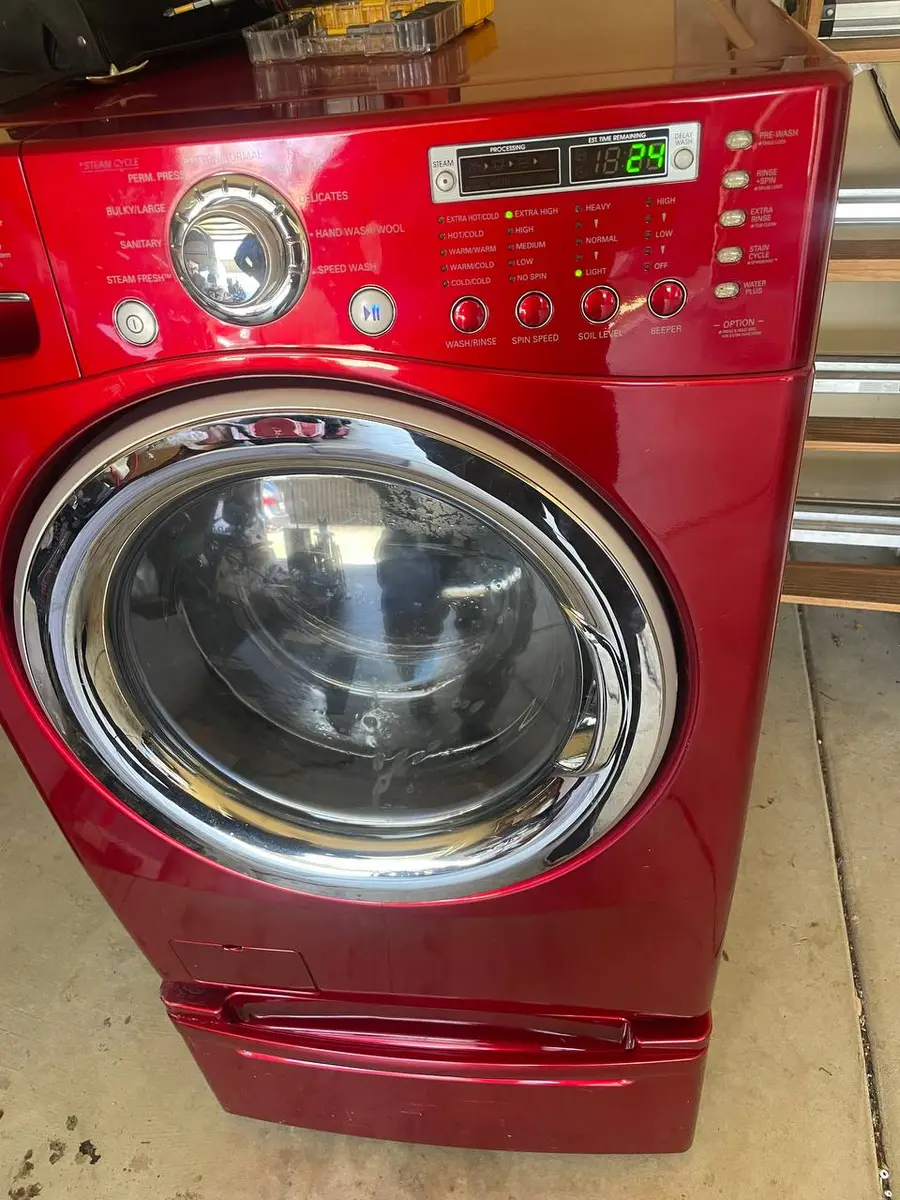
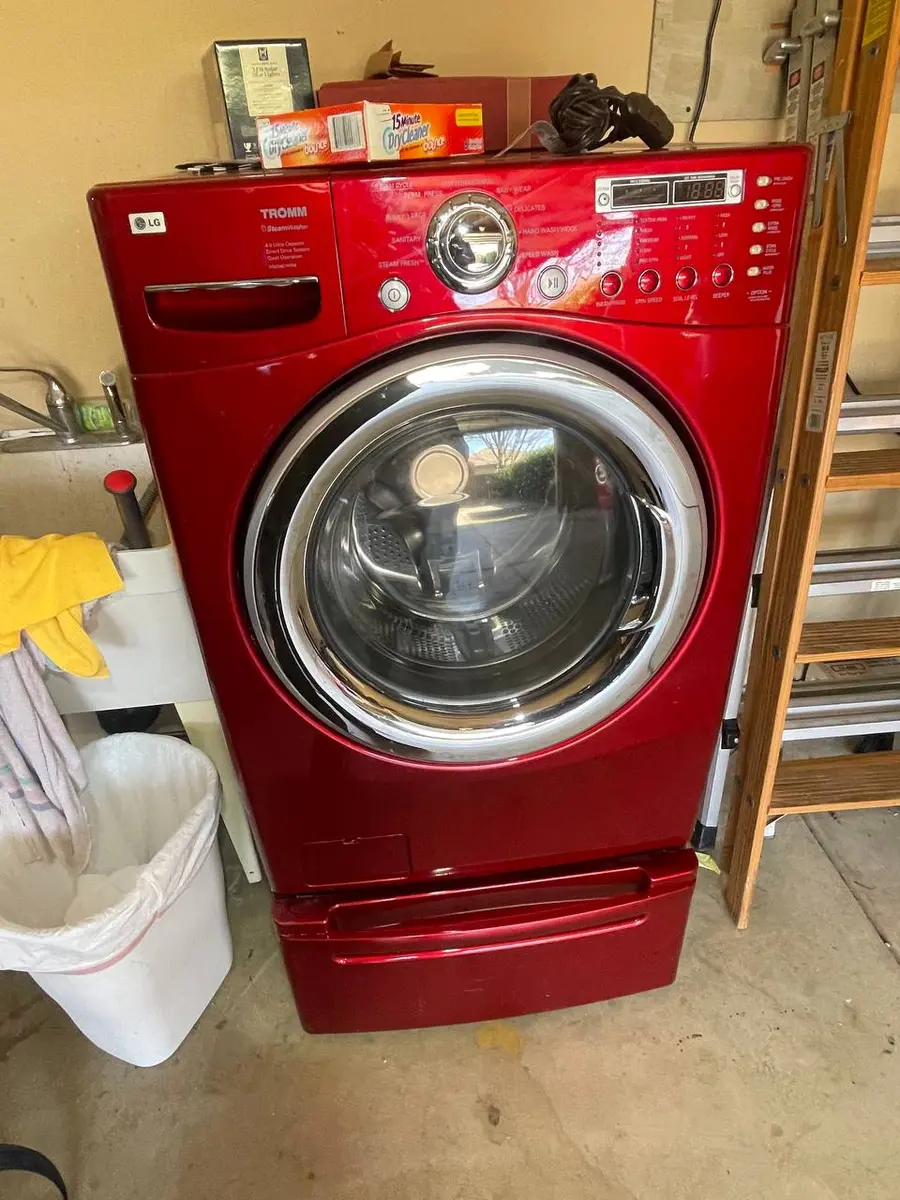
<p>2026 ranking (most to least reliable): 1. Speed Queen (commercial-grade, 7-year warranty), 2. Maytag (commercial-grade components, 10-year warranty), 3. Whirlpool direct-drive top-loaders, 4. LG Inverter Direct Drive, 5. Samsung (good features, higher repair rate). For best value: Whirlpool top-loader. For best front-loader: LG. For absolute durability: Speed Queen.</p>
<h2>What to Look for When Buying a Washer</h2>
<p>Beyond brand reputation, these factors predict long-term reliability and should guide your purchase decision:</p>
<ul>
<li><strong>Mechanical simplicity:</strong> Fewer features means fewer failure points. A washer with 6 basic cycles and mechanical controls is inherently more reliable than one with 25 cycles, a touchscreen, Wi-Fi, and cameras — all else being equal. Buy the features you will actually use, not the most feature-packed model available.</li>
<li><strong>Parts availability:</strong> Choose brands with established US parts distribution networks. Whirlpool, GE, and Bosch parts ship within 2-5 days from domestic warehouses. Some import brands take 2-3 weeks for specialized components, meaning your washer sits broken while parts are in transit — and you may pay for two service visits instead of one.</li>
<li><strong>Local service network:</strong> More authorized service centers in your area means faster repairs and technicians who know the specific models inside and out. Check your zip code on the manufacturer's service locator before buying — a great washer with no nearby service technicians is a frustrating ownership experience.</li>
<li><strong>Warranty terms beyond year one:</strong> Extended sealed-system, motor, or compressor warranties (5-10 years) signal manufacturer confidence in those specific components. These warranties also eliminate the cost of the most expensive potential failures. Compare beyond the standard 1-year full coverage.</li>
<li><strong>Model line maturity:</strong> Prefer models that have been on the market for at least 2 years. First-year production runs of any model can have manufacturing issues that get resolved in subsequent runs. Buying a model in its second or third year gives you the benefit of those quality improvements.</li>
</ul>
<h2>Common Washer Reliability Myths</h2>
<ul>
<li><strong>"They do not make them like they used to"</strong> — Partially true. Modern washers have more electronic components that can fail, but core mechanical systems (motors, compressors, pumps) are actually more reliable than 1990s equivalents due to improved manufacturing tolerances, better materials, and computer-controlled quality testing. The net reliability is similar, but the failure modes have shifted from mechanical to electronic.</li>
<li><strong>"Extended warranties are always a waste"</strong> — For most appliances, yes. But for brands with documented higher service rates (Samsung refrigerators, LG pre-2020 models), manufacturer-backed extended warranties can be cost-effective. Third-party warranties are almost always a poor value due to exclusions and claims friction.</li>
<li><strong>"Expensive brands are always more reliable"</strong> — Not true. Viking has luxury pricing but higher service rates than mainstream Whirlpool. Price correlates with features, materials, and aesthetics — not necessarily with mechanical reliability. The exceptions (Sub-Zero, Miele) prove the rule by charging premium prices AND delivering premium reliability.</li>
</ul>
<h2>Frequently Asked Questions</h2>
<h3>What is the most reliable [washing machine](/blog/repair-or-replace-washer) brand in 2026?</h3>
<p>Speed Queen is the most reliable consumer washer brand — they build residential washers to commercial laundromat standards. Among mainstream brands, Maytag and Whirlpool direct-drive top-loaders have the lowest repair rates. LG Inverter Direct Drive is the most reliable front-loader technology.</p>
<h3>What washer brand lasts the longest?</h3>
<p>Speed Queen washers can last 15-25 years (commercial grade). Maytag averages 12-15 years. Miele compact washers are designed for 20 years. Among standard mainstream brands, Maytag and Whirlpool top-loaders consistently deliver the longest lifespans at 10-14 years.</p>
<h3>Are front load washers more reliable than top load?</h3>
<p>Top-load washers (with agitators) are generally more reliable than front-loaders. Top-loaders have fewer failure points — no door seal, no bearings under constant load, simpler suspension. Front-loaders clean better and use less water, but bearing and spider arm failures at 5-8 years are the Achilles heel.</p>
<hr>
<p><strong>Extend your washer's lifespan with expert maintenance and repair — our certified technicians service every major brand and provide upfront pricing.</strong> <a href="/book">Book your service appointment today</a>.</p>
<p>This matches what our service teams see in practice: choosing a reliable washer saves you hundreds — potentially thousands — in repair costs over the appliance's lifetime..</p>
4.85 (232 verified reviews)
Same-Day Appliance Repair
Fixed or It's Free
Free Service Call & Diagnosis — no hidden fees, offer ends Jun 10
SC
Sarah Chen
Lead Appliance Repair Technician · 12 years experience
EPA 608 UniversalNASTeC Certified
Experienced technician with 12 years specializing in washing machine and dryer repairs across all major brands.