The stakes are real: a [dishwasher](/blog/repair-or-replace-dishwasher) that suits how you use it, and that you can get parts and service for, keeps working; one that does not becomes a run of repair visits. The table reads each maker's design, not a failure figure.
Pick one of the five by the constraint you actually have
Every row names one maker, reached from the constraint that would make you choose it. The third column is the part a ranking leaves out: what you are agreeing to when you pick that row.
| Your binding constraint | The design that fits, and a maker that builds it | What you accept by picking it |
|---|---|---|
| A long-lived machine, and the budget can take it | A premium build designed for long service, as Miele markets its machines | a higher price; check that a technician near you services the brand before you buy |
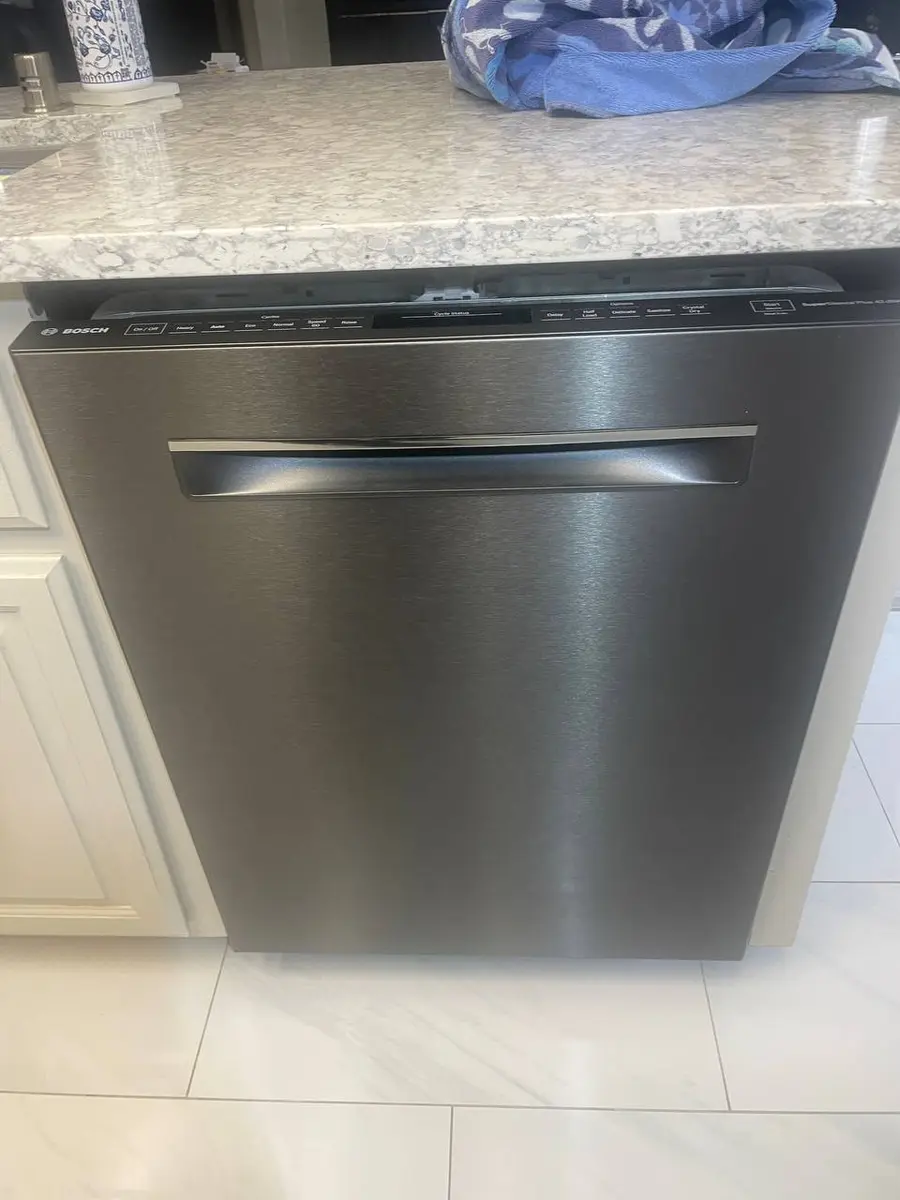
| A quiet machine in a kitchen you live in | A well-insulated stainless tub with condensation drying, as on Bosch's upper lines with CrystalDry | condensation drying can leave plastics damp without the drying aid; compare the published noise rating on the spec sheet |
| The lowest lifetime repair bill, whoever you call | A mechanically simple machine on a shared platform, as Whirlpool builds | fewer premium features; in return, parts are widely stocked and many technicians work on the platform |
| You are never going to pre-rinse | A hard-food disposer that grinds debris, as on some GE models | the grinder is one more part; a manual filter has nothing to wear out but needs you to rinse it |
| Better racking and tub hardware than a base model, without the top price | The premium end of a shared platform, as KitchenAid is on Whirlpool's | more features to fail than the base model; spray arms and racks are the parts to keep clean and check |
| You would rather the badge stopped mattering | Whichever machine you will actually maintain | the care is now yours: a clean filter and an early look at new noises are the part of a dishwasher's life you control |
How to judge dishwasher reliability
- Pumps and filter: the wash and drain pumps last longest when the filter is clean and hard debris never reaches them.
- Controls: a simple button panel has fewer parts to fail than a touch panel with Wi-Fi.
- Drying: condensation drying has no heating element to fail; heated drying dries plastics better and adds the element.
- Support: parts supply and local service decide how quickly a fault becomes a working machine again.
- Published warranty: read past the basic cover; some makers cover the tub, racks or specific parts for longer.
The five makers, design by design
Miele. Builds its own machines and markets them on long design life and solid build. Check that a technician near you services Miele before you buy.
Bosch. Known for quiet, well-insulated stainless tubs and condensation drying, with CrystalDry on its upper lines. If your Bosch shows a drain error, a clogged filter or a kinked drain hose is the first thing to check.
KitchenAid. The premium end of the Whirlpool platform, with better racking and tub hardware than base Whirlpool and shared parts underneath.
Whirlpool. Mechanically simple, with parts widely stocked and a platform many technicians work on, which keeps repairs straightforward.
GE. Offers a hard-food disposer on some models that grinds debris instead of trapping it in a filter you clean by hand, backed by a broad domestic parts network.
Samsung and LG build feature-rich machines that lean more on electronics; judge them on the same checks as the five above. And price is not a reliability guarantee: a high price buys features, finish and quiet running, not fewer parts.
What separates a dependable dishwasher
- Smart features add parts. Wi-Fi modules, touchscreens and app connectivity are electronics a traditional model does not carry, and surge-sensitive ones at that.
- Parent-company engineering beats the badge. Whirlpool builds Whirlpool, KitchenAid, Maytag and Amana on shared platforms; BSH builds Bosch, Thermador and Gaggenau. Many brand differences are cosmetic.
- Price does not decide reliability. It buys features and materials more than it removes parts that can fail.
- Maintenance closes the gap. A cared-for mainstream dishwasher can outlast a neglected premium one. Care is the most controllable variable.
Smart vs traditional
Smart dishwashers carry more to fail: touch displays, surge-sensitive Wi-Fi modules and app features that depend on the maker keeping its cloud service running. Smart diagnostics have an upside, LG ThinQ, for instance, can read a fault through your phone, so you may catch a problem earlier. If reliability is your only priority, buy the traditional model.
Rather have a pro handle it?
A vetted local technician can come out and diagnose your dishwasher at home.
Why maintenance outranks brand
Clean the filter, gasket and spray arms on the maker's schedule so nothing has to strain. Respond to the first odd noise or smell before a strained part triggers a cascade. Protect the control board with surge protection, since a board is among the costliest repairs. A yearly check by a technician catches worn seals and pumps early.
What to look for when buying
- Mechanical simplicity: a few sensible cycles beat a long list plus a touchscreen and a camera.
- Parts availability: a part that is in stock locally keeps your machine running; one that has to be ordered from abroad can strand it.
- Local service network: check the maker's service locator for your zip code before buying.
- Warranty beyond the basic term: longer cover on the tub, motor or racks tells you what the maker will stand behind.
- Model maturity: prefer a model that has been on sale for a couple of years, so first-run faults are ironed out.
Reliability myths worth retiring
- "They don't make them like they used to." Partly true: modern machines have more electronics that can fail, while pumps and motors are mature. The failure modes shifted; the care that keeps them running did not.
- "Extended warranties are always a waste." It depends on the machine and on what the maker already covers. Third-party plans come with exclusions; read them before you buy.
- "Expensive always means reliable." Not so. Price tracks features and materials more than mechanical dependability.
Configuration can matter more than brand
A straightforward stainless-tub model with a proven wash system usually has fewer parts to fail than a feature-dense showpiece, even one from a top-tier maker. Buy the wash performance and the build, not the spec sheet.
The best pick for your priority
Match the choice to what you value. For quiet running, compare published noise ratings and insulated stainless tubs. For low repair bills, choose a shared-platform machine with parts everywhere. If you never pre-rinse, look for a hard-food disposer. For a long-lived premium machine, check local service first. Whatever you choose, the machine you care for will outlast the one you buy and neglect.
[Dishwasher not draining](/blog/dishwasher-not-draining), cleaning or drying? Book your service appointment with a technician who services every major brand.